




Ultimate 11 review
 Analysis by Appsdrops
I like sports games that give me a clear first goal instead of burying me under menus, and Ultimate 11 makes its central idea easy to grasp: put together a football lineup and try to take it to a trophy. It is a free sports game from Vaulty Studios Inc., with an Everyone age rating, and its 4.6 average from around 1,100 ratings suggests that plenty of players have found something to enjoy. The appeal is straightforward, but the important question for a new player is whether the draft-and-build premise suits the way you like to play.
What to expect from the football draft
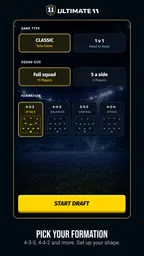
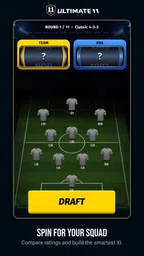
This is a team-building game first and a conventional football simulation second. Rather than asking me to manage a real club season or simply replay the same quick match, its core promise is to draft football legends, assemble an Ultimate XI, and pursue a trophy. That gives each choice a little more weight: the fun comes from shaping a side, not only from watching the scoreline.
The fantasy of choosing a group of standout players is familiar, but it leaves room for personal priorities. I might value a balanced team, while another player may want to build around favorite positions or a more adventurous selection. The best part of this setup is that the squad feels like a project I can make my own. The trade-off is that anyone looking for precise, hands-on control of every pass and tackle may find a draft-led sports game less satisfying than a dedicated football simulator.
For a first-time player, I would keep the opening objective modest: learn how the draft asks you to make choices, complete the immediate task in front of you, and see how your picks fit together. It is tempting to think that the first lineup must be perfect. I would resist that pressure. A first draft is more useful as a way to understand the game’s rhythm than as a test of football expertise.
The strongest reason to try it is the mix of football familiarity and squad-building decisions. You do not need to arrive with a complicated plan to get started. If you already enjoy comparing players and building a side from available choices, the premise should feel natural. If your favorite part of sports games is controlling movement moment by moment, you should check whether this style gives you enough direct play before committing much time.
Getting from installation to a usable lineup
When you first open the game, focus on the next clearly presented action rather than trying to understand every screen at once. In a draft-based game, the useful early question is not “What is the strongest possible team?” but “What choice helps me make progress right now?” That shift makes the opening less intimidating, especially if you are new to football roster games.
My practical tip is to pause briefly between picks and look at the shape of the team you are assembling. A collection of individually exciting names may not feel as coherent as a lineup with sensible coverage across the pitch. Even without relying on advanced tactics, thinking about balance can make the selection process more engaging. It also gives you a simple way to learn: notice what your current side seems to need, then use the next opportunity to address that gap.
Do not treat one imperfect choice as a reason to restart or assume you have failed. Drafting is interesting precisely because choices arrive in context, and you may not get every player you want. I would use an early run to discover what the game rewards and how its progression feels, then adjust my approach on the next attempt. That is a more reassuring route to a first satisfying result than chasing an ideal lineup before you know how the game works.
The game is free to download, which makes a cautious try easy. It does include optional in-app purchases, with items ranging from about a dollar to just under 300 dollars. That is a wide span, so I would decide in advance whether I want to spend anything at all and check each purchase carefully before confirming it. A free starting point does not mean every later option will suit every budget, and there is no need to spend simply because a draft choice feels important.
Finding the first meaningful success
For me, the first meaningful success would not be a perfect roster. It would be completing an initial draft, understanding why the lineup looks the way it does, and feeling ready to make a better-informed choice next time. That kind of small win tells you whether the central loop is enjoyable. If you find yourself already thinking about how to improve the team, the game has done its job as a squad-building experience.
A useful way to approach your first attempt is to make one simple plan before selecting players. For example, decide that you will avoid neglecting a part of the lineup, or that you will prioritize a style of team you personally enjoy. Then stick with that plan long enough to see its consequences. This gives each selection a purpose and makes the outcome easier to evaluate than picking on impulse and later wondering why the team feels uneven.
There is also value in separating a disappointing result from a bad decision. A draft can leave you with compromises; that is part of the appeal, not necessarily a sign that you misunderstood the game. Ask what you would change next time: the order of your priorities, your willingness to take a favorite, or the balance of the XI. That reflection turns a short session into useful learning without requiring a spreadsheet or a deep knowledge of football statistics.
For an everyday use case, I can see this working well as a brief break when I have enough time to make a few considered choices but do not want to settle into a long management session. The draft gives that pause a concrete focus: build a side, see how the choices come together, and decide whether to chase another improvement. It is less suited to a moment when I want a full, uninterrupted match experience with direct control throughout.
What can feel confusing, and how I would handle it
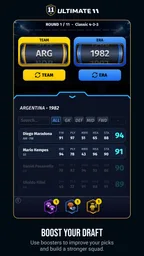
The first possible confusion is the meaning of “best” in a draft. A famous or appealing player is not automatically the right pick for every lineup. I would compare each option with what the team still needs, rather than selecting solely on recognition. That small habit is more valuable than trying to guess a hidden perfect strategy before you have had time to see how your squad performs.
Another point to keep in mind is that building a team and playing a traditional football match are not the same experience. The store’s description emphasizes drafting and a trophy chase, so I would approach it expecting roster decisions to be central. Players who want a deep club-management career, detailed coaching controls, or a conventional match simulator may be happier with another sports game designed around those things. This is not a criticism of the premise; it is a matter of choosing the kind of football game you actually want.
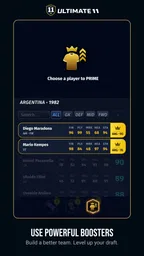
Progression can also make spending feel tempting, particularly if you are eager to improve a lineup quickly. My advice is to treat purchases as optional and avoid making one in response to frustration. Play enough to understand the ordinary pace first, then decide whether any paid item would genuinely add enjoyment for you. With purchase options stretching from about a dollar to nearly 300 dollars, checking the amount and the item before every confirmation is sensible, especially if a child is using the device.
There is a similar learning curve in judging a team. Resist the urge to change everything after one result. If you alter too many priorities at once, you will not know which decision helped. Instead, adjust one part of your draft approach and see whether the next lineup feels more coherent. That is a simple, low-effort way to get more from a game built around choosing a side.
Who is likely to enjoy it, and who may prefer something else
I would recommend giving it a try if you enjoy football, like assembling teams, and get satisfaction from making a limited set of choices work together. It could also suit a newcomer who wants a clear theme to follow rather than a sprawling sports-management workload. The game has more than 100,000 installs, and its current version is 1.10.10; it runs on Android 7.0 or later. Those details make it easier to judge basic compatibility, while the Everyone rating makes its intended age classification clear.
Someone who mainly wants realistic, hands-on match control should compare it with a football simulator before settling in. Likewise, if you dislike draft decisions or do not enjoy replaying a team-building loop to improve your outcome, the central appeal may wear thin. I would not choose it for detailed real-world club administration either: its identity here is about drafting a fantasy XI and pursuing a trophy, not recreating every responsibility of running a professional club.
Compared with the usual alternatives in sports games, Ultimate 11 sits closer to roster-building and draft challenges than to a pure match-day simulation. That difference is useful when choosing. A simulator is a better fit when the pleasure comes from controlling the action; a management game is stronger when long-term planning is the point. This one makes most sense when you want the quick, focused satisfaction of selecting a team and seeing whether your choices can carry you forward.
My next step after the first run
Once you have completed an early attempt, take a moment to identify one decision you would repeat and one you would change. That gives your next draft a direction without turning play into homework. I would also pay attention to whether the process itself is enjoyable, not just whether the outcome is successful. If choosing the XI is the part you look forward to, that is a good sign; if it feels like an obstacle between you and football action, a different game is probably a better match.
Ultimate 11 is at its best when I treat it as a football squad-building challenge, not a substitute for every kind of football game. Its free entry, clear team-focused premise, and Everyone rating make it approachable, while optional purchases and the draft-centered format call for a little awareness. Vaulty Studios Inc. has made a sports game with an easy-to-understand goal, and I would recommend it to friends who enjoy building a side from choices and improving their approach over successive attempts. If that sounds like your kind of football break, start with one draft, keep the plan simple, and let the first lineup teach you what to try next.
What we like
- Easy-to-learn controls make matches accessible to casual players.
- Quick matches suit short gaming sessions.
- Team management adds a strategic layer to the gameplay.
- Multiple player options encourage experimenting with lineups.
- Football-themed presentation makes the game easy to recognize.
What could be better
- Gameplay may feel repetitive after several matches.
- Limited depth may disappoint fans of realistic football simulations.
- Progress can take time if upgrades rely on repeated play.
- Touch controls may feel imprecise during fast moments.
- Some features may require an internet connection.







