


Flip Diving review
 Analysis by Appsdrops
The appeal of Flip Diving is easy to understand: a cliff edge, a stretch of water below, and the challenge of turning a dive into a clean landing. I found it best approached as a quick skill game rather than a serious sports simulation. The fun comes from learning how a small change in timing or body position can turn a neat entry into an awkward splash.
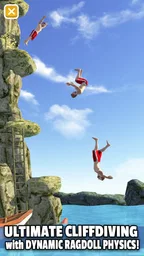
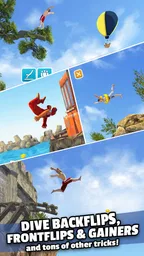
It is a sports game from MotionVolt Games Ltd, and its focus is deliberately narrow: perform dives and aerial tricks, then try to land well. That simplicity makes it easy to pick up when I have a few spare minutes, while the physics-based feel gives me a reason to try another attempt after a miss. It is not trying to reproduce a full diving competition, and that distinction matters when deciding whether it suits you.
What you get without paying
The game is free to download and play, so you can try its central diving challenge without an upfront purchase. It also offers in-app purchases priced from $0.99 to $9.99 per item. I would treat those as optional spending rather than assume they are needed to enjoy the basic premise; the most important question is whether repeating dives and improving your control feels rewarding to you.
That free entry point makes it a low-commitment choice for someone curious about a casual sports game. If you are deciding whether to spend, first see how much you enjoy the core loop: line up a dive, attempt the trick, and judge the landing. A purchase only makes sense if the available paid content appeals to you after that trial, not simply because the game presents an opportunity to spend.
Flip Diving has a 4.5 average from around 988,000 ratings and has passed 100 million installs. Those figures suggest that the simple, repeatable premise has found a broad audience, but they cannot tell you whether its particular timing and retry-focused play will suit your tastes. I would use them as context, not as a substitute for trying it yourself.
Why the diving loop can hold attention
A good attempt feels earned. The game’s central pleasure is not just seeing a diver rotate, but learning to control the sequence well enough to make the landing look deliberate. At first, I would focus on making a stable, straightforward dive instead of chasing the most elaborate stunt. That gives you a clearer sense of how your inputs affect the result and makes later experiments less frustrating.
One useful way to practise is to change only one thing between attempts. If you alter your timing and your chosen trick at once, a poor landing tells you very little. Keeping one part of the attempt consistent makes it easier to notice what helped, whether that is when you began a rotation or how ambitious a move you tried. This small habit turns repetition into practice rather than a string of guesses.
The physics emphasis also gives failure some character. A dive that goes wrong is not merely a generic “miss”; the appeal is watching a stunt become unbalanced and deciding how to adjust next time. That makes the game more engaging for players who enjoy experimenting with movement. If you prefer a clear progression of levels, story, or a wide roster of sporting events, the narrow focus may feel thin instead.
It works particularly well in short sessions. I can imagine opening it while waiting for a friend or taking a break, making a few attempts, and putting it away without needing to remember a plot or manage a long match. The same structure is less suited to someone looking for deep team tactics, realistic event management, or extended competitive play. Its strength is immediate interaction, not breadth.
Where the trade-offs show up
Repeated attempts are both the hook and the main limitation. When I am trying to improve a landing, restarting quickly is useful; when I want a steady stream of new situations, the same cycle can become repetitive. The central activity remains diving and performing stunts, so the game is a better fit for players who enjoy refining one skill than for people who need a fresh objective every few minutes.
The physics can also make early mistakes feel harder to diagnose than they should. A spectacularly poor result may be entertaining, but it is not automatically instructive. My advice is to resist the urge to make every dive more ambitious. Start with control, then add a trick once you can tell what your previous attempt did. That keeps the learning curve manageable and helps prevent frustration from turning into random button pressing.
There is a difference between enjoying a convincing sense of motion and expecting a complete simulation. Flip Diving’s premise is stylized and built around stunts; it should not be your first choice if you want detailed judging, the structure of a real competition, or the broader variety found in other sports games. A more conventional sports title is likely a better use of your time if realism and multiple disciplines matter more than quick, physics-driven attempts.
Spending deserves a little restraint, too. The game is free to start, but optional purchases mean the experience can include prompts or choices about paid items. I would decide in advance whether I am happy to keep playing at no cost, then avoid treating an optional purchase as a requirement for getting better at the basic challenge. The listed price range runs from $0.99 to $9.99 per item, so check the specific item in the app store before buying.
Who is likely to get the most from it
I would recommend it to someone who likes physics-based movement, short retries, and the satisfaction of gradually getting a tricky action right. It can also suit a casual player who wants a sports-themed game that does not demand a long session. The age rating is Everyone 10+, which helps families assess whether the game is appropriate for a younger player, though adults should still consider the child’s own preferences and comfort with the play style.
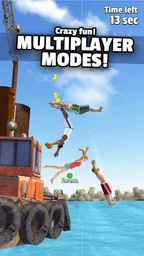
It is less compelling for someone who needs a strong sense of progression, enjoys managing a team, or wants multiplayer competition to be the central attraction. If your favourite sports games are about tactics and match results, cliff diving may feel like a side activity rather than a lasting pastime. Likewise, if you dislike repeating an action to improve your execution, the retry loop is unlikely to change your mind.
For an everyday test, try a short session when you have a few minutes free and set a modest goal: make a controlled dive rather than pull off the most daring stunt. If that small improvement feels satisfying, you have probably found the game’s strongest appeal. If you find yourself impatient with the repeated attempts, there is little reason to force it; a sports game with more varied events will likely suit you better.
How it compares with other sports games
Compared with a typical football, racing, or team-sports game, this is much more focused on one physical action. That focus is an advantage when you want fast access and a simple challenge, but a drawback when you want variety across a full season or a sequence of different events. It is closer to a compact stunt playground than a replacement for a larger sports title.
That comparison also helps set expectations about skill. You are not mainly learning a complicated set of team tactics; you are trying to make an individual movement work. Players who enjoy timing and experimentation may find this more inviting than a sports game with long matches. Those who want richer strategy, varied opponents, or a fuller sense of sporting progression should choose something designed around those priorities.
Flip Diving was released on August 17, 2016, and its current version is 4.8.00. It supports Android 6.0 and later. The long-running presence and large audience make it an established option in mobile sports, but the age of the release does not change the basic buying decision: the game’s value rests on whether its focused diving loop remains enjoyable for you.
My buy-or-skip verdict
I would try it for free if I wanted a light, skill-based game built around stunts and quick retries. The strongest reason to keep it is the small but satisfying process of learning how to make a dive look controlled. The strongest reason to skip it is equally clear: the narrow activity and repetition can wear thin if you need frequent changes of pace or a realistic sports structure.
My recommendation is to play without spending first, practise with simple attempts, and see whether improving your landings feels rewarding. Only consider an in-app purchase if a particular paid item genuinely appeals to you after that. With free access, an Everyone 10+ rating, and optional purchases, it is an easy game to sample; it is not automatically the right sports game for every player.
Overall, I see Flip Diving as a casual choice for people who enjoy experimenting with movement more than following a long campaign. It is worth a look if you want a few minutes of focused, physics-led play, but I would skip it in favour of a broader sports game if variety, realism, or extended competition is what you value most.
What we like
- Simple controls make dives easy to learn.
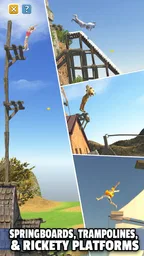
- Varied locations keep jumps visually fresh.
- Trick combinations add replay value.
- Unlockable divers offer clear progression.
- Short rounds suit quick play sessions.
What could be better
- Precise landings can take repeated attempts.
- Progress may depend on collecting in-game currency.
- Some divers and locations require unlocking.
- The physics can feel unpredictable at times.
- Advertising may interrupt the play experience.







