





Triple Find - Match Triple 3D review
 Analysis by Appsdrops
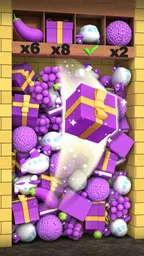
I find Triple Find most appealing when I want a small, focused puzzle break rather than a big game to sink into. It is a board game built around spotting matching objects in a three-dimensional-looking pile, then selecting sets of three. That familiar match-and-clear idea is easy to understand, but the crowded layouts make each turn a little search task: I have to notice what is available, judge what is obscured, and avoid filling my selection with pieces that do not help.
That makes it a natural fit for a short wait, a quiet moment at home, or a low-key break between other tasks. It is free to download, rated for Everyone, and published by LIHUHU PTE. LTD. The game has a 4.8 average from around 40,000 ratings, and has passed 10 million installs. Those figures suggest a broad audience, but they do not tell me whether its particular puzzle rhythm will suit you; the useful question is whether you enjoy patient visual sorting more than quick action or long-form strategy.
How the matching puzzle feels in practice
The central appeal is that the board asks for attention without requiring a long explanation. I scan a layered collection of objects, pick out three of the same kind, and try to keep the selection area from becoming cluttered with mismatched finds. The 3D presentation gives the search a sense of depth: an object may be easy to identify but less straightforward to reach when other pieces sit in front of it. That extra visual layer is what separates the experience from a flat row of identical tiles.
There is a useful distinction between recognizing a match and making a good move. When I spot two matching items, grabbing them immediately may feel satisfying, but the third could be hidden or harder to reach. It is often better to scan the surrounding pile before committing. Look for the full set, not just the first pair; that small habit can prevent a promising board from turning into a collection of unfinished selections.
The game’s board format makes it easy to return to after a distraction. I do not need to remember a story, a complex build, or a long chain of instructions to understand what I was doing. That convenience is also a limitation: if you want character development, tactical variety, or a substantial campaign, this kind of object-matching loop is unlikely to provide the depth you are looking for.
A better way to scan a crowded board
I get more out of the puzzle when I scan in passes instead of tapping whatever catches my eye. First, I look for objects that are already exposed and appear in groups. Next, I check whether a visible match depends on clearing another piece. Only then do I select items. This is a simple workflow, but it makes the board feel less like random searching and more like a small planning exercise.
Another practical tip is to pause briefly when the layout looks busy. Rapid tapping can turn a clearable board into a less manageable selection, especially if I have started collecting different object types without a plan. A moment spent checking what is still available can be more useful than reacting to the most noticeable shape. This is not an advanced system or a guaranteed route to success; it is a way to make the basic matching task more deliberate.
For a commute or a queue, I would treat it as a game to play in short stretches rather than assume every session will fit neatly into a specific number of minutes. The attraction is the quick-to-grasp objective, while the time needed can depend on how quickly I read the pile and how much I choose to think ahead. If you need a game that can be put down instantly without concern about an unfinished puzzle, check how a session feels for you before making it part of a tightly timed routine.
Progress, challenge, and the pressure to keep going
Triple Find’s challenge comes from visual attention and managing selections, not from learning a complicated set of controls. That makes the opening idea accessible, but it does not mean every board will feel effortless. A familiar rule can still create pressure when similar pieces are scattered through a dense arrangement. I like that the difficulty can come from noticing and planning rather than mastering a long control scheme, though anyone who dislikes searching through busy screens may find that same quality tiring.
It also has a particular kind of momentum: clearing a set gives a small sense of order, and that can make one more puzzle tempting. I would not mistake that satisfying loop for evidence of a deep progression system. The verified game details identify it as a board puzzle, but do not establish particular progression mechanics, timed modes, or competitive systems, so I would not choose it expecting those features. Its strongest case is the repeatable act of finding triples in a layered pile.
When I want to keep a session calm, I avoid turning each board into a race against myself. The puzzle rewards careful looking, and rushing is more likely to create messy selections than to make the task enjoyable. If you are seeking an intense reflex challenge, a fast arcade game will probably be a better match. If you enjoy visual order, spotting patterns, and making small decisions, the pace here is more inviting.
Spending, fairness, and what can be judged
The game is free to download and includes in-app purchases, with listed items ranging from $0.99 to $99.99 each. That is the practical spending context I would keep in mind before installing: you can try the core experience without an upfront purchase, but optional paid items are part of the app. A wide item-price range does not, on its own, explain what each purchase does or how necessary it is, so I would decide based on what the game actually presents rather than assume that every item is useful or required.
For fairness, I separate the puzzle’s basic appeal from questions about paid advantages. The confirmed facts do not establish whether purchases change puzzle difficulty, provide convenience, or affect any competitive outcome. They also do not establish that the game has player-versus-player competition. I therefore would not call it pay-to-win, nor claim that spending is irrelevant to success. If a purchase prompt appears, I would read its description carefully and ask whether it improves something I genuinely want before paying.
A sensible approach is to begin with the free experience and treat purchases as optional decisions, not as part of the entry requirement. That is especially useful if you are installing it for a child: the Everyone age rating describes the content classification, while in-app purchases mean it is still worth discussing spending controls on the device. I would not infer from the age rating that purchases are absent, or from their presence that the game cannot be enjoyed without them.
How it compares with other casual board puzzles
Compared with a conventional tile-matching game, the object pile gives this one more of a search-and-access feel than a neat grid where every candidate is already visible. Compared with a match-three game built around swapping pieces, the satisfying decision is less about arranging a line and more about finding three alike amid visual clutter. That makes Triple Find a better choice if you like scanning a scene and noticing what is available than if you prefer planning combinations several moves ahead on a fixed board.
It also occupies a different niche from word puzzles or number-placement games. Those ask me to reason through clues or rules; here, the main work is visual recognition and selection management. If you want to exercise vocabulary, arithmetic, or formal logic, another board game will serve that goal better. If you enjoy finding repeated objects and making order out of a crowded layout, the difference is a strength rather than a missing feature.
The trade-off is that object-based puzzles can become visually repetitive for players who want a changing strategic toolkit. I would choose this over a more involved puzzle when I want a low-barrier activity, but choose a deeper strategy game when I have time for planning, varied systems, or a longer-term goal. Neither style is automatically better; they answer different moods.
Compatibility, expectations, and who should skip it
The current version is 4.1.0, and the stated minimum operating system is Android 7.0. If you are considering an older Android device, that minimum is worth checking before you try to install it. The game is free, but the in-app purchases are a separate consideration, and its Everyone rating makes it broadly suitable in content terms. I would still supervise spending settings for younger players rather than treating an age label as a spending safeguard.
The game has around 3,300 written reviews in addition to its rating history, but I would not use popularity alone as a substitute for personal fit. A high average can tell me that many players respond well to it; it cannot predict whether you will enjoy searching a busy pile, or whether the pace will feel relaxing rather than repetitive. A quick trial is the most useful test: notice whether you like examining the board before tapping, and whether clearing a triple feels satisfying enough to bring you back.
I would skip it if you are looking for a story-driven adventure, a competitive multiplayer board game, or a puzzle with substantial strategic layers. Those expectations go beyond what is established about this title. I would also be cautious if crowded object layouts tend to strain your attention or patience. On the other hand, it suits someone who wants a straightforward visual puzzle and enjoys turning a cluttered arrangement into a series of tidy matches.
My verdict on whether it is worth trying
Triple Find is easiest to recommend as a casual pattern-spotting game, not as an all-purpose board-game collection. I like its clear premise and the extra thought that comes from searching a layered pile rather than simply matching pieces in an exposed grid. The best practical improvement is to scan before selecting, especially when only part of a triple is obvious. That habit makes the puzzle feel more considered and helps avoid a careless trail of unmatched objects.
LIHUHU PTE. LTD.’s game has a strong audience response, a free starting point, and optional purchases that range from $0.99 to $99.99 per item. Those facts make it approachable to try, while also giving me reason to stay thoughtful around purchase prompts. The limits are just as important: the core loop is focused, and players wanting narrative, competitive depth, or a different kind of reasoning should look elsewhere.
If you enjoy visual searches and small, self-contained decisions, I think it is worth giving a few boards a chance. If the first experience feels like squinting through clutter rather than spotting satisfying patterns, there is no need to force it; a grid-based match game or a logic puzzle may suit you better. My recommendation is conditional but clear: try it for relaxed triple-finding, keep spending deliberate, and judge it by whether the scanning itself is fun for you.
What we like
- Relaxing pace makes it easy to play in short sessions.,3D objects add a satisfying visual twist to matching.
- Simple rules are quick for new players to learn.
- Growing challenges help keep later levels engaging.
- Useful for practicing visual scanning and focus.
What could be better
- Timed levels can feel stressful for casual players.
- Small objects may be difficult to distinguish on phones.
- Repeated matching can become monotonous over time.
- Later stages may require several attempts to clear.
- Ads or optional purchases may interrupt the experience.







