
Traffic Racer Open World review
 Analysis by Appsdrops
I judge a mobile racing game by what it feels like in the small gaps of a day: can I get into a run quickly, does traffic make each drive engaging, and do online encounters add something rather than simply make the road busier? Traffic Racer Open World is aimed at players who want highway driving with other people in the mix, not a carefully staged circuit-racing experience. That focus makes it an appealing pick for quick, competitive sessions, but it also gives the game a narrower appeal than a racing title built around varied events or a deep career.
What to consider before choosing a highway racer
This is a free racing game from TOJ GAMES LLC, with a broad audience in mind: it carries an Everyone age rating and is available on Android devices running version 7.0 or later. It was released on July 7, 2022, and its current version is 0.7.0. Those details make it easy to see where it sits: an accessible mobile game designed around traffic racing, rather than a simulation that expects a controller, a long setup, or a specialist interest in motorsport.
The game has an average rating of 4.6 from around 313,000 ratings, and has passed 10 million installs. I take that as a sign that the basic idea has found a substantial audience, not as proof that every player will enjoy it. Highway racing depends heavily on whether you like making repeated moment-to-moment decisions—when to pass, how much risk to take, and when to ease off. If those choices are what make racing fun for you, the premise has a clear hook.
Before installing, decide whether you want a social road-racing feel or a more structured racing ladder. The store summary emphasizes online multiplayer, so I would choose this for the possibility of sharing the road and competing in a less traditional setting. If your priority is a clearly defined sequence of championships, a strong narrative, or realistic car handling, I would look at another type of racing game instead. That is not a knock on this one; it is a matter of matching its central idea to your own.
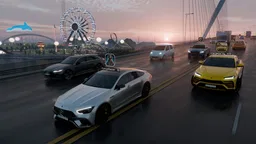
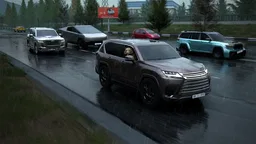
The word “open world” can also set expectations. I would not pick the game simply because that phrase suggests a huge, quiet map to explore at your own pace. Its identity is much more clearly tied to racing through highway traffic and online play. If you want a scenic driving app where the main pleasure is wandering, that is a different kind of experience. Here, the appeal is the tension and concentration of navigating a road while treating other traffic as part of the challenge.
Why traffic racing is the game’s strongest angle
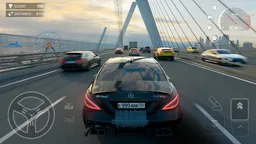
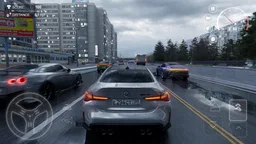
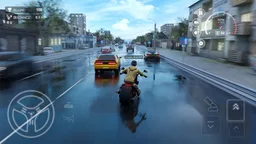
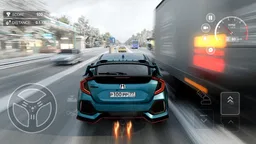
In a conventional circuit racer, the track tells you where the challenge is: braking points, corners, and the timing of a clean lap. In this game’s highway-focused setup, the useful question is more immediate: is there a safe opening, and is it worth taking? That makes it a natural fit for players who enjoy quick judgments more than memorizing a course. A good run is not just about pressing the accelerator; it depends on reading the road and choosing when not to force a pass.
That difference is also why I would treat it as a game for short bursts. Imagine having a few minutes before a bus arrives or while waiting for someone to finish an errand. A traffic racer can give that time a simple goal: start a drive, focus on the flow around you, and try to make better decisions than in your last attempt. It is an easier match for that situation than a game whose enjoyment depends on finishing a long event or keeping track of a complex progression system.
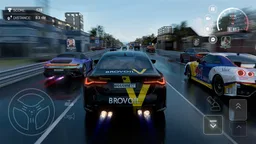
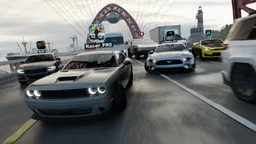
Online multiplayer gives the concept another draw. Driving around traffic alone can become familiar once you understand the rhythm; the prospect of other players makes the road feel less like a solitary test. I would especially recommend trying it when you want a casual competitive session with friends or other players, rather than when you are looking for the precision and fixed rules of a formal race. The social angle is a reason to choose this over a purely solo highway-driving game.
One practical approach is to treat each run as practice in restraint, not just speed. When traffic looks crowded, waiting for a clearer opening can be more satisfying than trying to squeeze through every gap. That is a useful way to keep a session from turning into repeated, impatient risk-taking. It also makes the game’s central road-reading challenge more noticeable: the best moment to move is not always the first moment you see space.
Another useful habit is to separate “I want a quick distraction” from “I want to improve.” For the first, jump in and enjoy the pace without expecting every run to be a personal best. For the second, pay attention to the decisions that led to a clean stretch or a bad one, especially whether a pass was necessary. That small shift gives the traffic-racing loop more purpose without assuming that the game offers a particular training mode or detailed statistics.
Where other racing games may suit you better
Compared with the usual alternatives, the key distinction is the shape of the driving challenge. Circuit racers are a better fit if you like repeating a course and refining your line through corners. Drag racers suit players who want short, narrowly focused contests. Open-world driving games may be preferable if you mainly want to roam without the pressure of passing traffic. Traffic Racer Open World is the more sensible choice when the mixture of highway driving and online competition is the thing you actually want.
It is also worth being honest about the limits of a traffic-first format. A highway road can keep you alert, but it does not necessarily provide the variety of a game that moves between tracks, event types, and different kinds of objectives. If you tire quickly of the same broad driving premise, the online element may not be enough to hold your interest. I would skip this one if you are already sure that you need a wide range of race formats to stay engaged.
Players who want meticulous simulation should be cautious too. A traffic racer is built around accessible, immediate decisions, so it is not the first place I would send someone searching for detailed car tuning, realistic racecraft, or a full motorsport season. Those are reasonable things to want, but they point toward another corner of the racing genre. This game’s strongest selling point is the road-and-traffic scenario, not evidence of a deep simulation toolkit.
Multiplayer also comes with a trade-off: the experience depends on whether you are in the mood for other people to be part of the session. If you want a calm solo drive, an online-oriented game may not be your best match. If you want a direct, organized competition, a racer centered on structured events could be clearer. I would choose this when shared highway racing sounds fun, and choose a different style when you want solitude or a more formal race format.
Free entry, purchases, and the cost of changing games
The game is free to download, which makes it straightforward to test whether its particular rhythm suits you. It includes in-app purchases ranging from $0.99 to $79.99 per item, so I would make a simple decision before spending: first see whether you enjoy the core traffic-racing experience, then consider whether anything offered in the game is worth paying for. A broad purchase range is a reason to be deliberate, not a reason to assume that payment is necessary to have a worthwhile first session.
If you are moving from another mobile racer, the main cost is likely to be a change in expectations rather than a complicated learning curve. A player accustomed to laps and cornering will need to focus more on openings and the behavior of surrounding traffic. I suggest giving the game a few sessions before deciding whether that change clicks. If you keep wishing you were back on a track, that is useful evidence that a circuit-based alternative fits you better.
Switching in the other direction is just as easy to think through. If you enjoy this game’s highway pressure but eventually want more varied goals, a broader racing title may complement it rather than replace it. Keep this one for short online drives and use another game for longer events or a more deliberate solo challenge. That division makes sense for players who like the traffic-racing idea but do not want it to carry every kind of racing mood.
Because it is designed for a broad age group, it can also be a reasonable option to consider for a younger player who wants a mobile racing game. I would still treat online play and purchases as decisions to make with the player’s age and habits in mind. The Everyone rating is useful context, while the presence of in-app purchases makes it sensible for a parent or guardian to review purchase settings before handing over a device.
My recommendation for the right kind of player
I recommend Traffic Racer Open World if you want a free mobile racer centered on highway traffic, quick decisions, and an online multiplayer angle. It is especially suited to someone who enjoys short sessions and finds it satisfying to judge openings rather than chase a perfect lap around a familiar circuit. Its large audience and strong average rating make it an easy game to consider, but I would still let the actual style of play—not popularity—make the final call.
I would pass if your ideal racer needs extensive event variety, a strong single-player structure, or simulation-focused handling. I would also look elsewhere if you want a relaxing drive without the pressure of traffic or other players. Those preferences do not mean you dislike racing; they simply point to a different kind of racing game. The useful question is whether navigating highway traffic sounds like the fun part, rather than a compromise.
For a first try, I would install it when you have a little time to focus, start with the basic idea of finding safe opportunities instead of forcing every pass, and see whether the online side makes the road more enjoyable for you. If it does, this is a convenient choice for quick competitive drives. If you find yourself wanting a track, a longer championship, or a quieter world, you will know early that another racing category is a better fit.
What we like
- Open-world roads offer more freedom than standard lane-based racing.
- Traffic density makes near misses and overtakes feel rewarding.
- A range of vehicles gives players different driving styles to try.
- Scoring encourages longer runs and careful risk-taking.
- Short sessions make it easy to play in spare moments.
What could be better
- Heavy traffic can make crashes feel difficult to avoid.
- Frequent close calls may become repetitive over time.
- Progression can take patience before better cars are available.
- High-speed play may be challenging for new players.
- Performance may vary on older or less powerful devices.







