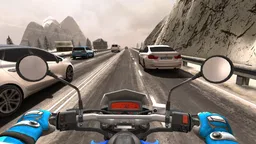
Traffic Rider review
 Analysis by Appsdrops
Traffic Rider is a first-person motorbike racing game built around a simple, demanding loop: ride through traffic, keep your speed up, and avoid turning a close pass into a crash. I like how quickly it gets to the point. There is no long setup before the road becomes the challenge, so it works well when I have a few spare minutes and want something that rewards concentration rather than elaborate planning.
Finding a steady rhythm on the road
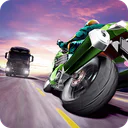
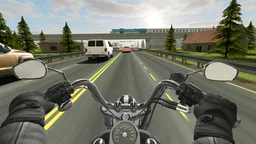
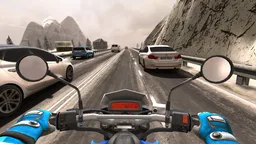
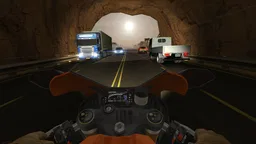
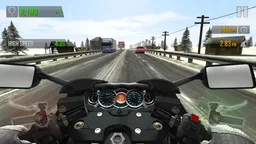
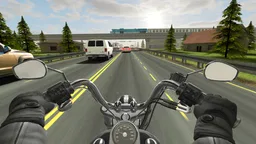
The first-person view is the defining choice. Instead of watching a bike from behind, I read the road from the rider’s perspective, judging gaps between vehicles and deciding whether to move past them or wait. That makes traffic feel close and immediate. A maneuver that looks harmless in a distant camera can feel much riskier when a vehicle fills the screen.
My most reliable starting habit is to prioritize a clean run over a dramatic one. I look well ahead, make small corrections, and avoid darting across lanes simply because a gap appears. In this game, a brief pause can be smarter than trying to squeeze through every opening. It is a small change in attitude, but it makes the ride feel more controlled and helps me learn how the traffic flows.
That approach also makes the game easier to pick up in short sessions. I can start a run, focus on reading the road, and stop when I have had enough without needing to remember a complicated sequence of actions. If I am playing while waiting for a bus or taking a short break, the immediate challenge is a plus. It is less suited to someone looking for a long, story-led racing experience with a gradual narrative payoff.
Traffic Rider is a racing game from skgames, released on January 11, 2016. It is free to download, rated for Everyone, and offers in-app purchases priced from $1.99 to $99.99 per item. The game has a 4.5 average from around 8.9 million ratings, with about 81,000 written reviews and over 500 million installs. Those figures show how widely it has been played, but what matters in practice is whether its focused riding loop suits you.
Settings that make a practical difference
Before settling into repeated runs, I recommend checking the control options and choosing a setup that feels predictable on your device. The key is not to chase the most aggressive control style; it is to find one that lets you make small, consistent adjustments. If steering feels twitchy, a run can become a test of correcting your own inputs instead of reading traffic. A calmer setup gives you more attention for the road.
It is worth trying the available control approaches in a low-pressure session rather than switching repeatedly during a strong run. Once a control method feels comfortable, keep it for a while. Familiarity helps you tell the difference between a genuine traffic mistake and an input that surprised you. I also suggest checking the sound and display preferences in a quiet moment, so you are not interrupting a good attempt to adjust them later.
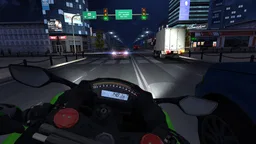
The first-person camera helps immersion, but it also means that visibility and your own comfort matter. If the view feels too intense or makes it difficult to judge gaps, take a short break instead of forcing a longer session. This is a reflex-heavy game, and tired eyes or rushed attention can make the same road feel much harder. A quick reset is often more useful than trying to recover from a string of near misses.
There is a useful distinction between changing a setting to make the game comfortable and changing it because a single run went badly. I try not to alter several things at once. If I adjust my controls, I leave the rest alone and see whether the next few rides feel more deliberate. That gives me a clearer sense of what actually helped, rather than turning each session into guesswork.
Repeatable habits for cleaner runs
Experienced play is less about constant swerving and more about repeating sound decisions. I scan beyond the vehicle directly in front of me, notice where the next opening is likely to be, and avoid committing to a lane change until I have a reason. This gives me time to respond when traffic closes a gap. The practical lesson is simple: plan one move ahead, not three, because a distant plan can become useless as the road changes.
Another helpful habit is to separate learning from chasing a personal best. In a learning run, I focus on staying composed and understanding how much room a pass needs. In a score-minded run, I use the same routine but accept that risk is part of the attempt. Mixing those goals can be frustrating: if I am experimenting with unfamiliar controls while also demanding a perfect result, every mistake feels like wasted effort.
I also avoid treating every close pass as proof that I should take more risks. A near miss may show that I chose a gap too late, not that I need to move faster. When a maneuver feels uncomfortable, I ask whether I could have made the decision earlier or simply waited for a better opening. That small review after a run turns failure into useful feedback without needing a complicated training plan.
A realistic use case is a short commute break: I can play one focused run, then put the phone away without losing track of a long campaign. For a longer session at home, I can repeat attempts and work on smoother judgment. The game’s immediate structure suits both situations, but I would not recommend playing while distracted or in any setting where the screen competes with real-world attention. Its close traffic demands focus.
Where the challenge—and the limits—show up
The same simplicity that makes the game easy to start can make it feel repetitive. If you want elaborate vehicle tuning, deep team management, or a detailed racing story, this is not the strongest match. Its appeal is the moment-to-moment task of navigating a busy road from the rider’s viewpoint. Players who enjoy improving their timing and keeping a run alive may find that loop satisfying; players who need substantial variety between rides may tire of it sooner.
It also asks you to accept that mistakes are part of the rhythm. A crash can end a promising attempt, and a small lapse in concentration may matter more than a grand strategic choice. That can be tense in a rewarding way, but it can also feel unforgiving when you are playing casually or using controls that do not suit you. I would not choose it as a relaxing background game: it works best when I can give the road my attention.
Compared with many other racing games, Traffic Rider puts less emphasis on arranging a full race against a field of opponents and more on personal control in moving traffic. That makes it a different kind of quick session from a conventional circuit racer. If you mainly want wheel-to-wheel competition, track layouts, and a sense of beating named rivals, another racing game may fit better. If the appeal is threading a bike through traffic and staying composed, this one has a clear identity.
The free entry point makes it easy to try, though the in-app purchase range is broad. I would treat purchases as optional and decide based on how much I actually enjoy the core riding, rather than assuming that spending is required to have a worthwhile first experience. The game is rated for Everyone, but that age rating does not mean every player will enjoy the speed, close calls, or repeated failure. Younger or more casual players may prefer shorter sessions and a familiar control setup.
Who I would recommend it to
I would recommend this game to someone who likes short, skill-based mobile challenges and enjoys making small improvements through repetition. It is especially appealing if first-person riding and close traffic feel exciting rather than stressful. Its large player base and 4.5 average rating suggest broad appeal, but personal taste still matters: the game’s central pleasure is a narrow one, and it does not try to be every kind of racer at once.
I would steer away from it if you want a slow, forgiving ride, extensive customization as the main attraction, or a campaign that carries you through a detailed plot. I would also skip a session when I am tired or distracted, since the view and traffic require steady attention. In those moments, a less demanding racing game—or no game at all—is the better choice.
My verdict after settling into its routine
What keeps me coming back is not a long list of modes or a complicated progression plan; it is the satisfying feeling of making a clean decision at the right moment. The best runs come from consistent controls, looking ahead, and resisting the urge to force every gap. Those habits are easy to explain but take practice to apply when traffic gets tight.
Traffic Rider is at its best when I treat each ride as a focused practice in timing. Its first-person perspective gives ordinary traffic a sharper edge, and its quick start makes it easy to fit into a spare moment. The trade-off is a deliberately focused experience that can become repetitive and punishing if you want variety or a relaxed pace. If you like mastering a compact challenge one run at a time, I think it is worth trying; if you want a broad racing package, I would look elsewhere.
What we like
- First-person riding makes traffic feel immediate and engaging.
- Career missions provide clear goals and steady progression.
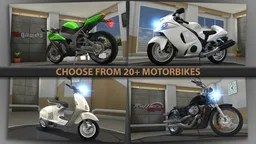
- A wide range of motorcycles gives players unlockable targets.
- Offline play makes it convenient during travel.
- Simple tilt and touch controls are easy to learn.
What could be better
- Frequent crashes can make missions frustrating.
- Upgrades and new motorcycles can require considerable grinding.
- The roads and environments can start to feel repetitive.
- Traffic behavior can seem unpredictable at high speeds.
- Ads may interrupt play unless removed through a purchase.







