





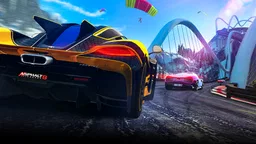


Asphalt 8 - Car Racing Game review
 Analysis by Appsdrops
The first time I spend a few minutes with Asphalt 8, its appeal is easy to understand: it turns a quick phone session into a loud, fast race, with cars and motorcycles sharing the spotlight. It is a free racing game from Gameloft SE, and its presentation aims for arcade excitement rather than careful driving simulation. That makes it approachable when I want immediate action, though the spectacle can also be a lot to take in on a small screen.
Why the first week feels so lively
The early draw is variety in motion. Races feel built around speed, jumps, and dramatic changes in direction, so I’m usually reacting to the track rather than planning a precise racing line. The motorcycle option adds a welcome change of feel for anyone who might otherwise tire of driving cars alone. If you enjoy racing games that reward bold moves and quick reactions, this style is much easier to pick up than a simulation that expects careful braking and tuning from the start.
That accessibility makes it a good fit for short breaks. I can imagine opening it while waiting for a ride, playing a race, and putting my phone away without needing a long setup. It also suits a casual handoff between friends: one person can enjoy the speed and crashes, while another can try a bike and see whether that feels more comfortable. The game’s broad appeal is reflected in its 4.6 average from around 12 million ratings, though a large audience does not mean every player will enjoy its arcade approach.
One practical tip is to give the controls a little attention before deciding whether the game feels right. Touch racing can feel less exact than a controller, especially when the track is busy and you’re trying to steer while reacting to other traffic or jumps. I’d use an early session to test the available control approach and settle on one, rather than changing methods mid-race. That small bit of setup can make the difference between feeling in control and blaming the game for every missed turn.
The visual rush is part of the hook, but it is also worth judging on your own device. Fast movement, bright effects, and detailed environments can make races feel energetic; they can also make it harder to read what is coming next if you prefer a calmer screen. I would try a short session before committing to longer play, particularly if you usually choose clean, minimal racing games. The point here is sensory excitement, not a quiet drive.
What keeps it worth returning to
For me, a racing game earns recurring space when a familiar track or vehicle still gives me a reason to play again. Asphalt 8 has a broad enough identity—cars, motorcycles, and multiplayer racing—that returning need not mean repeating exactly the same kind of session every time. Its useful everyday role is as a quick arcade option: I can choose a burst of competition when I have time, rather than treating it as a game that demands a long, uninterrupted evening.
The multiplayer angle is especially useful when I want competition that feels less predictable than racing against the game alone. It gives the title a social reason to reopen, whether I’m looking for a short challenge or want to compare how I handle a course against other players. Still, I would not choose it primarily as a guaranteed way to play with a particular friend at a particular moment; the appeal is the competitive race itself, not a promise of a specific social arrangement.
There is also a trade-off between spectacle and skill expression. The arcade style makes races exciting quickly, but players who want a restrained, realistic driving model may find that speed and stunts matter more to the experience than finely measured cornering. Compared with more simulation-focused racing alternatives, this is the one I’d pick for immediate energy, not for practicing realistic lines or building a serious motorsport routine. If your favorite part of racing is mastering subtle handling, a more grounded game may hold your attention longer.
Long-term value depends on whether the game’s repeatable action stays enjoyable after the first rush. The initial novelty of flying through a race can fade, so I’d make a simple habit of playing when I genuinely want a lively competition rather than checking in out of obligation. A session before a commute or during a short wait is a better fit than expecting every race to feel like a major event. That approach keeps the game in the role it serves best: a fast, entertaining diversion.
Keeping the game comfortable to maintain
Asphalt 8 is free to download, but it includes in-app purchases ranging from $0.29 to $149.99 per item. I’d treat those as optional spending, not as a reason to rush through the game or buy something before I know how often I’ll play. A sensible approach is to set a personal spending limit in advance and see whether the normal rhythm of play is enough for you. If you dislike games that offer paid items at all, this is a meaningful drawback even if you never make a purchase.
The game’s age rating is Everyone 10+, which is useful context for families deciding whether it suits a younger player. I would still have a parent look at the purchase options and decide what controls are appropriate before handing over a device. That is a practical step for any free game with optional purchases, and it prevents an entertaining racing session from turning into an unexpected spending conversation.
Its current version is 9.2.0i, and it requires Android 7.0 or later. Those details matter when deciding whether to install it on an older phone or tablet. Before downloading, I’d check that the device has enough room and that the operating system meets the requirement; a game built around fast visuals is not an ideal choice if the device already struggles with demanding apps. I would also keep the game updated through the app store, since staying current is the simplest way to avoid using an outdated build.
Maintenance is not just about updates. The real cost is attention: deciding how much time you want to give a game designed around quick, exciting races and whether optional purchases will be a distraction. I would avoid turning it into a daily chore. If I find myself opening it only to keep up with a routine, rather than because I want a race, that is a sign to take a break. A game that earns space should be enjoyable on its own terms, not another task on the phone.
Where the excitement can wear thin
The same intensity that makes the first races memorable can become tiring. When every session leans on speed and spectacle, I may want a more thoughtful racing experience after a while. Players who prefer clean tracks, measured pacing, and a strong sense of vehicle precision should consider a simulation-oriented alternative instead. Likewise, someone looking for a relaxed game to play while dividing attention may find that a fast race demands more focus than expected.
Another possible frustration is the gap between wanting to race and feeling ready to manage a game with ongoing content and purchase options. Free-to-play can make it easy to try the game, but the presence of paid items may affect how some people view progression and value. I wouldn’t assume that spending is necessary, nor would I promise that every player will be happy ignoring the purchase layer. If you strongly dislike that model, a paid racing game with a simpler purchase arrangement may be a better match.
The controls are a personal dividing line, too. Someone comfortable with touch steering may settle in quickly, while a player who expects exact inputs could find mobile handling imprecise. I’d test the game in a short session and pay attention to whether missed turns feel like a learning curve or a genuine mismatch. If it remains frustrating after trying a control style that feels natural, there is little reason to force the fit simply because the game is popular.
Its scale is impressive: it has passed 500 million installs and has about 285,000 written reviews. Those figures point to broad reach, but popularity is not the same as lasting personal value. I’d use them as reassurance that the game has attracted a substantial audience, then make the decision based on whether its arcade racing, busy presentation, and optional spending model suit my own habits.
Who should keep it installed
I’d recommend Asphalt 8 to someone who wants an energetic racing game for short sessions, likes both cars and motorcycles, and enjoys competing in a fast arcade style. It is particularly easy to recommend if you want to try a racing game without paying to download it and are comfortable treating purchases as optional. Gameloft SE has built a recognizable, accessible kind of mobile racing here, and the combination of quick action and multiplayer gives it more than a one-time novelty.
I’d skip it if you want realistic handling, a restrained visual style, or a game with no in-app purchase options. I would also look elsewhere if your phone runs demanding games poorly or if you want a carefully paced experience that rewards patience more than reflexes. For those players, a simulation-focused racer—or simply a less intense driving game—will probably be a better use of screen time.
My long-term verdict is that it can earn a place on a phone, but it does not need to become a habit. I’d keep it installed for the days when I want a loud, immediate race and remove it if the repetition or purchase prompts start to outweigh the fun. With an Everyone 10+ rating, a free entry point, and a huge player base, it is easy to try; whether it stays is a question of taste. If arcade speed is what you want, this is a strong option. If you need depth through precision and calm, choose a different kind of racer.
What we like
- A large car roster offers plenty of vehicles to unlock.
- Airborne stunts make races feel fast and varied.
- Multiple game modes provide alternatives to standard races.
- Vehicle upgrades let players tune cars to their preferences.
- Touch controls are easy to learn on mobile.
What could be better
- Progress can feel slow without spending money.
- Ads and purchase prompts may interrupt the experience.
- Upgrades can make competitive racing feel pay to win.
- The game requires substantial storage space.
- Online races depend on a stable internet connection.







