


The Real Juggle: Soccer 2026 review
 Analysis by Appsdrops
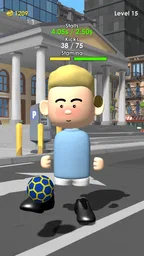
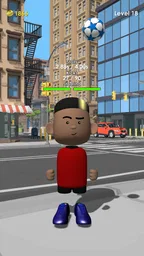
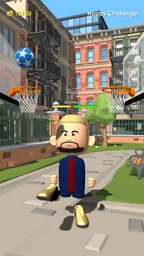
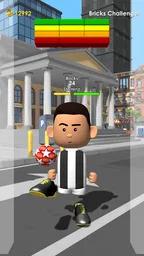
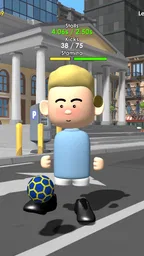
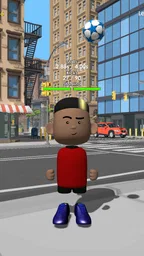
I approached The Real Juggle as a quick football game for spare moments rather than a substitute for a full soccer simulation. Its appeal is the focused idea of freestyle ball control: you try to keep a ball moving through juggling-style play, aiming to improve your touch and beat your own performance. That makes it easy to understand at a glance, but the simple premise also puts pressure on the controls and repeat play. If those feel satisfying, a short session can be absorbing; if you want team tactics, matches, or a deep career, this is not the kind of soccer game I would choose.
What the free download gives you
The game is free to download, so you can try its core style without paying upfront. That is the clearest part of its value: there is no purchase decision required before you find out whether a one-ball freestyle challenge is your kind of sports game. The listing also shows optional in-app purchases priced from $0.99 to $24.99 per item. I would treat those as optional spending, not as a necessary entry fee, and decide whether anything offered is worth paying for only after you have played enough to know what you enjoy.
That distinction matters because a free download does not automatically mean the whole experience is free of friction. The existence of in-app purchases tells you that spending options are present, but it does not establish what each purchase contains or whether it changes play in a meaningful way. I would not budget for an upgrade in advance. Start without paying, see whether the basic loop holds your attention, and make any purchase only if its purpose is clear in the game itself.
The Real Juggle: Soccer 2026 is a sports game from Lion Studios, and the store describes its focus as professional freestyle football. In practice, that narrow focus is both the main attraction and the main limit. You are not choosing formations, managing a club, or playing through a conventional match. The game is built around the pleasure of keeping a football alive with controlled touches, so its value depends more on whether that small challenge feels rewarding than on how much variety you expect from a broader soccer title.
A compact challenge, not a match simulator
I find that the best way to approach this kind of game is to think in short attempts. A few minutes during a break, while waiting for someone, or at the end of the day are a more natural fit than settling in for a long session. The central task is immediately legible: pay attention to the ball, make your touches count, and try to sustain control. That directness can be refreshing when I do not want menus, team selection, or a long match to get started.
It also makes the game unusually easy to share as a casual challenge. A friend who does not follow soccer closely can still understand what you are trying to do, because the goal is physical and visible rather than tied to tactics or player statistics. If you are taking turns, I would keep the comparison informal: agree on a similar attempt and focus on who can stay composed longer. That avoids treating a single run as a definitive measure of skill, especially when timing and comfort with the controls can take practice.
The useful skill here is not the same as learning a realistic football simulation. You are working on timing, attention, and consistency within a deliberately narrow activity. That can suit someone who enjoys chasing a cleaner attempt or improving a small personal benchmark. It is less satisfying if you want the game to teach you how to pass, defend, or build an attack in a full match. A freestyle juggling game can be soccer-themed without being training software for every part of soccer.
How to make short sessions feel worthwhile
One practical tip is to treat early attempts as control practice rather than as a test of talent. If you immediately chase a long streak, a small mistake can make the session feel like failure. I get more value from noticing what happened just before a miss and making one adjustment on the next try. This turns repetition into a simple learning loop instead of mindless restarting, and it helps reveal whether the challenge is engaging enough to keep playing.
Another useful habit is to play in a setting where you can give the screen your attention. A juggling task rewards steady focus, so it is a poor fit for moments when you are walking, distracted, or trying to do something else at the same time. For a realistic everyday use case, I would open it while waiting for a coffee or during a short pause between tasks, then stop when the break ends. That keeps the game’s quick-session appeal without expecting it to fill an entire evening.
There is also a trade-off in how narrow repetition can become. A compact skill challenge is satisfying when each attempt gives you a reason to adjust, but repeated tries can start to feel alike if you are looking for new match situations. I would use it as a small side game, not as my only sports title. If variety is what keeps you engaged, a conventional soccer game with fixtures, opponents, and broader decisions will likely offer more to explore, even if it asks for more time and attention.
Who is likely to get good value
I would recommend trying it if you like football culture but do not always have time for a full match. It is especially suited to players who enjoy dexterity challenges, brief retries, and the satisfaction of making a simple action more consistent. The format is approachable for casual players because it does not require knowledge of league tables or tactical systems. Its Everyone age rating also makes it broadly accessible, though that rating alone does not tell you whether a particular child will enjoy repeated skill attempts.
It may also appeal to someone who wants a low-commitment game to keep on a phone for idle moments. The free starting point makes that experiment easier: you can see whether its rhythm suits you before considering any paid option. The game has reached more than 50 million installs, while its average rating is 3.1 from around 89,000 ratings. I read that combination as a reason to approach it with measured expectations, not as proof that it will or will not suit you. The core idea is clear, but individual tolerance for repetition and control feel makes a big difference.
I would skip it if your idea of a soccer game means competing in full matches, building a squad, or controlling several players at once. It is also not my first recommendation for someone who dislikes retry-based challenges or gets frustrated when small timing errors interrupt a run. In those cases, a more traditional football game is the better choice. If you mainly want a relaxed, varied sports collection, a game with several activities may also be a better use of your time than one centered on freestyle control.
What the ratings and version tell me
The game was released on March 14, 2019, and its current version is 1.13.18. It requires Android 7.1 or later, which is useful to check before downloading on an older device. Those details establish a practical compatibility point, but they do not tell me how it will feel on every phone. If you are deciding whether to install it, the sensible test is to try a short session on your own device and judge responsiveness and comfort for yourself.
There are around 2,100 written reviews, alongside the broader rating count. I would use those figures as context rather than as a substitute for your own test. Ratings can reflect different expectations: someone hoping for a full soccer game may judge it differently from a player who wants a quick freestyle challenge. The lower average is a reason not to assume universal appeal, while the large install count suggests the basic concept has reached a wide audience. Neither tells you whether the loop will hold your attention after the first few sessions.
The practical purchase question is therefore simple: do not pay just because the game is free to download and offers purchases. First check whether you enjoy the core activity in its unpaid form. If the repeated juggling challenge gives you a satisfying reason to return, then you can assess any in-app offer on its own merits. If you are already tiring of the main loop, spending is unlikely to solve that mismatch. I see the free entry as a chance to test fit, not a promise that every part of the experience has no cost.
My verdict for a casual football break
For me, The Real Juggle works best as a focused little sports game: easy to understand, suited to short pauses, and built around improving a single kind of control. I would keep it in mind for someone who likes football but wants a quick challenge rather than a complete simulation. Its value comes from how enjoyable that repeated skill test feels to you, not from the scale of a soccer career or the breadth of a match-day package.
The trade-off is clear. You get a direct freestyle premise and a free way to try it, but the same narrowness can make sessions feel repetitive, and optional purchases deserve a cautious look rather than an automatic yes. My buy-or-skip advice is to download it if brief juggling challenges sound fun, play without spending first, and move on if you are looking for matches or wider variety. The best value here is the chance to test a specific football skill loop before committing money or much time.
What we like
- Simple swipe controls make juggling easy to pick up.
- Short rounds suit quick play sessions.
- Timing and touch provide a satisfying skill challenge.
- Soccer-themed visuals give the game a clear identity.
- Progress depends on practice rather than complex controls.
What could be better
- Ads may interrupt the experience.
- Repeated juggling can feel monotonous over time.
- Precise timing may frustrate new players.
- Progress can feel slow without frequent successful runs.
- The focus on juggling offers limited soccer variety.







