






Stunt Bike Extreme review
 Analysis by Appsdrops
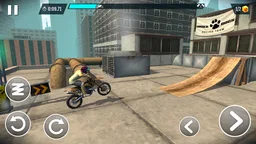
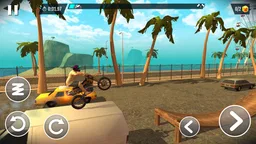
I enjoy motorcycle games most when the challenge comes from reading the track rather than simply holding the accelerator. Stunt Bike Extreme is a racing game built around that kind of trial riding: its appeal is the prospect of tackling stunt-focused courses and learning how to guide a bike through them. It is free to start, and the app is made by Hyperkani. I’d consider it for short bursts of focused play, especially if the satisfaction of improving a tricky run matters more to you than realistic racing or a long story.
What kind of ride you are choosing
The game’s presentation points toward a compact, challenge-led experience rather than a conventional race between a field of riders. That distinction matters. If you want to settle into a realistic circuit racer, tune a machine in detail, or follow a career narrative, this is not the first game I would choose. If you like the trial-bike idea of balancing control against momentum, though, its central premise is a better fit.
One useful way to approach a trial course is to treat it as a sequence of small decisions instead of one continuous sprint. A steep rise, a gap, or an awkward landing asks for a different pace, and repeating a section can teach you more than charging through the whole course again. That makes the game suitable for a quick break: I can focus on one obstacle, notice what went wrong, and try a more deliberate approach without needing to commit to a lengthy session.
The store’s average rating is 4.7, based on around 166,000 ratings, and the game has passed 50 million installs. Those figures suggest a broad audience, but they do not tell me whether its particular handling style will suit you. The key question is whether you enjoy learning through retries. Trial riding can feel rewarding when a careful adjustment works; it can feel irritating if you expect every attempt to produce immediate progress.
Controls, patience, and the learning curve
With stunt riding, small changes in speed and balance can matter more than raw acceleration. My practical advice is to resist the urge to treat every obstacle as a jump to attack at full speed. When a run goes badly, change one thing on the next attempt—your approach, timing, or willingness to slow down—rather than making several guesses at once. That gives each retry a purpose and helps you work out whether the problem is your line or your pace.
This is also where expectations matter. The store summary invites players to explore a trial-racing setting, but that broad pitch should not be mistaken for a promise of a particular control scheme or a specific progression structure. What is clear is the trial-bike focus. I would judge it by whether that focus feels satisfying on your device, not by expecting the breadth of a full motorsport simulator.
For a realistic everyday scenario, imagine having a few minutes while waiting for a ride or taking a break between tasks. A short attempt at a difficult section can be a good fit because the challenge is easy to understand: get through the obstacle more cleanly than last time. If you prefer games that pause naturally between rounds or let you make progress without concentrated inputs, the demands of precision riding may be less relaxing than they sound.
Progress without turning every retry into pressure
Trial games naturally create a loop of attempt, mistake, adjustment, and another attempt. That can make progress feel personal: you improve because you understand the course better, not just because time has passed. A useful habit is to notice the exact point where a run starts to unravel. If the bike loses control after a fast approach, a calmer entry may be worth testing; if the difficulty is a landing, focus on arriving in a more stable position rather than trying to shave time everywhere.
That advice is about how to approach this style of game, not a claim that the app has a particular replay tool, checkpoint system, or training mode. I would rather keep the distinction clear than promise conveniences that may not be there. The same caution applies to progression: the available facts establish the game’s identity and purchase context, but do not describe how its levels, unlocks, or rewards are arranged.
The game is free to download, with in-app purchases listed from $0.49 to $94.99 per item. That range is worth knowing before you begin, especially if you share a device with a child or prefer games where spending is never part of the experience. It does not, by itself, show what any individual purchase contains, how often the game presents offers, or whether buying something changes the difficulty. I would start without spending and decide only after seeing how the actual play feels.
Its age rating is Everyone, which makes it broadly accessible as a game choice, but that rating is not a guide to purchase controls. If you are setting it up for a younger player, use the device’s purchase-approval or spending controls rather than assuming the rating answers questions about transactions. That is a sensible precaution for any free game with optional purchases, and especially useful when the listed item prices cover such a wide range.
Fairness, spending, and what can be judged
I can confirm the presence of in-app purchases and their listed price range; I cannot responsibly infer what they buy or whether they affect competitive balance. The game’s racing category alone does not establish that it has online competition, leaderboards, or paid advantages. So I would not describe it as pay-to-win, nor would I promise that spending is irrelevant to performance. Those conclusions require details that are not established here.
For a player deciding whether the free download is worth trying, the practical approach is straightforward: install it, see whether the handling and course challenges hold your attention, and keep purchases disabled or approval-protected until you know what is being offered. If you are mainly looking for a fair head-to-head contest, first check the game itself for the kind of competition you want. If your priority is mastering a stunt course alone, the trial-riding premise may be enough to make a free test worthwhile.
Compared with the usual alternatives in racing games, this is a more specialized choice than a standard circuit racer or traffic-dodging game. Those often emphasize speed, overtaking, or a broad vehicle collection; a stunt-bike trial experience instead puts the obstacle and your control of the bike at the center. That narrower focus can be a strength when you want a specific mechanical challenge, but a limitation if you want variety across race formats or a social competition scene.
Compatibility and practical expectations
The current version is 0.582, and the minimum Android requirement is 8.0. That gives Android users a concrete compatibility check before downloading. The game is free, so there is no upfront purchase to weigh against that requirement, though the optional item prices are still relevant if you choose to buy anything. It was released on December 27, 2023; that date helps place its launch, but it does not by itself indicate how frequently the game is updated.
Hyperkani is the developer behind the game. I’d keep the decision focused on the experience rather than the name: does a trial-bike challenge sound more appealing than ordinary racing, and are you comfortable with a retry-driven style? A high average rating and a large install count can be reassuring signs of reach, but neither substitutes for that personal fit. A player who dislikes precise control or repeated attempts may not enjoy it, even if many others do.
One limitation I would keep in mind is that the short store description does not answer the practical questions some players care about most: whether there are modes beyond the core trial riding, how progression works, or what purchases provide. Rather than fill those gaps with guesses, I would treat them as things to inspect in the app before investing time or money. That is especially important if you are choosing a game for a particular feature, such as offline play or online races.
Who I would recommend it to
I’d recommend giving it a try if you like motorcycle trials, enjoy learning a course through repeated attempts, and want a free racing game with a focused premise. It may also suit someone who prefers a small, concrete goal over a sprawling campaign: get past the obstacle that stopped you, then decide whether to continue. The most rewarding mindset is patient experimentation, not expecting every run to be clean on the first go.
I would steer you elsewhere if you want realistic road racing, extensive vehicle setup, a story-led career, or confirmed competitive features. I’d also skip it if repeated precision challenges tend to feel like chores rather than satisfying puzzles. In those cases, a conventional racing game with the mode and style you already know you enjoy is a safer choice than hoping a trial-bike format will become something else.
Overall, Stunt Bike Extreme looks like a clear, narrowly focused option: a free stunt-racing game from Hyperkani for people drawn to controlling a bike through trial-style challenges. Its strong audience reach is encouraging, while the purchase range deserves sensible guardrails and the unspecified details should not be mistaken for guarantees. I’d try it without spending, judge the handling for myself, and keep it installed only if the process of learning each obstacle feels fun rather than frustrating.
What we like
- Responsive controls make midair adjustments feel precise.
- Short levels suit quick play sessions.
- Bike upgrades add a sense of progression.
- Varied obstacles keep tracks engaging.
- Offline play works well for gaming on the go.
What could be better
- Tricky landings can lead to frequent crashes.
- Some upgrades may require substantial grinding.
- Repeated retries can make progress feel slow.
- Ads may interrupt the flow between levels.
- Later tracks can feel punishing for casual players.







