



Sticker GO! review
 Analysis by Appsdrops
I judge a sticker-trading game less by how many collections it offers than by how easy it is to understand what I need, make a trade, and get back to my day. Sticker GO! is a board game built around collecting and exchanging stickers, with a community element that gives trading a central role. That focus can make it a pleasant companion for players who enjoy coordinating with other collectors. It also means the experience depends on more than the game itself: reading the interface, managing interactions, and finding a comfortable way to participate all matter.
Developed by Ganko, the game is free to download and is rated for Everyone. It has a 3.6 average from around 66,000 ratings, and more than 5 million installs. Those figures suggest a large audience, but the average rating is a useful reminder that popularity does not guarantee a smooth fit for every player. I would approach it as a social collecting game, rather than as a self-contained board game that will satisfy someone who wants purely solo play.
Understanding the screens and the trading loop
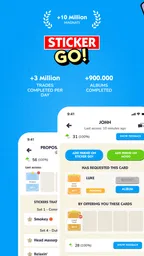
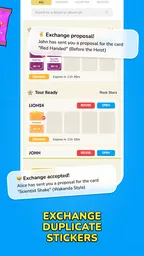
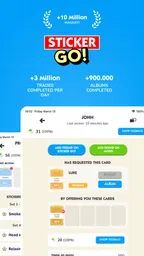
The clearest reason to try Sticker GO! is its straightforward premise: stickers are something to collect, and trading gives you a way to connect with other players. That makes the game’s basic purpose easy to explain to a friend. If you already enjoy sticker albums or board games with a collecting angle, you can quickly decide whether the central activity appeals to you.
For accessibility, though, a simple premise is only one part of the picture. A player still needs to be able to read the information on screen, distinguish what they have from what they are looking for, and follow the steps involved in a trade. I would pay particular attention to those tasks during an initial session. Rather than rushing into a large number of exchanges, first work out how you identify a useful trade and what you need to check before confirming one.
That slower start is practical even for players without specific access needs. Sticker collections can turn a quick game into a sequence of small decisions: which missing item matters most, whether a proposed exchange helps, and whether it is worth spending time arranging it. Keeping a short personal note of the stickers you want can reduce repeated checking, especially if you tend to play in brief sessions. It is a simple workaround, not a claim that the game offers a particular tracking tool.
There is also a useful distinction between trading as a feature and trading as a social activity. The game’s community focus may be appealing if you like communicating with other collectors, but players who find open-ended interaction tiring may prefer to approach it selectively. I would set a small goal for each visit—such as finding one worthwhile exchange—rather than treating every session as a race to complete a collection.
Reading, contrast, and visual comfort
Sticker games naturally place emphasis on visual items, so anyone with low vision, color-vision differences, or difficulty distinguishing small details should test the actual screens on their own device before committing time or money. A sticker image may be easy to recognize at one size and harder to compare when several options appear together. The important question is not simply whether the artwork is attractive, but whether the information needed to make a decision is clear enough for you.
I recommend checking the game in the display conditions where you expect to use it. Try a bright room, a dim room, and your usual screen brightness; then see whether names or other identifying details remain readable without relying only on color or fine visual differences. If your phone’s built-in display enlargement or text adjustments help, it is worth seeing whether they make the screens easier to use. These are general device-level options, and their effect can vary from one screen to another.
One non-obvious way to make trading more manageable is to avoid comparing many stickers at once. Focus on a single need, inspect a potential exchange, and then decide. This reduces visual scanning and makes it easier to notice a mismatch before acting. If you have trouble remembering which item you meant to seek, a note outside the game can also help. The trade-off is that switching between an app and a note takes extra attention, so it is most useful when you are planning a longer session rather than playing casually for a minute.
The game’s overall rating sits at 3.6, which I take as a reason to try it with realistic expectations rather than assume every part of the experience will feel polished. Ratings do not tell me which particular screen or interaction causes difficulty, and they cannot predict an individual player’s experience. For a reader who relies on large text, screen readers, or strong contrast, hands-on testing is especially important. I would not choose it solely on the strength of its collecting idea if visual access is a deciding factor.
Motor and sensory demands of trading
Trading can involve repeated, deliberate interactions, and that may be a better fit for some players than fast, continuous play. If you have limited dexterity, hand pain, tremors, or fatigue, notice whether the actions you need are comfortable to repeat on your phone. A sensible approach is to play in short bursts and stop when interactions become uncomfortable, rather than trying to finish a long trading session in one sitting.
There is a practical trade-off here: community-based collecting can make progress feel more purposeful, but arranging exchanges may ask for more attention and interaction than a quiet solo board game. If you prefer minimal input, little social coordination, and a predictable pace, a conventional single-player board game may suit you better. If you enjoy negotiating a useful exchange and can manage the interaction comfortably, the social side may be exactly what keeps the collection interesting.
Sensory comfort is also personal. Some players enjoy a lively game environment; others need to limit visual stimulation, sound, or time spent looking at a screen. I would begin with a brief session and pay attention to whether the presentation feels tiring. If audio or motion is uncomfortable, check your device settings and the game’s own controls where available, but do not assume a particular adjustment exists. Taking breaks and playing somewhere with comfortable lighting are reliable first steps that do not depend on a special feature.
A useful everyday scenario is a short break between errands. Instead of opening the game with the goal of completing a large task, you could check whether there is one trade worth pursuing, make that decision, and close it. This keeps the activity bounded and helps avoid the feeling that social collecting demands constant attention. It is also a good way to learn whether the interaction style suits you before making the game part of a regular routine.
Playing in different places and at different paces
Sticker trading can fit around small pockets of free time, but a community activity is not always equally convenient in every setting. On a commute, in a noisy waiting room, or while someone is speaking to you, it may be harder to concentrate on comparing items or communicating clearly. I would save decisions that require careful checking for a calmer moment. That is not a drawback unique to this game; it is a consequence of making trades thoughtfully rather than tapping through them distractedly.
For players who share a device or need help from a family member, agree on who is making decisions before trading. A second person can help read or compare options, but the collector should remain in control of which exchanges they want. That small boundary matters in a game where the appeal comes from building a collection according to personal priorities, not simply completing actions as quickly as possible.
The age rating is Everyone, so the game is presented for a broad audience. Still, an age label alone does not tell a family how much social interaction or spending will suit a particular child. The game includes in-app purchases ranging from $1.99 to $39.99 per item. I would review purchase settings on the device and talk through spending expectations before handing it to a child, especially if the phone can make purchases without an adult’s approval.
The game is free, which makes trying it relatively straightforward, but optional purchases change the value calculation for anyone who is sensitive to spending prompts or prefers a strictly no-cost hobby. I would first see whether the collecting and trading loop is enjoyable without buying anything. If you are looking for a game that never puts paid options in view, this may not be the most comfortable choice; a traditional board game app without in-app purchases would be a better match.
Where it may still create friction
The biggest limitation is built into the concept: trading is most meaningful when you are comfortable engaging with a community. Someone who wants an entirely private, independent experience may find that the central attraction is also the main obstacle. Likewise, players who dislike checking collections, weighing exchanges, or spending time on small decisions may prefer a board game with a clearer beginning and end to each round.
There is also a difference between being able to open a game and being able to use it comfortably over time. A player might manage the first few screens but find repeated visual comparisons tiring, or enjoy collecting while finding the social side demanding. I would treat that distinction seriously. Test one short session, then ask whether the process felt clear and comfortable—not just whether the idea sounded appealing beforehand.
The current version is 7.0.520, and the game runs on Android 7.0 or later. That gives Android users a concrete compatibility check before they install. The release date is February 8, 2024, but what matters more to a prospective player is whether their device supports the current version and whether the on-screen experience works for them. On iOS, I would check the app store’s compatibility details for the device in hand rather than assume Android requirements apply.
As a comparison with usual board-game alternatives, Sticker GO! is less about sitting down for a self-contained match and more about collection management and exchanges with other people. A classic digital board game is generally the better choice if you want a defined session with little social coordination. A solo puzzle or collection game may work better if trading is not part of the appeal. This game has a clearer case for someone who enjoys the social process of finding and making a useful sticker exchange.
Who I would recommend it to
I would recommend giving it a try if you already like sticker collecting, enjoy talking with other players, and are comfortable making repeated visual comparisons on a phone. It may also suit someone who wants a low-commitment activity to revisit in short sessions, provided they can keep trading focused and avoid feeling pressured to stay engaged continuously.
I would be more cautious if you need highly legible text, have difficulty with small visual distinctions, experience discomfort from screen use, or strongly prefer games with no social coordination. Those are not reasons that every player in those groups will struggle, but they make a hands-on trial more important. If the first session feels confusing or tiring, changing your play pace or using device display settings may help; if it still feels burdensome, a simpler solo board game is likely the kinder choice.
My overall view is that Sticker GO! offers a specific kind of fun: collecting becomes more interesting when you enjoy the human side of trading. Its free entry point and broad age rating make it easy to consider, while optional purchases and the need to navigate exchanges deserve a little care. I would start with one small collecting goal, check that the screens and interactions feel comfortable, and only then decide whether its community-centered style belongs in your regular game rotation. For players who want that social layer, it has a clear appeal; for anyone seeking quiet, fully independent board play, there are better-fitting alternatives.
What we like
- Scans sticker albums to help track missing and duplicate stickers.
- Makes it easier to find trading partners for needed stickers.
- Supports multiple album collections and events.
- Offers a clear overview of collection progress.
- Useful for organizing trades with other players.
What could be better
- Requires an internet connection for many features.
- Trading depends on finding active and reliable players.
- Some features may require an account.
- Sticker data may need manual correction after scanning.
- Frequent updates can change the app's layout or features.







