


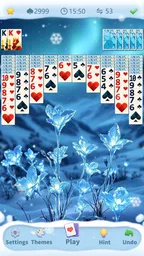




Spider Solitaire review
 Analysis by Appsdrops
When I want a card game that feels calm but still gives my brain something to work on, Spider Solitaire is an easy option to consider. It keeps the familiar appeal of solitaire while centering the experience on arranging cards into descending sequences. The result is a game that can suit a quiet break, a short wait, or a longer stretch of focused play. Classic Spider Solitaire is especially worth a look if you want a free, straightforward card game that can be played offline.
What to consider before choosing a solitaire game
Solitaire games can look very similar at first, but the best fit depends on the kind of session you enjoy. Some players want a brisk puzzle with a clear goal; others prefer a slower game where they can pause, think through a move, and settle into a rhythm. Spider Solitaire leans toward that second kind of experience. It asks for attention and planning without turning every round into a race.
The basic appeal is easy to understand: cards need to be organized into sequences, and each decision affects what you can do next. That makes the game approachable for someone who already knows card games, while still leaving room to think carefully. I like that it gives a small session a sense of purpose without demanding the commitment of a sprawling strategy game.
Offline play is another useful part of its appeal. A card game that works without an internet connection can be a dependable choice when connectivity is limited or when I simply want to play without going online. The store summary also presents the game as a way to sharpen your mind and relax, which captures the balance I look for in a casual puzzle: enough concentration to stay engaged, but not so much pressure that it stops feeling restful.
It also helps to consider whether you want a focused card experience or a larger collection of different activities. This title is specifically Spider Solitaire, rather than a broad gaming hub. That focus makes it easier to pick up when you know what kind of game you want, but players looking for lots of unrelated modes may prefer a different category of app.
A familiar format with room to think
Spider Solitaire is a board-category game built around card organization and patient decision-making. Its central attraction is not a complicated story or a long list of systems; it is the satisfaction of working through a puzzle one move at a time. For me, that simplicity is a strength. I can return to the basic challenge without needing to relearn a collection of changing rules or manage a larger game world.
That focused design also makes the game a natural choice for people who already enjoy solitaire. If you are new to the format, the idea of arranging cards into sequences is a clear starting point, though the challenge comes from thinking ahead rather than merely making the first available move. A quiet card game can still be mentally engaging, and Spider Solitaire gets much of its appeal from that combination.
Where Spider Solitaire stands out
Classic Spider Solitaire has a direct identity: it is a Spider Solitaire game, and that is the reason to choose it. The title does not need to compete by promising every kind of puzzle under one roof. If your goal is to play this particular card game, a focused app is a sensible place to start. I appreciate that the experience is easy to describe and easy to return to.
Its offline emphasis makes it practical for everyday use. I can think of it as a pocket-sized way to fill a spare moment without relying on a connection, rather than an activity that needs a social group or a live opponent. That can be a real advantage for people who enjoy solitary puzzles and prefer to set their own pace. It also suits travel, waiting rooms, or other moments when a simple distraction is welcome.
The game is free, which lowers the barrier to trying it. That does not mean every player will prefer it, but it does make the initial decision uncomplicated: if you enjoy Spider Solitaire, you can give this version a try without paying an upfront price. Its age rating is Everyone, so it is positioned as a broadly accessible game rather than one aimed at a narrow adult audience.
Its audience is substantial, too. The game has over ten million installs and an average rating of 4.8, with around thirty-five thousand ratings. Those figures suggest that many players have found it appealing, though I would treat popularity as a useful signal rather than a guarantee that it will match every personal preference. What matters most is whether you enjoy the pace and focus of Spider Solitaire itself.
The game was released on May 28, 2023, and its current version is 1.8.103. It is made by Classic Puzzle Games Maker and is listed for devices running Android 7.0 or later. Those details can help you decide whether it is suitable for your device, while the core question remains much simpler: do you want a dedicated, offline card puzzle?
How it fits into a casual routine
I see this sort of game as most useful when I want a modest, self-contained activity. A round can give a break a bit of structure: instead of scrolling through content without a clear endpoint, I can focus on a card puzzle and stop when I am ready. That makes it appealing for people who like their mobile games to be easy to dip into, rather than games that ask for a regular schedule or long-term commitment.
It may also suit players who want a calmer alternative to fast-paced action. There is no need to chase a dramatic narrative or react to a stream of competing demands. The pleasure comes from examining the cards, weighing options, and seeing a sequence take shape. If that kind of measured problem-solving sounds satisfying, Spider Solitaire offers a clear reason to install it.
At the same time, a focused solitaire game is only as enjoyable as your interest in solitaire. If arranging cards is not your thing, a high rating or a large install base will not change that. I would choose it for the activity, not simply because it is popular. That distinction is useful when browsing a crowded app store: start with the sort of play you actually want, then look for the app that delivers it.
When another kind of game may fit better
There are several broad alternatives to a dedicated Spider Solitaire game. A general solitaire collection may appeal if you like switching between different card formats instead of returning to one central puzzle. A board-game app may be a better match if you want a wider variety of turn-based challenges. And a word or number puzzle may suit you more if you prefer solving clues or patterns rather than organizing cards.
Those alternatives are not automatically better; they simply answer different preferences. I would choose a broad collection when variety is the main goal, and a single-game app when I already know which format I want. Players who enjoy competing with other people may also want to look at multiplayer-focused games, while those who prefer an independent, low-pressure session may find a solo card puzzle more comfortable.
It is worth being honest about what you expect from a mobile game. If you want frequent new activities, social interaction, or a strong narrative, a straightforward solitaire title may feel too narrow. If what you want is a familiar puzzle you can revisit whenever a spare moment appears, that narrow focus becomes an advantage. The decision is less about finding one universally best game and more about matching the app to your preferred way of playing.
That comparison also helps avoid choosing by headline alone. “Relaxing” can mean different things: for one person, it means a quiet card puzzle; for another, it means a game with gentle exploration or a collection of short challenges. Spider Solitaire’s appeal is specifically tied to card play and careful sequencing. I would recommend it to someone who wants that activity, not to someone searching for an all-purpose entertainment app.
Thinking about the switch
If you are moving from another solitaire app, the main adjustment is likely to be the particular version of the game and the habits you have built around it. The broad concept remains familiar, so the change is less like learning an entirely different genre and more like settling into another presentation of a card puzzle you already enjoy. If you are new to Spider Solitaire, the adjustment is about getting comfortable with planning moves and recognizing useful sequences.
There is little reason to overcomplicate the choice. Since the game is free, trying it is a straightforward way to see whether its focused approach works for you. You can keep your expectations simple: install a Spider Solitaire game, play for a while, and decide whether the rhythm feels enjoyable. If you find yourself wanting more variety, a collection or another puzzle category may be a better next stop.
For someone replacing a game they already like, the important question is whether a dedicated Spider Solitaire experience is what they want to return to. A familiar format can be comforting, but a different app will not necessarily transform the underlying game. I would make the switch because I wanted this specific card puzzle in an offline-friendly format, rather than expecting a completely different kind of entertainment.
My recommendation
I recommend Classic Spider Solitaire to players who want a free, focused card game with an offline-friendly pitch and a calm, thoughtful style. It is an especially sensible choice if you already enjoy solitaire or want a simple puzzle to keep on your phone for spare moments. Its accessible rating and broad popularity add reassurance, but the strongest reason to choose it is still the straightforward appeal of Spider Solitaire.
I would look elsewhere if your priority is a large mix of game types, a social experience, or a very different kind of puzzle. A dedicated card game is not meant to satisfy every gaming mood, and its simplicity will be a plus for some people and a limitation for others. Before choosing, ask yourself whether you want to organize cards and think through a sequence, or whether you are actually looking for variety, competition, or a different challenge.
For the right player, this is an easy recommendation: an approachable Spider Solitaire game for quiet, offline card-puzzle sessions. It keeps its purpose clear, costs nothing to try, and offers the sort of measured play that can make a short break feel more engaging. If card sequencing is already your kind of pastime, this game is worth a place on your shortlist; if not, a broader puzzle or board-game app will probably serve you better.
What we like
- Classic solitaire rules are easy to learn.
- Offline play works without an internet connection.
- Short rounds fit into spare moments.
- Undo helps recover from a mistaken move.
- Daily challenges add goals beyond standard games.
What could be better
- Some deals can feel repetitive over time.
- Ads may interrupt play in the free version.
- Small cards can be hard to read on compact screens.
- Higher difficulty levels can frustrate new players.
- Hints may reduce the challenge for experienced players.







