
Speed Stars: Running Game review
 Analysis by Appsdrops
I like Speed Stars most when I treat it as a game about rhythm rather than a test of reflexes. It puts running and hurdling on a track, but the appeal is in learning to control a sprinter’s pace through repeated attempts. A race is brief enough to fit between other tasks, yet a small timing mistake can give me a reason to try again. That simple loop makes it easy to understand and surprisingly demanding to master.
Why rhythm matters more than frantic tapping
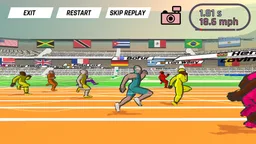
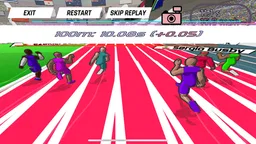
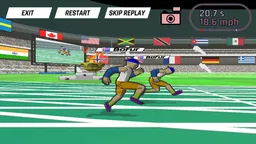
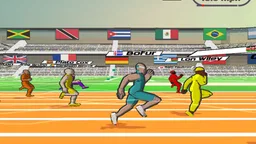
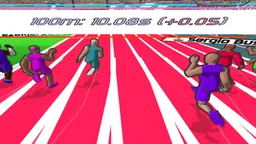
As a sports game from Miniclip.com, Speed Stars focuses on the feel of a track event instead of asking me to manage a whole team or follow a long season. The central challenge is coordinating my input with the runner’s movement. That makes the game feel different from casual runners where the character mostly moves forward automatically and I react to obstacles. Here, I pay attention to how my actions affect the run itself.
That distinction changes how I play. At first, it is tempting to tap quickly and hope the runner responds with more speed. I found that a steadier, more deliberate rhythm is a better starting point: watch the movement, make controlled inputs, and adjust based on what happens. A race then becomes a small experiment. If I stumble or lose momentum, I can try changing one part of my timing instead of randomly doing everything faster.
The satisfying part is that improvement feels connected to my own timing. The game does not need a complicated sports-management layer to make a run matter. I can focus on the immediate question of whether I am keeping a useful cadence and handling a hurdle cleanly. For players who enjoy getting better through repetition, that focus is a strength. For anyone expecting a deep simulation of athletics, it is also a clear boundary: the appeal is the hands-on running challenge, not an expansive account of a sporting career.
Learning the controls through useful retries
I would approach the opening attempts as practice, not as proof that I am either good or bad at the game. The most useful habit is to make a change small enough to understand. If I alter my rhythm and my next run feels more controlled, I have learned something. If I change several things at once, it is harder to tell what helped. This is a practical way to turn a string of retries into progress rather than frustration.
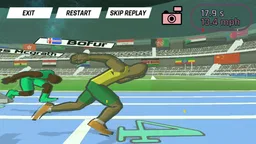
Hurdles add another layer because running smoothly is not the only concern. I have to think about the obstacle as part of the race, not as an unrelated interruption. A rushed approach can undermine an otherwise decent run, so I try to keep my attention on the sequence rather than panic at the last moment. The useful trade-off is that the game asks for concentration in short bursts: it is approachable in concept, but it rewards patience and control more than frantic tapping.
One detail that matters in practice is separating a poor result into likely causes. Was my rhythm uneven from the start, or did I lose control around a hurdle? Even without turning every attempt into a formal analysis, asking that question helps me choose what to work on next. It also makes the game more enjoyable for someone who likes skill-building, because a disappointing run can still offer a clear lesson.
A good fit for short breaks and personal practice
My best everyday use for Speed Stars is a short break when I want something active but do not have time to settle into a long game. I can start a run, focus on one improvement, and put the phone down when I am ready. It suits the gap before leaving home, a quiet moment between chores, or a brief pause when I want a game that asks for attention without requiring a long commitment.
It can also work as a small self-imposed practice routine. Rather than chasing a perfect performance every time, I might decide to focus only on maintaining a more consistent pace or approaching hurdles with better control. That keeps each session from feeling like the same attempt repeated without purpose. The game is at its best for me when I set a modest target and stop once I have either made progress or run out of patience.
That short-session usefulness does not mean it is ideal for every setting. The timing-based play needs my eyes and hands, so it is not a good choice when I am walking, multitasking, or only half paying attention. It is also less suited to a player who wants a relaxing game that can run in the background. Even a quick race works better when I give it a moment of concentration.
Where it differs from other sports games
Compared with sports games built around teams, match tactics, or collecting athletes, this one keeps the focus much narrower: I am working on the run. That is a welcome change if I want to get straight to the physical challenge rather than spend time on menus and roster decisions. It is also more direct than many endless-running games, where the main task is avoiding hazards over an ongoing course. Speed Stars gives me a track-and-hurdle context, so timing and race execution are the point rather than simply surviving for as long as possible.
The narrow focus is both its identity and its limitation. I would not choose it when I want the variety of a full sports package, multiple kinds of competition, or a story that carries me from one event to another. I would choose it when I want a compact running challenge and enjoy repeating a task to improve my technique. In that sense, it is a better fit for a player who values control and replaying a focused event than for someone shopping for a broad athletics catalogue.
What to know before installing
The game is free to install, with in-app purchases listed from $0.99 to $7.99 per item. I would treat those purchases as optional spending rather than part of the basic reason to try it. If I am unsure whether the rhythm-focused play suits me, the sensible approach is to start without buying anything and see whether I enjoy learning through repeated races. A free entry point lowers the barrier, but it does not guarantee that every player will enjoy the repetition.
Its Everyone age rating makes it broadly approachable, and it has passed one million installs. The average rating is 4.1 from around 7,800 ratings, with roughly 700 written reviews. Those figures suggest that plenty of people have tried it, but they do not tell me whether its particular style will click for an individual. I would pay more attention to the core question: do I enjoy tuning my timing, or do I quickly wish the game would move on to something else?
For device compatibility, the listed minimum operating system is Android 7.1, and the current version is 2.55. I would check that requirement against my device before installing, especially if I am using an older phone. The game was released on March 22, 2023, but what matters more to my decision is whether the current experience fits the kind of short, focused play I want.
Small decisions that make each attempt more useful
I get more out of the game when I avoid treating every run as a final exam. A run can be practice even if it is messy. I try to keep a consistent approach for a few attempts, then make one adjustment at a time. This is a simple but useful way to avoid a common frustration with timing games: changing my input constantly and never learning which change actually improved the result.
I also recommend taking a break if repeated attempts start to feel tense rather than satisfying. Since the basic loop depends on timing, fatigue or impatience can make me play less carefully, which creates more mistakes and encourages even more rushed inputs. A short pause can be more useful than immediately restarting. That is not a special feature; it is simply a sensible way to keep a compact skill game from turning into an irritating one.
Another practical point is to choose the game based on the moment. If I have a few minutes and want a challenge I can focus on, it fits. If I am looking for something to occupy a long trip without much effort, or a game I can play while chatting, a less timing-dependent option would suit me better. The same focused design that makes a run easy to pick up also makes distraction more noticeable.
Who will enjoy it—and who may not
I would recommend Speed Stars to players who like sports games with a clear, repeatable skill to practice. It is especially appealing if you enjoy spotting a mistake, adjusting your timing, and seeing whether the next attempt feels more controlled. It can also suit someone who wants a running-themed game without the extra planning that comes with managing a team or building a long campaign.
I would skip it if repeated races quickly feel like chores, if I want a realistic athletics simulation with extensive event variety, or if my preferred sports games revolve around strategy and squad management. Players who dislike rhythm-based input may also find the central challenge more frustrating than rewarding. There is no point forcing myself through retries if the act of refining timing is not enjoyable on its own.
Overall, I find Speed Stars most convincing as a focused test of pacing and hurdle control. Its strongest quality is not breadth but the way it gives me a simple reason to pay closer attention on each attempt. I would try it for short, deliberate sessions, keep purchases optional, and judge it by whether improvement feels satisfying. If it does, the compact track challenge can be a fun way to spend a few spare minutes; if I want a wider sports experience, I would choose something less narrowly centered on the run.
What we like
- Simple controls make it easy to start running quickly.
- Short races suit quick play sessions.
- Timing inputs well can make each run feel rewarding.
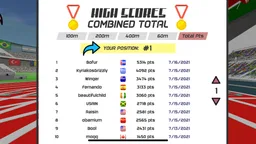
- Leaderboards add a competitive goal.
- The minimalist presentation keeps the focus on racing.
What could be better
- Precise timing can take practice for new players.
- Repeated races may feel similar over time.
- Progress depends heavily on improving your technique.
- Ads may interrupt the experience in the free version.
- The running theme offers limited variety beyond racing.







