



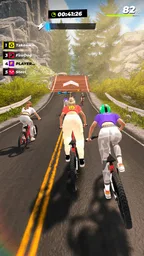


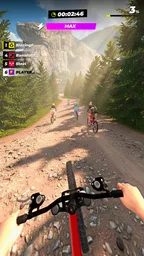

RUSH: Xtreme review
 Analysis by Appsdrops
I came away from RUSH: Xtreme thinking less about a long list of racing features and more about one clear promise: getting on a bike and chasing speed without a lot of ceremony. That focus is the game’s strongest idea. It suits quick bursts of play, when I want the feeling of a race but don’t want to spend my break learning a complicated simulation or preparing for a long session.
A bike racer built around momentum
This is a free racing game from SayGames Ltd, with an Everyone 10+ age rating. Its central appeal is easy to understand: ride fast, react to the track, and try to keep a run going. Rather than presenting itself as a detailed motorcycle simulator, it aims for an accessible, high-energy arcade experience. That distinction matters if you are choosing between it and a racing game where tuning, realistic handling, or long championships are the main attraction.
The arcade approach makes the game easier to pick up, but it also puts more weight on the moment-to-moment ride. When a racer offers layers of setup and strategy, players can spend time improving a bike or planning a race. Here, the appeal is more immediate: the ride itself needs to hold your attention. I’d recommend it most to someone who enjoys quick attempts and a direct test of reactions, rather than someone looking for a deep motorsport career.
The game has an average rating of 4.6 from around 627,000 ratings, and it has passed 10 million installs. Those figures suggest that its straightforward racing premise has found a broad audience, though they cannot tell you whether its particular pace will suit you. My practical advice is to judge it by what you want from a racing game: brief bursts of speed are a better fit than a detailed, hands-on simulation.
Why the focus on speed changes the feel
In a bike racer, speed is not just a visual flourish. It changes how much time you have to read a situation and decide what to do next. That is where a stripped-back arcade design can work well: it keeps the player’s attention on the immediate ride instead of surrounding each run with extra decisions. For me, that makes the game easier to return to in short sessions and gives each attempt a simple purpose—stay composed, respond quickly, and see how far the run takes you.
The tradeoff is that a fast ride can become less satisfying if you want to make deliberate, technical choices. Players who enjoy comparing detailed bike specifications, adjusting handling setups, or studying realistic racecraft may find this approach too light. It is not a flaw so much as a different priority. The game is trying to make speed feel accessible, not to reproduce every part of competitive motorcycling.
How to make short sessions count
I find this style of game works best when I give it a small, specific goal rather than expecting a deep session every time I open it. For example, on a commute break or while waiting for a friend, I might play a few runs and focus on staying alert instead of treating each attempt as a major achievement. That keeps the quick-play format enjoyable and makes it easier to stop when I have only a few minutes.
A useful habit is to notice what causes a run to go wrong before immediately starting again. Was I reacting late, or did I lose focus because I was trying to rush? Even without turning the game into a serious training exercise, that small pause helps make retries feel purposeful. It also gives the speed-focused format a little more depth: improving your attention can be as rewarding as simply playing another round.
That approach is especially helpful if you are new to bike games. Instead of comparing yourself with experienced players or expecting to master the ride immediately, treat each attempt as a chance to get comfortable with its pace. If the quick feedback keeps you engaged, the game is doing its job. If you would rather make slow, careful adjustments before racing, a simulation-oriented alternative will probably feel more rewarding.
When it fits into an everyday routine
Picture having a short wait before an appointment, with enough time to play but not enough to settle into a long event. A direct arcade racer is a natural fit for that gap: you can focus on the ride, finish a brief session, and put the phone away without needing to remember a complicated campaign plan. I would also choose this kind of game when I want something active and reflex-based rather than a puzzle or a passive video.
It is less suited to moments when you need a calm, low-attention distraction. Racing asks you to watch what is happening and react, so trying to play while holding a conversation or dividing your attention can make the experience frustrating. That is worth considering if you mainly want background entertainment. A slower driving game or a casual game with pauses may be a better companion for those situations.
One small but useful way to decide whether to keep playing is to check what you enjoy about each session. If the rush of a run and the urge to try again are the point, short play can be enough. If you are waiting for a substantial story, realistic bike management, or a long-term competitive structure, repeated quick races may not fill that gap. Knowing that before you invest much time makes the game easier to appreciate on its own terms.
Where the arcade choice has limits
The main limitation I would keep in mind is that speed alone cannot satisfy every racing fan. Players who want to learn authentic braking lines, compare a wide range of vehicle setups, or build a career over many events should look for a game designed around those systems. RUSH: Xtreme’s identity is narrower: it puts the fast ride first. That can make it immediately inviting, but it also means the experience may feel repetitive to someone who needs a steady stream of deeper decisions.
There is also a practical consideration around spending. The game is free to download, but it includes optional in-app purchases ranging from $0.99 to $99.99 per item. I would treat those as something to assess for yourself rather than as a reason to assume you need to pay. Start by deciding whether the core racing loop is fun on its own, and be deliberate before buying anything. That is particularly sensible if you are sharing a device with a younger player.
The age rating is Everyone 10+, so it is intended for a broad audience while still being worth checking against your household’s preferences. If a child will play, I’d review purchase settings on the device and agree on expectations beforehand. That advice is useful for any game with in-app purchases, and it helps keep a free download from turning into an unexpected spending decision.
For players who use an older device, the listed minimum operating system is version 8.0. The current version is 1.6.5, so it is worth checking that your device meets the system requirement before trying to install it. I would also keep the app updated through the store when possible, since using the current release is the simplest way to avoid problems caused by running an older build.
Choosing it over other racing games
Compared with a realistic motorcycle simulator, this game is the better choice when you want to get into the action quickly and care more about an energetic ride than technical accuracy. Compared with a broad car-racing game, it has a distinct bike focus for anyone who specifically wants two-wheeled racing. But if your favorite part of racing is adjusting vehicles, planning a championship, or mastering realistic controls, a more simulation-heavy title will be a stronger match.
I would also separate it from racing games built around long, structured progression. A player who likes having a clear season to work through may want a game that makes that structure its centerpiece. Here, the attraction is the immediate challenge of a fast ride. That makes it easier to dip into, but it may leave less to explore for someone who needs a constant sequence of new goals to stay interested.
SayGames Ltd is the developer behind the game, and the overall reception is strong. Still, ratings and download numbers are best read as context, not a promise that every player will enjoy the same thing. The more useful question is whether you want quick reflex-led bike racing or a detailed racing hobby on your phone. This game is much more convincing as the first.
Who is most likely to enjoy it
I’d point casual racing fans toward RUSH: Xtreme if they want a bike game that is easy to approach, works well in short sessions, and puts the excitement of speed ahead of simulation detail. It also makes sense for someone who has tried more involved racers and wants a lighter alternative for spare moments. If that sounds like you, the game’s direct focus is an advantage rather than a missing feature.
I’d suggest skipping it if you need realistic motorcycle handling, extensive vehicle tuning, an elaborate campaign, or a game that rewards long, planned sessions. The same goes for players who want something they can play without paying attention: a racing game built around quick reactions is not ideal for distracted play. Those preferences point toward a different kind of racer, not necessarily a better one overall.
My recommendation is to try it with modest expectations and notice whether the speed-focused loop makes you want another run. It is free to download, but optional purchases are available, so there is no need to spend just to find out whether the basic idea appeals to you. For the right player, this is a convenient way to get a concentrated dose of arcade bike racing. For a simulation fan, the more honest recommendation is to choose a game with deeper controls and long-term racing structure instead.
What we like
- Responsive controls make steering feel direct and easy to learn.
- Short races suit quick play sessions.
- A range of tracks keeps the racing varied.
- Vehicle upgrades offer a sense of progression.
- The 3D environments add energy to each race.
What could be better
- Frequent collisions can make races feel unpredictable.
- Progress may require repeated races to earn upgrades.
- Some tracks can be difficult to master.
- The action may feel repetitive over longer sessions.
- Performance can vary on older devices.







