


Retro Bowl review
 Analysis by Appsdrops
Retro Bowl is a sports game I’d recommend to someone who likes American football but doesn’t want every match to feel like a long simulation. Its appeal comes from a clear mix: quick, retro-styled action on the field and a longer-running franchise to manage around it. That combination gives a short play session a point beyond simply winning the next game.
Why the franchise gives each match a purpose
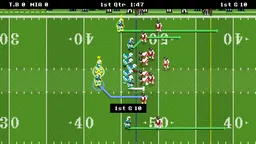
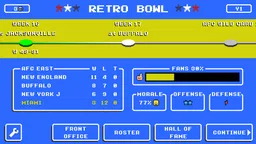
The most interesting part of Retro Bowl is how its franchise mode changes the feel of the arcade action. A match is brief and easy to approach, but it sits inside a season-long effort to build a team and keep it competitive. I find that context makes even a simple drive feel more meaningful: I’m not just trying to complete a pass, I’m trying to move the season forward.
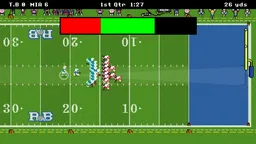
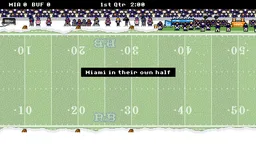
The game’s retro presentation suits that design. It strips football down to readable plays and direct decisions instead of asking me to manage a dense set of controls or follow a broadcast-style simulation. That makes it a good fit for a phone, where I might have only a few minutes rather than the time and attention for a full console match.
New Star Games Ltd developed the game, and the compact arcade approach is a strong match for its premise. The challenge is less about recreating every detail of real football and more about making each decision understandable and satisfying. If you want a deep, realistic simulation, that distinction matters; if you want a quick game with a reason to come back, it works in Retro Bowl’s favor.
How the arcade action supports the season
In practice, I treat a session as a small loop: make progress on the field, see how the game affects the broader campaign, then decide whether I have time for another match. The controls and presentation keep the action approachable, while the franchise framing encourages me to think beyond a single result. It’s a useful balance for players who like sports games but don’t want every session to involve a long setup.
One helpful way to play is to focus on making sensible decisions rather than chasing a perfect-looking sequence on every possession. The arcade format rewards paying attention to the situation in front of you: a safe gain can be more valuable than forcing a risky attempt just because it looks exciting. That mindset makes the game easier to enjoy in short bursts and helps keep a difficult match from turning into a series of careless choices.
The franchise layer also gives losses and wins a different weight. A result feels connected to the team’s ongoing progress, which can make a close game more engaging than an isolated arcade round. At the same time, that connection means players who only want a disposable pick-up match may find the longer-term framing less important than the on-field action itself.
I wouldn’t approach it expecting a full coaching simulator. Its appeal is that it keeps football decisions accessible and moves quickly, not that it reproduces every tactical or administrative detail. Think of the franchise as a reason to care about the next match, rather than a promise of exhaustive management systems.
A good fit for the spare minutes between plans
My ideal everyday use case is a commute, a lunch break, or a few quiet minutes while waiting for an appointment. I can play a little without needing to set aside a large block of time, and the season structure gives me a natural stopping point: finish a match, check where the campaign stands, and put the phone away. It’s particularly convenient when I want a sports game that doesn’t demand a full evening.
That short-session strength is also why I’d suggest it to someone who enjoys football highlights or quick arcade games but has bounced off more involved sports titles. The controls are easier to approach than a simulation built around a wide range of inputs, and the retro look keeps the presentation uncluttered. The tradeoff is that players who value realistic visuals, detailed player animation, or a broadcast-like match experience may find it deliberately simple.
Another practical point is that the franchise structure can make a brief session feel worthwhile even when I don’t have time to play for long. I can make progress without treating the game as a commitment that requires constant attention. Still, if you dislike season-based progression and prefer every match to stand entirely on its own, the extra context may not add much for you.
Where the simplicity helps—and where it can feel limiting
The biggest strength and the biggest limitation come from the same design choice: Retro Bowl compresses football into an approachable arcade format. That makes it quick to learn and easy to revisit, but it also means it won’t satisfy someone looking for the breadth of a full-scale sports simulation. I’d choose it for direct action and a light franchise hook, not for exhaustive realism.
There can be a learning curve in judging when to take a safe option and when to push for a bigger gain. Because the game moves briskly, an impatient player may make rushed decisions and blame the controls when the real issue is taking unnecessary risks. I recommend slowing down enough to read the situation before committing. That small change makes the action feel more deliberate without making the game complicated.
The retro style is another matter of taste. I find it helps the game stay clear on a small screen, but anyone who wants modern presentation may see it as too minimal. The same goes for the game’s overall scope: it delivers a focused football experience rather than trying to compete with large console-style titles on every front. If detailed tactics and lifelike match presentation are your priorities, a deeper simulation is the better choice.
It’s free to download, with optional in-app purchases priced from $0.99 to $29.99 per item. I’d start by playing the free version and decide whether the core match-and-franchise loop is enough for me before spending anything. That’s a sensible approach for a game whose main appeal is its straightforward rhythm, especially if you’re unsure whether retro sports games are your style.
Who is most likely to enjoy it
I think Retro Bowl is best for players who want football in compact sessions, enjoy seeing matches contribute to a broader season, and don’t need a realistic simulation to stay engaged. It can also work well for someone returning to sports games after a break: the presentation is approachable, and the central idea is easy to grasp without learning a complicated control scheme first.
I’d be less likely to recommend it to someone who wants deep tactical control, highly realistic visuals, or a wide range of detailed simulation systems. It may also be a poor fit if you find retro presentation off-putting or have no interest in a franchise-style progression. In those cases, a more simulation-focused football game would better match what you’re looking for.
The game is rated Everyone, and it has an average rating of 4.6 from around 516,000 ratings. More than 10 million installs suggest it has reached a broad audience, but the more useful question is whether its particular blend of quick action and season context suits you. I’d call it an easy recommendation for casual football fans, not a replacement for every kind of sports game.
Retro Bowl was released on January 17, 2020, and its current version is 1.6.54. It requires Android 6.0 or later. Those details make it straightforward to check basic device compatibility before trying it, while the free entry point keeps the initial decision low-commitment. If you’re browsing on iOS, check the app store on your device for availability and compatibility.
My overall take is that the franchise mode is what turns a pleasant retro football game into one I’m willing to revisit. It gives quick matches a little continuity without taking away their pick-up-and-play feel. I’d try it when I want a focused, casual sports game that fits around the day; I’d look elsewhere when realism and extensive control matter more than speed and simplicity.
What we like
- Simple controls make it easy to start playing.
- Short matches suit quick gaming sessions.
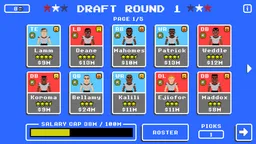
- Team management adds strategy beyond the field.
- Retro visuals give the game a distinctive style.
- Offline play is useful when internet access is unavailable.
What could be better
- Roster management can feel limited compared with full sports simulators.
- Repeated play may make matches feel predictable.
- The pixel art may not appeal to players seeking realistic graphics.
- Some features require the paid version.
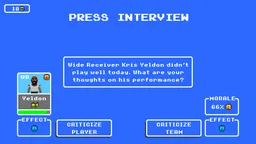
- Managing player morale and contracts can add extra busywork.







