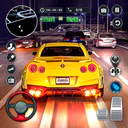
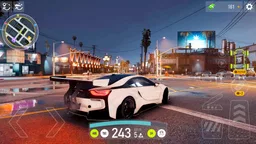
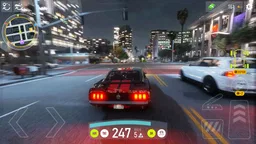
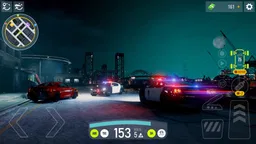
Real Car Driving Midnight Club review
 Analysis by Appsdrops
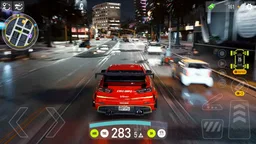
I approached Real Car Driving Midnight Club as a pick-up-and-play racing game: something to open when I want to drive for a while without committing to a long campaign or a demanding simulation. Its appeal is easy to understand. It puts car driving in an open-world city, where the promise is less about following a strict racing schedule and more about making the streets feel like a place to explore. That gives the game a relaxed, free-roaming identity, though it also means the experience depends on whether you enjoy the act of driving itself.
It is a free racing game from Zendios, and the store description is brief enough that the real decision comes down to your expectations. I would not approach it as a precision-focused track racer or a detailed driving simulator. It is better suited to players who want an accessible city-driving session, with room to roam and a casual sense of speed. If you prefer tightly structured races, carefully tuned handling, or a strong narrative to pull you forward, you may find its open-ended premise less satisfying.
Why the first drive sets the tone
The first impression is built around the contrast between speed and freedom. Rather than framing the whole experience as a sequence of formal competitions, the open-city idea invites you to get moving and decide what kind of drive you want. That simple choice changes the mood: a short session can feel like a quick escape, while a longer one gives you time to learn the routes and settle into the city.
That freedom is also a trade-off. An open world can make driving feel less repetitive than circling the same track, but it asks the player to supply some of the motivation. I found that this kind of game works best when I set a small personal goal before starting: explore a different stretch of the city, practise keeping control at speed, or simply take a few minutes to drive without worrying about a finish line. Without that self-directed purpose, roaming can start to feel aimless.
The game has a Teen content rating, so it is aimed at players who are comfortable with that age category. It is free to install, with optional in-app purchases listed from $0.99 to $19.99 per item. I would treat those purchases as a choice rather than a prerequisite: first find out whether the driving and open-city format hold your interest. That is more useful than spending early just because a racing game presents paid options.
A city that gives driving room to breathe
The setting matters because the city is not just a backdrop to a start-and-finish race. Its open-world framing encourages you to think in terms of routes and movement: where to head next, whether to keep pushing forward, and when to slow down enough to take in the surroundings. This makes the basic act of driving the central activity, rather than a brief link between menus and events.
My most practical tip is to treat early sessions as orientation rather than performance tests. Instead of trying to drive fast everywhere, spend a little time noticing how the streets connect and how much space you have to manoeuvre. That approach helps make later drives feel more deliberate. It also gives you a fairer sense of whether the environment itself is enjoyable to you, which is important in a game whose central attraction is the city-driving premise.
For a routine use case, imagine having a spare break and wanting a game that does not require you to remember a complicated objective from last time. A brief drive can suit that mood: you can get into the car, choose a direction, and make your own entertainment out of the streets. On the other hand, if you have only a few minutes and want a clearly marked challenge with an obvious completion point, a level-based racer may give you a more satisfying start-to-finish session.
How the atmosphere supports the pace
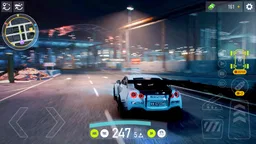
The title points toward a midnight-club mood, while the confirmed premise centres on driving through an open-world city. That combination suggests an experience meant to feel urban and speed-minded, but I would judge it by how comfortable you are spending time behind the wheel rather than expecting a particular story or event structure. The atmosphere works best when it gives your driving a sense of place; it cannot, on its own, replace variety in the things you do.
Sound and visual presentation are important in any driving game because they shape how speed feels. In my view, the most useful way to assess them here is to notice whether they help you stay immersed during ordinary stretches of driving, not only during the most exciting moments. A convincing mood can make an unhurried drive enjoyable, but players who want music, sound design, and visual spectacle to carry a strongly scripted experience should look for a game built around that kind of presentation.
Pacing is where open-world racers can either become pleasantly flexible or lose momentum. The freedom to continue driving is valuable when you want to explore at your own tempo. It is less helpful when you need constant escalation or a steady stream of clearly explained goals. I recommend approaching the game with a short-session mindset at first; if you naturally find reasons to keep exploring, the format is working for you. If you keep waiting for the game to impose a stronger structure, that is a sign a more event-driven racer may fit better.
Where the driving fits among racing alternatives
Compared with track-based racing games, the key difference is the emphasis on an open city rather than repeated laps around a fixed course. That makes this a better match for players who enjoy choosing their own route and having room to wander. Track racers are usually the safer choice when you want clear competitive objectives, predictable layouts, and a direct way to measure improvement from one run to the next.
It is also distinct from driving simulators, where the pleasure often comes from realistic vehicle behaviour and careful control. Real Car Driving is presented as an accessible car-driving game, so I would not choose it expecting the depth or discipline of a serious simulation. If your fun comes from getting a route right, experimenting with handling, and deciding how to approach the city, its premise may be enough. If you are looking for a detailed lesson in real-world driving technique, a game with explicit simulation goals would be a better fit.
A useful way to get more out of a free-roaming format is to vary your own approach instead of repeating the same kind of drive. Try one session focused on exploring, then another where you pay attention to staying controlled and choosing smoother routes. This small change gives the city a different purpose without pretending the game has a challenge system it may not offer. It also helps you identify whether you enjoy the driving mechanics or mainly like the idea of an open city.
There is a practical device question, too. The listed minimum operating-system requirement is Android 8.1, so an Android user should check that their device meets it before expecting to install the game. The current version is 1.9.3. Those details matter most if you are considering a download on an older phone or tablet; compatibility is a more immediate concern than any assumption about how a game will perform on every device.
Who will get the most from it
I would recommend it to casual racing fans who enjoy being able to drive without first settling into a long series of events. It can also suit someone who likes open-world settings and wants a low-pressure game to dip into between other activities. Its free entry point makes it reasonable to try if the basic concept appeals, while the optional purchases are a reason to decide what you value before spending. You do not need to treat every paid option as part of the core experience.
The audience response is strong: it holds a 4.6 average from around 77,000 ratings, and it has passed 50 million installs. Those figures suggest broad interest, though they cannot tell you whether you personally prefer open driving to structured racing. The most useful question is still whether you enjoy making your own goals. If you do, the open-world format has room to breathe; if not, a game with defined races and progression may feel more rewarding.
I would skip it if your main priorities are realistic handling, a deep career structure, or a clear sequence of competitive events. I would also be cautious if you dislike spending time in a game without a strongly signposted objective. That is not a flaw for every player, but it is a meaningful limitation for anyone who wants the game to direct each session. The appeal here is freedom, and freedom works only when the player enjoys deciding what to do with it.
A grounded verdict on its urban mood
Real Car Driving Midnight Club is most compelling as a casual open-city driving game, not as a substitute for a simulation or a tightly organised racing championship. I like the idea of a game that lets a short drive be the whole point. Its mood and setting can make that simple activity feel inviting, while the open-world structure gives you a reason to choose your own pace. The same design can feel thin if you expect a constant chain of goals or a detailed competitive framework.
Zendios has built a game with a clear, easy-to-grasp premise, and the scale of its audience makes it an established option in mobile racing. It is free, rated Teen, and includes optional purchases, so I would start by exploring without spending and decide whether the city and driving keep you engaged. My recommendation is for players who want a relaxed place to cruise and can bring their own sense of direction. If you need every session to deliver a defined race, a different kind of racer will serve you better.
For me, the deciding factor is not simply how fast the cars go; it is whether I enjoy being in the city when there is no urgent objective pushing me onward. If that sounds appealing, this is worth trying. If you would rather chase clear wins, learn carefully designed circuits, or focus on simulation, choose a game centred on those strengths instead.
What we like
- Nighttime city routes create a distinct driving atmosphere.
- Car handling is simple to pick up for casual play.
- A range of vehicles offers variety between drives.
- Short driving sessions suit quick breaks.
- Exploration lets you discover routes beyond the main roads.
What could be better
- Vehicle selection may feel limited compared with larger racing games.
- Driving physics can feel less realistic than a simulator.
- Night scenes may make some road details harder to see.
- Progress can require repeated drives to unlock more content.
- Ads may interrupt play depending on the version.







