


Race Max Pro - Car Racing Game review
 Analysis by Appsdrops
I approached Race Max Pro as a mobile driving game for those moments when I want a quick burst of racing rather than a long, carefully staged simulator session. Its focus on street racing, drag runs, drifting, and tuned performance cars gives it a broader feel than a game built around one kind of event. The key question for me is whether that variety makes each short session satisfying—and whether the driving feels good enough to return to when I have only a few minutes.
Speed, handling, and the kind of racing it suits
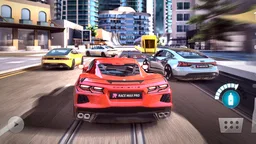
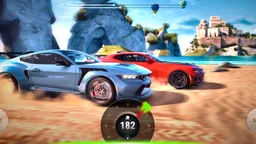
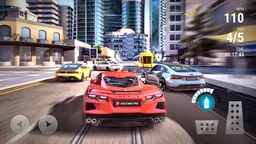
The game’s appeal is easy to understand: it puts sports cars and more exotic machines at the center, then frames driving around speed and control. In practice, that combination suits players who like the sensation of building momentum and correcting a car through a turn, not just tapping through a race as quickly as possible. The drift angle gives the driving a more deliberate edge, while drag racing offers a different kind of pressure: setting up for a straight contest rather than managing a bend.
I would not treat the word “simulator” as a promise of uncompromising real-world driving behavior. This is a mobile racing game, and its draw is the accessible fantasy of taking high-performance cars onto the street and learning how they respond. If you want a detailed driving school, a strict motorsport rule set, or a painstakingly realistic model of vehicle behavior, a dedicated simulation game is likely a better fit. If you want racing that can be picked up without turning every session into a technical exercise, the balance here makes more sense.
One useful way to approach the different event styles is to avoid driving them all with the same habits. A line that feels safe in a street race may not be the best way to approach a drift-focused run, and a drag event asks for attention to a different rhythm altogether. I found it more rewarding to treat each format as its own small challenge instead of judging the whole game by whether one driving style works everywhere. That also helps explain the variety: the modes are not merely different scenery around identical driving.
For a casual player, that variety can make a short visit feel less repetitive. For someone who prefers a single, highly refined discipline, switching between event styles may feel like a distraction. The game is at its strongest when you enjoy changing the kind of driving you are doing, rather than expecting one format to be the entire experience.
What I would expect from a quick session
A realistic everyday use case is opening the game during a break, choosing a race, and spending a few minutes trying to improve a run or get more comfortable with a car. I would go in expecting an arcade-leaning mobile experience with a sense of speed, not a guaranteed, uninterrupted sequence of elaborate races. That expectation matters: if I only have a short window, I want to enjoy the driving itself and not rely on a long campaign session to feel that I made progress.
When speed is the main attraction, it is tempting to push hard immediately. I found it more sensible to learn how a car responds before treating every event like a full-throttle test. In drift-oriented driving, small adjustments can matter more than simply holding a direction; in a straight contest, the priorities shift. This is a practical distinction, not a hidden trick, and it helps prevent the common frustration of repeating an event while making the same mistake with a different car.
When the game gets demanding
Racing games tend to feel busiest when the player is steering, correcting a slide, watching the road, and reacting to other visual movement at once. That is the point where a session can become less forgiving, especially on a small screen or when playing in a distracting setting. I would give myself a few uninterrupted minutes for a drift or a close race, rather than trying to play while constantly switching attention between the game and messages.
There is also a useful distinction between a game feeling fast and a device running smoothly. Quick movement and energetic presentation can create a strong sense of speed, but they do not by themselves tell you how well the game will perform on every phone. I would avoid making assumptions about frame rate, loading time, heat, or battery use without testing the specific device. If your phone already struggles with visually busy games, it is sensible to try a brief session first and see whether controls remain responsive during the moments that demand the most attention.
My practical advice for heavy-use moments is to keep the first attempt simple: play a straightforward event, get used to the steering, then move into the style that asks for more correction. That gives you a baseline for judging whether any difficulty comes from the car, your technique, or the device’s response. It is more useful than changing several things at once and then being unsure why a run felt worse.
Reliability, progression, and value
Race Max Pro is developed by Revani and is free to download. It has an average rating of 4.7 from around 742 thousand ratings, alongside roughly 4.3 thousand written reviews, and has passed 50 million installs. Those figures suggest that it has found a large audience, but they cannot tell me whether it will suit your phone or your preferred style of racing. I see them as context rather than a guarantee of a flawless experience.
The game was released on November 20, 2023, and its current version is 2.18.3. I would treat version information as useful when checking whether my installation is current, particularly if I run into a problem and want to distinguish an outdated app from a broader device issue. Still, an update number alone is not proof that every connection, control, or performance issue has been resolved; the sensible test is whether the game behaves consistently on the device you actually use.
On reliability, I would judge it through ordinary play rather than assume that a popular racing game is automatically stable. Notice whether inputs respond as expected, whether a session continues smoothly through the kind of event you enjoy, and whether returning to the game feels straightforward. If something goes wrong, restarting the app and trying a less demanding event is a reasonable first check. That is general troubleshooting, not a claim that a particular recovery feature is built in.
The game is rated Everyone, which makes its stated age rating broad, though parents should still decide whether its racing presentation is appropriate for a child in their care. It is also worth remembering that a free download can include optional purchases. In-app items range from $0.49 to $189.99 each, so I would check purchase prompts carefully, especially if a child uses the device or if you prefer to keep spending predictable. You can enjoy the idea of the game without treating every purchase as necessary; decide on a budget before playing rather than in the middle of a tempting upgrade prompt.
That spending range is one of the main trade-offs to consider. A player who is comfortable enjoying the driving at their own pace may find the free entry point appealing. Someone who dislikes any pressure to spend, or who wants every progression step to be available without purchase prompts, should be more cautious. I would not spend simply because a car looks exciting: first work out whether the driving itself is keeping you interested. If it is not, buying items is unlikely to fix the underlying mismatch.
Choosing it over other mobile racers
Compared with the usual mobile racing alternatives, Race Max Pro makes sense if you want several flavors of car driving—street racing, drifting, and drag events—in one game. A pure drag racer is a more direct option if you only care about straight-line contests. A circuit-focused game may be better if you want to concentrate on repeated laps and clean racing lines, while a more simulation-minded title is preferable if careful vehicle handling is your main goal. The choice is less about which game is universally better and more about what kind of driving you want when you open your phone.
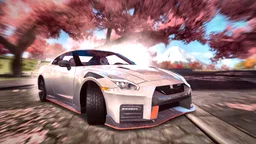
The car-focused presentation will also appeal to players who enjoy the idea of sports and hypercars, but that interest alone is not enough. Ask yourself whether you enjoy learning how a car behaves across different event styles. If you do, the changes in focus can keep sessions fresh. If you mainly want realistic racing against a structured field, or a quiet game that demands little attention, this is probably not the right alternative for you.
For device expectations, the listed minimum operating-system requirement is Android 8.0. That gives Android users a basic compatibility point, not a promise that the game will feel equally smooth on every device running that version. A phone meeting the minimum may still differ in responsiveness from a newer or more capable model. I would leave some free storage and close other demanding apps if performance seems uneven, then test again before deciding that the game itself is unsuitable.
Who should give it a try
I would recommend it to players who want a free-to-start racing game with different driving moods, enjoy high-performance cars, and are happy to learn through short attempts. It can work well for a commute break or a relaxed evening when you want a focused activity that does not require setting up a long play session. It is also a reasonable pick if you like comparing how a change in driving style affects a run, rather than simply collecting wins.
I would skip it if you need a strict simulation, dislike optional purchases in free games, or find fast, visually busy driving uncomfortable on a phone screen. It may also be a poor match if your device is older and already struggles with demanding games; the minimum OS requirement does not settle that question. In those cases, a simpler racer or a game designed around one discipline may provide a more comfortable experience.
My overall view is that Race Max Pro is most convincing when approached as a flexible mobile racer, not as a substitute for a full driving simulator. Its mix of street, drag, and drift play gives me a reason to change tactics between sessions, while the free download makes it easy to see whether the handling suits me. I would start with a short test, pay attention to how the controls feel on my device, and keep a firm eye on purchase prompts. If the different driving styles are what you enjoy, it is worth trying; if you want realism above all else, choose a more specialized racing game instead.
What we like
- Offers several racing modes for varied play styles.
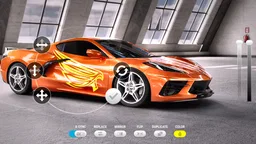
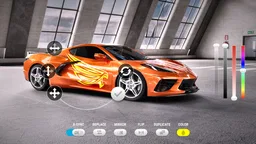
- Car customization lets you tune both looks and performance.
- A broad selection of licensed cars adds variety.
- Touch controls are easy to learn.
- Short races suit quick gaming sessions.
What could be better
- Progress can slow without frequent upgrades.
- Some cars and features may require in-game purchases.
- Online play depends on a stable connection.
- Repeated events can make progression feel grindy.
- Performance may vary on older devices.







