
No Limit Drag Racing 2 review
 Analysis by Appsdrops
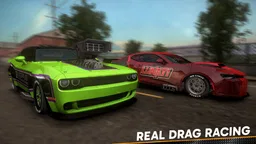
I’d recommend No Limit Drag Racing 2 to someone who enjoys the small decisions that sit between a start line and a finish: adjusting a car, learning how it behaves, and trying again when a run goes wrong. It is a free racing game from Battle Creek Games, LLC, built around drag racing rather than long, open-road circuits. That focus makes it easy to understand what you are trying to do, but getting a car to feel consistent takes more attention than simply holding down a button.
The game suits players who like tuning and competition as much as speed. If you want a quick arcade racer where every vehicle feels immediately familiar, its emphasis on setup may feel fussy. I find that trade-off appealing: a good run feels earned, and a poor one can give you something specific to reconsider rather than just a reason to restart.
What to expect from a focused drag racer
Drag racing has a different rhythm from the usual mobile racing game. You are not navigating a series of bends or choosing a route through traffic; the challenge is to make a short, controlled effort count. This gives each attempt a clear purpose. You can concentrate on how the car launches, how it responds through the run, and whether your current setup is helping or holding you back.
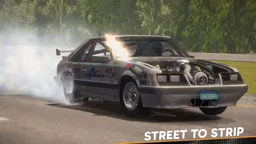
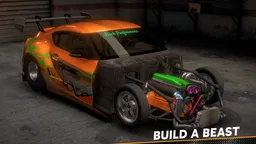
The game also brings tuning and drifting into its broader racing identity, so it is not only about pressing start and watching two cars charge forward. The satisfying part for me is the connection between preparation and execution: changing how you approach a run can matter more than simply repeating it with more aggression. That makes the game more engaging for a player who enjoys experimenting, though less appealing to anyone who wants every race to be a completely hands-off spectacle.
Online competition adds another reason to refine your approach. Racing against real players can make a familiar run feel more demanding, because your goal is no longer just to get through it; you want to be consistent enough to compete. I would treat that as a later step rather than the first thing to chase. Early on, learning what your car is doing is more useful than comparing yourself with someone who has already spent time tuning and practising.
There is enough here to attract a dedicated drag-racing fan, but its focused format is also a limit. If you chiefly want a large driving world to explore, varied road courses, or a story-led racing campaign, a broader racing game will probably fit better. This one is strongest when you are happy to return to the same basic challenge and improve how you handle it.
Who is likely to enjoy the pace
I would suggest it to players who like cars as systems to understand, not just decorations to unlock. It can work well in short sessions: a few attempts give you a clear task and a reason to adjust your next one. It may also suit someone who follows drag racing and wants a mobile game that puts acceleration and setup at the centre rather than treating them as one part of a circuit racer.
By contrast, I would steer a casual player toward a simpler arcade racer if they find tuning menus tiring or prefer to make progress without learning how a vehicle responds. The same goes for anyone who dislikes repeated attempts. Drag racing naturally asks you to compare runs, and that can feel rewarding or repetitive depending on whether you enjoy the process of refinement.
Getting started without overthinking the car
When you first open the game, I would resist the urge to change everything at once. Start by getting comfortable with the basic flow of a run and noticing what seems to go well or poorly. If you alter several settings between attempts, it becomes hard to tell which change helped. A small, deliberate adjustment gives you a more useful comparison and keeps the learning curve from becoming a guessing game.
Think of your first session as a baseline, not a test of whether you are good at the game. Pay attention to the launch and the overall feel of the run, then make one change at a time when the game gives you a reason to do so. This is a practical way to approach a tuning-focused racer even if you have never played one: observe, adjust, and see whether the next attempt feels more controlled.
It is also worth deciding what you want from the game before spending money. The game is free to download, while optional in-app purchases range from $0.99 to $124.99 per item. That is a wide range, so I would treat purchases as a personal choice rather than a necessary first step. Give yourself time to learn whether the racing loop holds your interest before considering any paid extras.
The game is rated Everyone, and the current version is 2.31.1. It was released on May 2, 2021, and requires Android 8.0 or later. Those details matter if you are checking compatibility or choosing a game for a younger player, but the most useful first decision is still whether you enjoy short, repeatable racing challenges more than the varied tracks found in many other racers.
Your first meaningful win is consistency
For a first-time player, I would define success as completing a run that feels more controlled than the one before it, not as immediately beating an experienced opponent. That goal is concrete and within reach: establish a baseline, notice where the attempt felt messy, and make one measured change. When a run improves, you have learned something about your car and your own timing rather than simply getting lucky.
A realistic everyday session might be a few minutes while waiting for a ride or taking a break. Pick one thing to work on, make a couple of attempts, and stop when you have a useful comparison. That is a better fit for the game than trying to squeeze in a long, unfocused session while distracted. The short format makes it easy to revisit, but your attention still matters if you want to understand why one run worked better.
Once the basic rhythm feels familiar, competing against other people can give your practice more purpose. I would move into that side of the game when you can repeat a decent run, not necessarily when you have mastered every tuning option. Consistency gives you a fairer sense of how you are doing; otherwise, an unpredictable result can leave you unsure whether your setup, timing, or opponent made the difference.
Where new players can get confused
The most common trap is assuming that a faster-looking setup must be the right setup. In a game built around tuning, one change can affect how the whole run feels, and chasing an impressive result without a comparison can make progress less clear. I recommend keeping your experiments simple and remembering what you changed. Even an informal note in your head—what you adjusted and whether the next run felt better—can make the learning process more satisfying.
Another source of frustration is expecting every race to teach you something automatically. A loss against a real player can be useful, but only if you can separate what you control from what you do not. Focus first on your own launch and repeatability. When you are still learning, a close look at your own run is more actionable than trying to copy someone else’s setup without knowing why it works for them.
Drifting is part of the game’s identity, but a drag-racing newcomer does not need to treat every element as an equal priority at once. If your immediate goal is to become comfortable with straight-line competition, focus on that first. Adding another activity makes more sense when you want a change of pace, rather than as a distraction from the basic controls and tuning decisions that make the main challenge click.
Patience matters, too. If you prefer a game that rewards reflexes instantly and lets you move on after one attempt, the repeated-run structure may feel like friction rather than depth. I would not interpret that reaction as a failure to understand the game; it simply means the central appeal is not a match for your preferred style. A more varied arcade racer is a better choice when exploration and constant novelty matter more than refining one kind of race.
How it compares with other racing games
Compared with a typical circuit racer, this game asks for narrower but deeper attention. A circuit game spreads the challenge across steering, braking, cornering, and route management. Here, the appeal is concentrated on drag racing, the car’s setup, and the execution of a short run. That focus is a strength if you want to practise one discipline, but it naturally offers less variety than a game built around many types of tracks and events.
Compared with a simple tap-to-race title, it has more room for experimentation and a stronger connection between preparation and results. The trade-off is that quick satisfaction can take longer to arrive. If you want to jump in, win immediately, and leave, a simpler alternative may be more relaxing. If you enjoy the feeling of gradually making a car behave more reliably, this one has a clearer reason to keep trying.
The game has an average rating of 4.1 from around 104,000 ratings, and it has more than 10 million installs. That suggests a sizable audience for its particular mix, but popularity alone does not guarantee that its repetition will suit you. I would use those figures as context, not as a substitute for considering whether you actually enjoy drag racing and tuning.
What to try after the first good run
After you have achieved one run you feel good about, do not immediately replace every part of your approach. Repeat it and see whether you can get a similar result. That is a more useful next step than chasing a completely different setup, because it tells you whether your success came from a repeatable decision or a one-off attempt. Once you have a dependable baseline, you can test another adjustment with a clearer idea of what changed.
Then decide which part of the experience you want more of: improving the car, trying drifting, or testing yourself against real players. You do not need to pursue all of those at once. Choosing one direction keeps your sessions purposeful and reduces the feeling that you must understand the whole game before enjoying it. That is especially helpful for newcomers who might otherwise mistake a broad set of activities for a checklist they need to finish.
Developed by Battle Creek Games, LLC, No Limit Drag Racing 2 is a worthwhile pick for a patient player who wants focused races and meaningful tuning decisions. Its biggest strength is also its clearest limitation: it returns to a specific kind of challenge, so the enjoyment depends on whether you like refining that challenge rather than constantly moving to something new. I would try it if you are curious about drag racing and happy to learn by making small adjustments; I would skip it if you want a varied, low-effort racer from the very first minute.
What we like
- Responsive controls make it easy to steer and shift gears.
- Car tuning offers room to refine performance for different races.
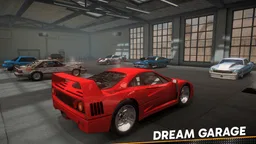
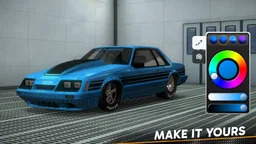
- The garage provides extensive options for customizing vehicle appearance.
- Multiplayer races add competition beyond the single-player events.
- Short races fit well into quick gaming sessions.
What could be better
- Progress can feel slow without spending time on upgrades.
- In-app purchases may appeal to players seeking faster progression.
- Precise gear shifts can take practice to master.
- Repeated race formats may become familiar over time.
- Online matches depend on a stable internet connection.







