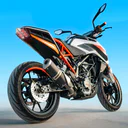
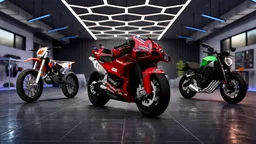
Motorcycle Real Simulator review
 Analysis by Appsdrops
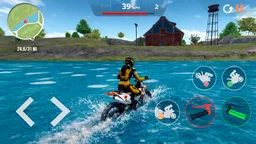
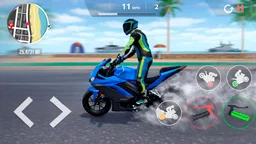
I came away from Motorcycle Real Simulator with a clear sense of its appeal: it offers the pleasure of riding around an open world without asking me to treat every session like a race against a clock. That makes it easy to pick up for a short break, though it also means players looking for tightly directed competition may want something more structured. As a motorcycle game from Cerebellium Apps, it sits in the racing genre but leans on free-roaming riding as much as on the idea of racing.
What gives a first ride its purpose
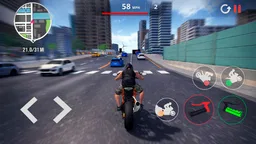
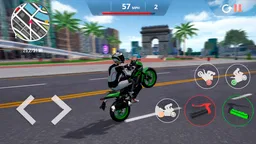
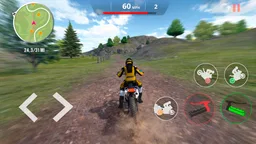
The game’s early appeal is straightforward: get on a motorcycle and explore. I like that this premise gives a new player an immediate, understandable goal. Rather than needing to learn a complicated management system before riding, I can focus on steering, getting a feel for the bike, and seeing where the open world leads. That freedom is the strongest reason to try it if you enjoy motorcycle games for the act of riding itself.
There is a trade-off, though. Open-world freedom can feel welcoming, but it does not automatically provide a strong sequence of objectives. If you need a clear checklist, a rival to beat, or a defined finish line every time you play, a more event-driven racer will probably keep you focused better. Here, I would approach a session with my own small aim: explore a different stretch of the world, practice staying in control, or simply enjoy a few minutes on the bike.
That self-directed style makes the game suitable for casual play. I can imagine opening it during a short pause, riding until I have had enough, and leaving without feeling that I must complete a long campaign. It also suits players who like to learn a game through experimentation. The key is to enjoy the ride as an activity, not to expect a tightly staged introduction to a deep racing career.
Reading progress without a rigid checklist
In a game built around an open world, progress is not always best judged by a single finish line. I find it more useful to notice whether I am becoming comfortable with the motorcycle and whether exploring is still giving me a reason to keep moving. Those are modest signals, but they help turn free riding into a personal challenge rather than aimless wandering.
A practical way to make a session feel purposeful is to set one goal before starting. For example, I might decide to ride carefully for a while, then try a faster run once I have settled in. That simple change gives the session a beginning and an end without relying on objectives I have not chosen. It is also a good way to tell whether the game’s relaxed pace suits me: if making my own goals feels enjoyable, the open format is doing its job; if it feels like homework, I am probably looking for a more structured racer.
The game’s broad reach suggests that this easy-to-grasp premise has found an audience. It has a 4.6 average from around 298,000 ratings, and more than 50 million installs. I would treat those numbers as useful context, not as a promise that every player will enjoy the same things. The experience is still most appealing to someone who likes the freedom to ride rather than needing a new reward or race objective to appear constantly.
How the challenge feels over time
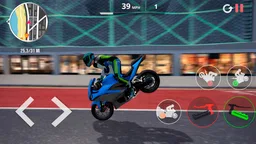
The challenge I would focus on first is control. A motorcycle game feels satisfying when I can make small adjustments and recover from imperfect inputs, rather than simply holding a direction and expecting every turn to work out. Taking time to learn how the bike responds is more rewarding than immediately trying to ride at maximum speed. That is especially true in an open environment, where the player chooses when to take risks instead of following a race pack.
There is a useful distinction between a game that is difficult and one that leaves me unsure what to do next. If a ride goes badly, I can slow down and approach it as practice. If I lose interest because I cannot identify a meaningful next step, better handling alone will not solve that problem. For me, the game is best when I supply a little structure of my own and treat each ride as a small experiment in pace and control.
Players who want an escalating series of races, increasingly demanding opponents, or a defined competitive ladder should keep their expectations measured. The open-world motorcycle focus is not the same promise as a conventional championship racer. A more event-led alternative is a better fit when the main pleasure comes from beating a set target and moving immediately to a harder one. This game makes more sense when roaming and riding are themselves part of the reward.
Keeping play enjoyable without turning it into a chore
Motorcycle Real Simulator is free to start, with in-app purchases priced from $2.99 to $21.99 per item. That matters most if you are the kind of player who feels pushed to spend whenever progress slows. I would begin by deciding whether the core riding is enjoyable on its own, then avoid treating purchases as a necessary shortcut. The game is a much better match for a relaxed player who can stop when a session stops being fun than for someone who feels compelled to optimize every part of progression.
My practical recommendation is to use short sessions as a test. Ride for a while without setting a spending goal, and pay attention to whether you naturally want to return. If the appeal comes from exploring and improving your feel for the bike, you have a good reason to keep playing. If you are only continuing because you expect a reward to arrive soon, that is a sign to take a break or choose a racer with clearer event-to-event progression.
There is also a small but important difference between replay value and retention pressure. An open world can invite another ride because there is more space to explore, but a player should not have to manufacture endless tasks to justify staying. I prefer to see the freedom as an option rather than an obligation: a quick ride is enough, and there is no need to turn every session into a long grind. That attitude makes the game easier to enjoy on its own terms.
Who should take it for a ride
I would recommend it to someone who wants a casual motorcycle simulator experience, enjoys roaming, and is happy to make personal goals. It is also a sensible choice for players who prefer to practice at their own pace instead of competing in every session. The content rating is Everyone, so its age classification is broad, while parents can still decide whether the game’s style is right for a particular child.
I would steer a few players elsewhere. If you want a realistic training tool, a serious motorcycle-handling simulation, or a campaign built around carefully staged races, do not assume that an open-world premise guarantees those things. Similarly, if you dislike self-directed play and need a steady stream of explicit challenges, a conventional racing game may provide a more satisfying loop. The right choice depends less on the word “simulator” and more on whether free riding is what you actually enjoy.
For an everyday use case, imagine having ten minutes between errands. I would open the game, take a short ride, and choose one simple focus—such as staying controlled rather than rushing. That makes the session feel complete without needing to commit to a lengthy event. On a longer evening, I would be more likely to keep exploring, but only if the world and the riding continue to hold my attention. This flexibility is a genuine strength for casual play, even if it does not replace the momentum of a race-focused campaign.
A measured verdict on its progression
With a release date of August 30, 2018, and a current version of 4.2.15, the game has had room to find a sizable audience. It is free to download, and the minimum operating-system requirement is version 7.0. I would not choose it solely because of its popularity or availability, however. The deciding question is whether I want an open-ended ride or a tightly organized competition.
For me, the progression works best when I do not expect it to carry the entire experience. Early goals come from learning to ride and choosing where to go; progress becomes meaningful when I notice better control or find a reason to explore further. The challenge can be satisfying for a self-motivated player, but the relaxed structure will not suit everyone. My advice is simple: try it for the riding, set small goals that make each trip feel worthwhile, and move on if you need a stronger sequence of races and rewards.
Motorcycle Real Simulator is an easy recommendation for a friend who wants a free-roaming motorcycle game and can enjoy a ride without needing a strict agenda. I would not pitch it as the best option for someone chasing a demanding competitive ladder. Its strongest quality is the freedom to make a session your own; its main limitation is that this freedom asks the player to supply some of the motivation. If that sounds appealing rather than frustrating, it is worth taking out for a spin.
What we like
- Offers an open environment for free riding.
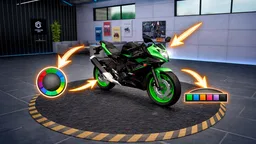
- Includes multiple motorcycles to try.
- Simple controls are approachable for new players.
- Quick sessions make it easy to play casually.
- Motorcycle sounds add atmosphere to rides.
What could be better
- Some bikes may require substantial in-game progress.
- Handling can feel unrealistic to experienced riders.
- Repetitive tasks may limit long-term interest.
- Ads can interrupt the play experience.
- Performance may vary across older devices.







