
Moto Racer: Bike Racing Game review
 Analysis by Appsdrops
I would approach Moto Racer: Bike Racing Game as a quick way to get into motorcycle racing, rather than as a promise of a deep simulation. It is a free racing game from Bacon Ltd, and its straightforward premise suits a first-time player who wants to start riding without first learning a complicated setup. The useful question is whether its style of racing matches the kind of session you want: a brief burst of action, or a more detailed experience built around realistic bike handling and long-term tuning.
What to expect from the ride
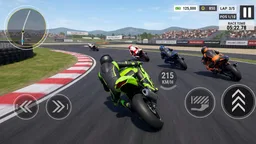
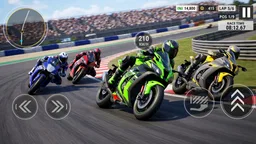
The game’s focus is speed and racing tracks. That makes it a natural fit when I have a few spare minutes and want to concentrate on a race instead of managing a large collection of menus. The appeal is in getting onto a bike and trying to make a run go better, not in treating the game like a technical guide to real-world motorcycling.
It belongs to the crowded motorcycle racing corner of the racing genre, where alternatives range from arcade-style rides to games that emphasize realistic control. I would choose this one when I want the more immediate end of that spectrum. If your priority is detailed simulation, careful mechanical setup, or a highly structured career, compare it with games that put those elements front and center before settling in.
The game is marked Everyone, so its age rating is broad, and it has passed ten million installs. Its average rating is 3.8 from roughly fifteen thousand ratings. Those figures suggest plenty of players have tried it, but they are not a substitute for deciding whether its pace and handling feel right to you. I would use a first session to judge that directly instead of assuming popularity means it suits every racing fan.
There is also a practical cost distinction: downloading is free, while optional in-app purchases range from $0.99 to $25.99 per item. I would begin without buying anything and see whether the basic experience holds my attention. That keeps the decision simple: first establish that you enjoy the riding, then consider whether any purchase actually addresses something you want from the game.
Start simply, then learn the feel
On a first launch, my advice is to resist the urge to rush through any prompts. Read what the game puts in front of you, take note of the controls it presents, and use the earliest opportunity to get comfortable with them. I would not assume that steering or acceleration behaves just like another bike racer; even familiar-looking controls can reward different timing.
For the first few attempts, focus on one thing at a time. If you are struggling to stay on a clean line, pay attention to steering before trying to optimize every movement. If the bike is moving as you expect but the race still feels untidy, make a deliberate change to your timing rather than altering several habits at once. This small, repeatable approach makes it easier to tell whether a mistake comes from input, anticipation, or simply not knowing the track yet.
A useful first success is not necessarily a perfect run. I would count it as progress when I can complete a race with fewer panicked corrections than the previous attempt. That is a more reassuring target than expecting an instant win, especially for someone new to mobile racing. Once the controls feel less like guesswork, the speed becomes more enjoyable instead of merely stressful.
For a realistic everyday use, imagine opening the game during a short break, playing a race, and stopping before the session turns into a longer commitment. The low-friction appeal is clear if that is what you want. If you prefer a game that rewards a planned hour-long session with layered progression, this may not be the best match unless its particular racing loop keeps drawing you back.
Where new riders can get confused
The most common early mistake in a fast racing game is treating every moment as a reason to react harder. Overcorrecting can make a ride feel less controlled, even when the original problem was simply acting too late. I would try calmer, earlier inputs and change only one part of my approach per attempt. It is a practical way to learn without needing to guess whether a new setting or a new technique caused the difference.
Another potential point of confusion is expecting a racing game to explain its whole appeal immediately. A first run tells you whether the pace is engaging, but it does not necessarily answer whether you will enjoy repeating tracks or improving your consistency. Give yourself a few focused attempts before deciding, while also being honest if the handling never feels comfortable. Persistence is useful; forcing yourself to like a control style is not.
Purchases can be a distraction during that first evaluation. Since the game offers in-app items, I would separate the question of whether I enjoy racing from the question of whether I want to spend. Avoid making a purchase just because a run went badly or because you assume it is necessary to understand the game. First learn what the free experience feels like, then decide whether an item offers something you personally value.
Version 1.2.4 is the current version, and the game was released on March 13, 2025. It requires Android 8.0 or later. If you are installing on an older device, check the operating-system requirement before planning a session. The game is also available as a free download, so the initial decision is about compatibility and interest rather than an upfront price.
Who will enjoy it, and who may prefer another racer
I would recommend giving it a try if you like the idea of motorcycle racing, want a free starting point, and are happy to judge a game by how its riding feels in your hands. It can also suit someone who wants a short activity between other tasks, rather than a sprawling game that demands attention to many systems before the racing begins.
I would look elsewhere if your favorite part of racing games is fine-grained control over a bike’s technical behavior, a detailed simulation feel, or an extensive progression structure. Those are reasonable preferences, but they call for a different kind of product. Likewise, players who dislike learning through repeated attempts may find a racing game less satisfying than a slower-paced alternative.
Compared with car racers, the motorcycle focus changes what I look for: I care more about whether steering feels readable and whether I can settle into a rhythm than about a broad selection of vehicle types. Compared with more simulation-oriented bike games, I would judge this one by immediacy and approachability rather than expecting a lesson in real riding. That distinction helps set fair expectations before installing it.
Build confidence before chasing speed
After the first comfortable run, make the next step modest: repeat a race or situation and aim for a cleaner, more controlled effort. The point is not to invent a complicated training routine; it is to notice whether practice makes the experience more satisfying. If it does, keep going and gradually push your pace. If it does not, that is a clear sign that another racing game may suit your preferences better.
I would also keep sessions purposeful. Decide whether you are playing to relax, to get used to the controls, or simply to enjoy a burst of speed. A clear goal makes it easier to stop when the game has served its purpose, and it prevents a rough attempt from turning into an unplanned spending decision. For a quick break, that kind of boundary is especially useful.
The broad audience rating and free entry make trying the game relatively straightforward, while its optional purchases are worth keeping in mind if you prefer to avoid spending inside games. The 3.8 average reflects a mixed reception rather than a universal favorite, so I would treat it as a prompt to test the feel for yourself, not as a verdict.
My recommendation after a first session
Overall, Moto Racer: Bike Racing Game is worth a look if you want a motorcycle-focused racing game that you can try without paying to download. I would go in expecting fast track action and give the controls a few calm attempts before making a judgment. Its strongest case is for a player who wants an accessible ride and a quick way to spend a break; its weakest is for someone who needs deep simulation or extensive progression to stay interested.
My simple recommendation is to install it only if that racing style sounds appealing, check that your device runs Android 8.0 or later, and make your first goal consistency rather than a perfect result. If the bike starts to feel responsive and another run sounds fun, you have found a good reason to continue. If the handling or repeat-race rhythm does not click, move on without feeling that you need to buy anything to give it a fair chance.
What we like
- Quick races make it easy to play in short sessions.
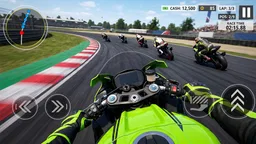
- Touch controls are simple to learn.
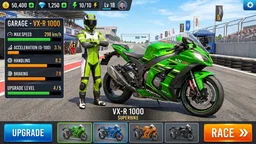
- A variety of bikes adds progression goals.
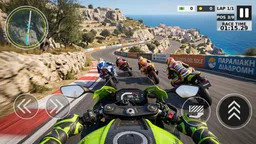
- Different environments help keep races visually fresh.
- Offline play is useful when an internet connection is unavailable.
What could be better
- Frequent ads can interrupt the racing flow.
- Upgrades may take time to earn without purchases.
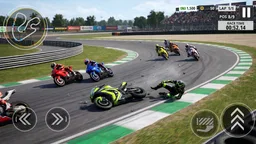
- Racing physics can feel less realistic than a simulator.
- Some tracks offer limited route variation.
- Performance may vary on older devices.







