





MONOPOLY: Bingo! review
 Analysis by Appsdrops
I went into MONOPOLY: Bingo! expecting a familiar bingo game with a Monopoly twist, and that is the clearest way to understand its appeal. You daub numbers as they appear, keep an eye on your cards, and chase the satisfaction of completing a line or another winning pattern. The premise is easy to grasp, so there is very little ceremony between opening the game and getting involved. Its “Guess Who? meets MONOPOLY: Bingo!” pitch also hints at a playful mash-up, while the basic attraction remains wonderfully straightforward: spot a number, mark it, and hope the next call brings your card closer to a win.
From the first call to the first daub
MONOPOLY: Bingo! is a free board game from Clipwire Games Inc, built around bingo’s familiar call-and-mark rhythm. That familiarity makes the first session approachable even if you have not played a mobile bingo game before. You do not need to learn a complicated rulebook to understand the central task. Numbers arrive, you look for them on your card, and you daub the matches. The decision-making is easy to follow, but the tension comes from whether the numbers you need will show up in time.
That first action matters because it establishes the whole feel of a round. I find bingo most enjoyable when the interface lets me focus on the cards and the changing pattern rather than stopping to decode a long list of systems. Here, the core idea is instantly readable: watch, react, and keep track of what is still missing. A successful daub gives a small burst of progress, while a number that does not help your card keeps the suspense alive. The result is a light, focused activity that suits quick play as well as a longer stretch when I feel like staying with it.
The Monopoly identity gives the game a recognizable frame, but the main loop is still rooted in bingo. That is a useful distinction if you are deciding whether to download it. This is not simply a board-game recreation in which you move around a traditional Monopoly board; the store description presents it as bingo with a Monopoly connection. I would approach it as a casual bingo game first, with the familiar brand helping set its personality. Fans of number games should feel at home quickly, while people drawn to the Monopoly name may enjoy seeing that theme attached to a different kind of play.
There is a pleasing immediacy to the opening minutes. A call gives you something to react to, a matching number gives you a reason to tap, and an almost-complete pattern makes the next call feel important. Nothing about that loop needs a lengthy explanation. It works because every action has an understandable purpose, and every new number can change how close the card feels to a payoff. If you are looking for a board game app that is simple to pick up rather than demanding to master, this clear entry point is one of the game’s strongest qualities.
A rhythm built on small reactions
The feedback rhythm is the heart of the experience. Each call invites a quick check of the card, and each daub provides a visible sense of movement toward a possible win. When a number does not match, the round continues without giving you a reason to lose track of the goal. When it does, the card becomes more promising and your attention naturally sharpens. That repeated cycle—listen for the call, scan, mark, and reassess—keeps the game active even though the basic action stays consistent.
I like this sort of structure because it offers little moments of anticipation without asking for a large time commitment every time I play. A round can feel calm when the calls are not helping, then suddenly become more engaging as the card fills in. There is a small mental rhythm to checking what you need and remembering which spots remain open. It is not deep strategy, and it does not need to be. The fun comes from staying alert and feeling that one useful call could change the outcome.
The game’s limited-time framing adds urgency to its pitch: daub, duel, and collect for a limited time. That language gives the activity a sense of occasion, making a session feel like something to take part in now rather than an endlessly abstract practice round. It also reinforces the idea that the game is designed around repeated bursts of participation. I find that framing appealing when I want a casual game with a clear reason to jump in, although players who prefer a slower, purely solo puzzle may want to consider whether a more event-oriented mood is their style.
Because the central loop is so familiar, the quality of a session depends on how satisfying those repeated reactions feel. The best moments are not complicated: a number appears, you spot it, and the card looks closer to completion. That simple feedback can be surprisingly effective on a phone, where short interactions are often more welcome than long stretches of planning. It gives the game a natural pick-up-and-play quality, while still leaving enough suspense for me to care about what happens next.
What keeps the reward in view
Every bingo game needs a reason to keep watching the calls, and here that reason is the prospect of completing a pattern and collecting a reward. The goal is easy to hold in mind, which helps keep the action focused. You are not juggling a stack of instructions while numbers pass by; you are looking for the next useful match and gauging your progress. That clarity is especially welcome in a casual mobile game, where a quick return to the screen should not require remembering a complicated chain of tasks.
The reward is not only the result at the end of a round. There is also a smaller, immediate payoff in each successful daub. A match confirms that you are tracking the calls correctly and gives your card a more complete look. If you are close to a winning pattern, that progress can make the next number feel more exciting. I enjoy games that make progress legible in this way, because even a short session has a clear emotional arc: begin with an open card, build toward a possibility, and see whether the calls deliver.
The Monopoly theme supports that reward-seeking mood by giving the game a familiar identity, while the bingo action supplies the moment-to-moment satisfaction. The store description also uses the word “duel,” suggesting a competitive element in its presentation, but I would keep expectations grounded in the core promise: daubing, playing, and collecting. The basic pleasure does not depend on treating every round like a high-stakes contest. It comes from the combination of chance, attention, and visible progress, which makes the game easy to revisit when I want something light and lively.
For players who enjoy a clear goal, that reward loop is a good fit. For those who need elaborate tactics or a story that changes with every session, the appeal may be more limited. This is a board game app organized around a compact activity, not a sprawling adventure. Its strengths are accessibility and repeatable suspense. I would recommend it most readily to someone who already enjoys bingo or wants a low-friction game whose next objective is always obvious.
When a round ends and another begins
A satisfying casual game also needs a reason to start again after the outcome is settled. Bingo naturally provides one: the next card and the next sequence of calls offer a fresh chance. The reset is part of the genre’s appeal. You can leave a round behind and return to the same easy-to-understand challenge without needing to remember a long campaign or reconstruct a complicated plan. That makes the experience particularly convenient for short breaks, when I want a self-contained activity rather than a commitment that demands a specific amount of time.
The limited-time language gives that reset an extra nudge. The prospect of taking part and collecting while an opportunity is available can make starting another session feel purposeful. It is a straightforward motivational hook, and it suits the game’s quick-action format. I appreciate when a mobile game makes its next step clear, though I also think it is wise to keep the experience in perspective: a compelling loop can make “one more round” tempting, so it helps to play at a pace that feels comfortable.
MONOPOLY: Bingo! is free to download and includes in-app purchases, with listed items ranging from $0.49 to $749.99. That is a wide span, so I would pay attention to purchase prompts and keep an eye on spending if you decide to explore optional transactions. The core description remains centered on bingo, daubing, dueling, and collecting, but the presence of in-app purchases is relevant for anyone choosing a game for themselves or a family member. Its content rating is Teen, another detail worth considering before installing it for a younger player.
On the practical side, the game is listed for Android with a minimum operating-system requirement of version 9. It launched on January 21, 2025, and its current version is 1.22.2. Those details help set expectations about compatibility and the edition you may encounter. The game has attracted over one million installs, and its average rating is 4.7 from around 154,000 ratings, with roughly 9,100 written reviews. Those figures suggest that it has found a sizable audience, though personal preference still matters more than popularity when choosing a casual game.
The verdict on the loop
What works best here is the clean chain of actions: a number is called, I search the card, a match gives me a quick sense of progress, and the possibility of a completed pattern keeps me watching. When a round closes, the familiar structure makes it easy to begin again. That is the full appeal in a nutshell, and it is a good one for players who enjoy bingo’s blend of chance and attention. The game does not need a complicated premise to make the next call matter.
I also like that the experience is easy to explain to someone else. If a friend asks what you are doing, the answer is simple: playing bingo with a Monopoly theme, daubing numbers and working toward a reward. That kind of clarity is valuable in a mobile game. It makes the first session approachable and gives returning players a familiar routine. The “Guess Who?” comparison in the store summary adds a playful note to the pitch, but the most reliable expectation is still a bingo-focused game with a recognizable board-game brand.
There are trade-offs to that simplicity. Players looking for deep tactical decisions may find the repeated call-and-daub pattern too light, while anyone wary of in-app purchases should be mindful of the broad price range attached to optional items. Neither point changes the basic identity of the game, but both are worth weighing before installing. For me, the central loop is strongest when I want an uncomplicated distraction, a little anticipation, and a clear finish to each burst of play.
Overall, MONOPOLY: Bingo! is an accessible choice for fans of casual bingo and anyone curious about a Monopoly-themed take on the format. Its core loop is tangible from the first call: act by daubing, get feedback as the card fills, pursue a reward, and reset for another chance. I would give it a try if that kind of quick, repeatable play sounds appealing. It understands the pleasure of a simple goal and a suspenseful next number, then builds its reason to return around that familiar rhythm.
What we like
- Familiar Monopoly themes make bingo rounds easy to follow.
- Short rounds suit quick play sessions.
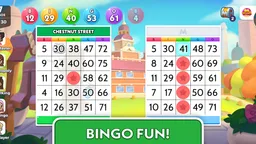
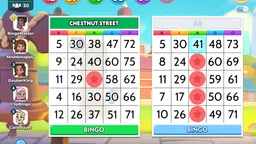
- Multiple bingo cards add variety to each round.
- Power-ups can help improve your chances of winning.
- Bright visuals give the game a polished feel.
What could be better
- Random number draws can make outcomes feel luck-based.
- Several cards at once may be hard to track.
- Progress can slow when useful boosts are unavailable.
- Frequent play may feel repetitive over time.
- Some rewards may encourage in-app purchases.







