
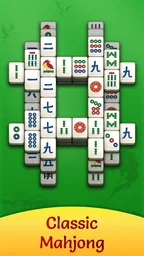
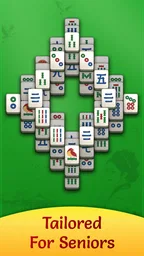

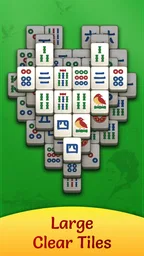
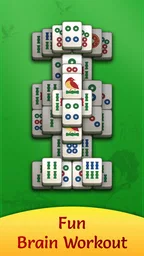


Mahjong Voyage: Tile Matching review
 Analysis by Appsdrops
Some mobile games are easy to pass around: one person takes a turn, another picks up the phone later, and the whole household can enjoy a quiet break without needing a complicated setup. Mahjong Voyage: Tile Matching puts a familiar tile-matching idea in that relaxed space, pairing classic Mahjong play with the promise of building a dream zen paradise. I like that combination as a starting point: it gives the game a calm theme while keeping the central activity easy to understand.
A calm game for shared downtime
Mahjong works well for short pauses because its basic appeal is immediately recognizable: look over a board, find matching tiles, and make considered choices. That makes this Mahjong game a natural candidate for a shared phone or tablet in a household. One person can play for a while, then hand the device to someone else when they are ready. The simple premise also makes it approachable for people who do not usually spend much time with mobile games.
The title, Mahjong Voyage: Tile Matching, signals both sides of its identity. “Mahjong” sets expectations for a board-style puzzle, while “Voyage” and the zen-paradise theme suggest a gentler presentation than a high-pressure competition. The store summary describes matching tiles and building a dream paradise, so the appeal is not only the puzzle itself; there is also a sense of working toward a peaceful setting. That gives the experience a clear mood, even for someone just browsing for a casual game.
For me, the strongest household use case is not a formal family activity with rules everyone has to learn together. It is a low-friction option for a quiet moment: perhaps one person plays while waiting, or a device stays available for whoever wants a puzzle break. The board-game category suits that kind of use, since the central idea is familiar and does not demand that everyone follow a story or keep up with a fast-moving match.
Why the premise is easy to share
Tile matching is straightforward to explain in conversation. A new player can understand the broad goal by watching someone else for a moment, and a returning player can get back into the familiar rhythm without a long introduction. That is useful when several people share a device, because the game does not need to become a scheduled group session to be enjoyable. It can simply be there when somebody feels like playing.
That said, a shared-device experience depends on the people using it as much as on the game. If one person prefers to keep a particular activity personal, it is worth agreeing on that before others pick up the device. I would treat Mahjong Voyage as a casual puzzle to take turns with only when everyone is comfortable doing so, rather than assuming that every player’s activity or progress should be open to the whole household.
Setting practical boundaries
Before installing any game on a shared phone or tablet, I find it sensible to decide who is allowed to make purchases and which store account is in use. This title is free to download, with in-app purchases priced from ninety-nine cents to two dollars and ninety-nine cents per item. That does not mean anyone needs to spend money to try the game, but it does make a quick household conversation useful: adults can clarify whether purchases are allowed and who should approve them.
Those boundaries matter especially when a device is used by children as well as adults. A child may see an appealing option and tap before thinking about the cost, while the person responsible for the store account may expect every purchase to be intentional. Clear expectations prevent misunderstandings and help keep a relaxed game from becoming an awkward conversation about an unexpected charge. The same approach is useful for any free-to-play app that offers optional purchases.
It is also worth agreeing on ordinary device etiquette. For example, people can take turns using the device rather than interrupting someone who is in the middle of a puzzle, and they can avoid changing settings or making account decisions on another person’s behalf. These are household choices, not special game features. Keeping the distinction clear helps everyone enjoy the game without assuming that it provides account separation or family-management tools.
Taking turns without mixing expectations
Coordination can be simple: decide whether the device is generally shared, whether each person should ask before opening the game, and whether anyone prefers to play alone. A small agreement like that is often enough for a casual title. It gives children a clear routine and gives adults confidence that the shared screen is being used respectfully.
I would not treat a shared device as a guarantee that each person has a separate experience. When more than one person uses the same phone or tablet, they should be mindful that actions in apps and store accounts can affect the person who owns or manages the device. If independent use matters, the household should check the device’s own account and user settings rather than relying on assumptions about the game.
The game’s calm Mahjong framing makes it a reasonable option for taking turns, but coordination still comes down to communication. One player might enjoy spending time on the tile puzzle, while another may be more interested in the paradise-building theme. A quick chat about what each person wants from the game can make sharing more pleasant and prevent anyone from feeling that their time or progress has been taken over.
Age context and trust
Mahjong Voyage is rated for Everyone, which makes its audience broad in the store. That rating can be reassuring when considering a game for a household with mixed ages, but it is still only one part of a parent’s decision. Adults should consider the child’s maturity, the way the device is shared, and the household’s rules around optional spending. A general audience rating does not replace those personal judgments.
The simple board-game premise is another reason the title may be easy to introduce to different generations. Someone who enjoys traditional puzzles may be comfortable with the tile-matching idea, while a younger player may be drawn to the paradise theme. It offers a shared point of interest without requiring that every household member have the same gaming habits.
Trust also means avoiding promises the game has not made. I would not describe it as a dedicated children’s app or claim that it includes parental controls, separate profiles, or special privacy protections. Those details should be assessed through the app store and the device’s available settings. For a responsible household review, it is better to keep the focus on what is clear: the game is a free board-style title with optional in-app purchases and an Everyone rating.
A familiar puzzle with a gentle theme
The store summary gives the game a concise hook: match tiles and build a dream zen paradise. That pairing should appeal to players who want a classic puzzle premise with a light sense of progression or purpose around it. I appreciate the contrast between careful tile matching and the peaceful setting suggested by the theme. It offers a reason to return beyond simply opening another board, without asking the player to take the experience too seriously.
Because the central activity is recognizable, it can fit into different routines. Someone might pick it up during a short break, while another person could prefer a longer, quieter session. The important point is not to assume that every player will use it the same way. For households sharing one device, flexible expectations are often more helpful than trying to turn a casual game into a group project.
The game is free, and its current version is 3.7.0. It was released on February 7, 2025, and it requires Android 7.0 or later. Those details are useful when checking whether a device can run it and deciding whether to try it, while optional purchases remain a separate consideration. The game has an average rating of 4.8 from around 215,000 ratings, with about 4,000 written reviews and over 5 million installs. Those figures point to a widely played title, though they cannot tell any one household whether its style will be a personal favorite.
Who may enjoy it most
I would recommend taking a look at this tile-matching game if you enjoy calm board puzzles, want something easy to introduce to a casual player, or like the idea of a zen-themed setting alongside Mahjong play. It may suit a shared household device when people are happy to take turns and the account owner has made purchase expectations clear. Its broad age rating and familiar concept make it approachable, but the best fit still depends on individual taste.
Players looking for a competitive multiplayer experience, a dedicated family mode, or a particular account-management feature should not assume that those needs are met simply because the game is easy to share physically. The practical distinction is important: passing a device between people is not the same as having separate accounts or coordinated household tools. If those features are essential, check the app’s current store information and the device’s own settings before relying on them.
The household verdict
As a casual board game, Mahjong Voyage: Tile Matching has a clear and appealing premise: match tiles, enjoy a peaceful atmosphere, and work toward a dream zen paradise. I see its best household role as an easygoing option for shared downtime rather than a game that needs everyone to play together. The simple concept helps make it approachable, while the theme gives it a softer identity than a bare puzzle board.
My main practical advice is to keep the boundaries just as relaxed and clear as the game’s mood. Agree on who can use the device, who manages the store account, and whether optional purchases are allowed. For children, pair the Everyone rating with your own age judgment and household rules. That small bit of coordination can help prevent confusion and make taking turns feel natural.
Overall, Mahjong Voyage looks like a sensible choice for anyone seeking a free Mahjong-style tile-matching game with a tranquil theme. Its broad audience, familiar puzzle idea, and optional purchase model make it easy to consider for casual play, especially in a home where people already share devices thoughtfully. If you want a calm board game to dip into and appreciate a little zen-inspired framing, it is worth checking out.
What we like
- Easy-to-learn matching rules make it approachable for new players.
- Short rounds suit quick breaks throughout the day.
- Tile layouts offer a satisfying visual focus.
- A relaxing pace makes it a low-pressure puzzle game.
- Progression gives players a reason to return for more puzzles.
What could be better
- Some layouts may feel repetitive after extended play.
- Later puzzles can require patience when useful matches are scarce.
- Frequent play may rely on hints or shuffles to clear tough boards.
- Small tile details may be harder to distinguish on compact screens.
- The game may offer limited appeal to players seeking action or story.







