
Mahjong Club - Solitaire Game review
 Analysis by Appsdrops
I like Mahjong Club best as a quiet, repeatable puzzle: open a board, scan for a sensible move, and work through it at my own pace. This is a classic tile-matching board game, not a competitive mahjong table or a sprawling strategy game. That distinction matters: if you want a low-pressure way to focus for a few minutes, it fits; if you expect social play, deep rules, or a long campaign, you may want something else.
How a round fits into an ordinary day
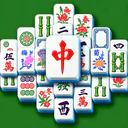
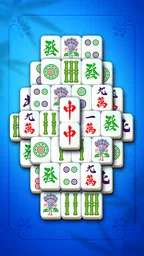
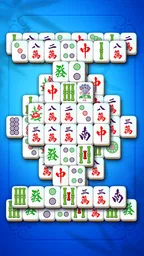
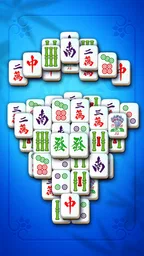
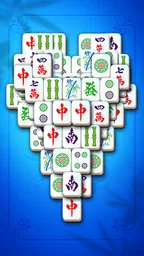
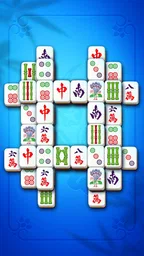
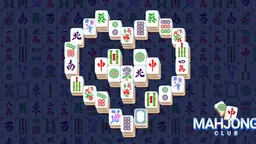
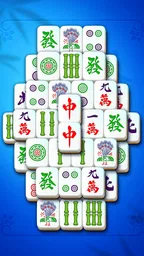
The basic rhythm is familiar to anyone who has played solitaire mahjong. I look for matching exposed tiles, remove a pair, then reassess the board as newly available choices open up. The challenge is not just spotting two identical symbols. A tile can be a tempting match now and still be the wrong one if removing it leaves a useful tile trapped or narrows the remaining options.
That makes the game easy to pick up without making every board automatic. I can play casually by choosing a visible pair and seeing where the puzzle goes, or slow down and consider which match preserves the most choices. The latter is a better habit when a board starts to feel stuck: pause before taking the first obvious pair, and compare the consequences of the alternatives you can actually play.
A realistic use is a short break between tasks. I can settle into one board without needing to learn a complicated ruleset or coordinate with other people. It also suits a quiet evening when I want something more engaging than scrolling, but not something that demands sustained attention for a long stretch. Since the game can be played offline, it is useful in places where a connection is unreliable, such as a commute or a waiting room.
Offline play is particularly valuable for this kind of puzzle because the central pleasure is the board itself. I do not need a live opponent to make a move meaningful. Still, I would treat it as a focused solo activity rather than assume every part of the app works without a connection. The practical point is simpler: the puzzle play has an offline use, so a brief loss of connectivity need not automatically end a session.
Build a repeatable board-reading habit
My most useful routine is to scan before each move rather than play on reflex. First I check which tiles are exposed and which are blocked by neighboring or stacked tiles. Then I look for pairs whose removal could reveal more of the layout. When several matches are available, I give priority to a move that opens access or keeps multiple future choices alive, rather than treating every match as equally helpful.
This is not a guaranteed solution method; a board can still become difficult, and a good-looking move can have consequences that are hard to see at a glance. But the habit makes the game feel less like random tapping. It is especially helpful when two pairs appear interchangeable. I ask which pair seems more likely to clear a path to covered tiles, and leave the less urgent pair for later if the board permits it.
Another small improvement is to avoid rushing the final part of a board. Early on, the layout offers many visible choices, so a quick match may seem harmless. Near the end, each remaining tile matters more, and an unwise removal can leave a dead end. I slow down when the available pairs become scarce. That change of pace is a simple way to make the puzzle more satisfying without needing any special feature or elaborate strategy guide.
Settings and comfort: check what the game actually offers
I recommend taking a moment to inspect the available settings when first settling in, especially if you expect to play often. On a tile game, small comfort choices can matter more than flashy extras: the board should be easy to read, and controls should feel natural on the screen you use. I would check the options that are visibly available in the installed version rather than assume there are particular themes, hints, or control modes.
That cautious approach is useful because players value different things. Someone playing on a smaller phone may care most about legibility and avoiding accidental taps. Someone with a larger screen may prefer a layout that makes it easy to scan the whole board at once. If an option is available, try it on a real puzzle rather than judging it from its label; a setting that looks appealing can make tile recognition less comfortable for your eyes.
I also suggest deciding in advance how you want to handle a difficult board. If the game presents help or recovery options, use them deliberately instead of tapping through them out of frustration. A hint can be useful for understanding a missed possibility, while leaning on assistance for every uncertain move can remove the satisfaction of reading the layout yourself. If you prefer a pure puzzle challenge, keep your own rule consistent; if you are unwinding, there is no need to turn every board into a test.
There is a practical trade-off here: a relaxing game can become irritating if you play when tired and keep making careless matches. I find it better to stop for a moment when I notice myself tapping without scanning. A short pause often helps more than restarting immediately. The game is most enjoyable when I treat each board as a small exercise in attention, not a task that must be cleared as fast as possible.
Faster play without turning it into button-mashing
Experienced play is less about moving quickly and more about reducing wasted decisions. I use a consistent scan order: inspect the most constrained tiles first, then consider the more obvious exposed pairs. Tiles that are difficult to reach may become the real bottleneck, while a pair sitting in plain sight might remain available later. This simple order helps me notice when a move changes access to the board instead of merely reducing the tile count.
A second useful pattern is to keep track of pairs I have postponed. If I see a match but choose not to remove it, I make a mental note of where it is and why I left it. That prevents me from repeatedly reconsidering the same easy pair while overlooking a more important opening elsewhere. It is a lightweight habit, not a demand to memorize the entire layout, and it works particularly well on boards where several similar symbols are clustered together.
I also separate recognition from commitment. I can spot a promising match, then take a beat to check whether either tile is supporting access to something else. That extra pause is small, but it reduces the common mistake of clearing a convenient pair simply because it is visible. When I am playing for relaxation, I do not apply this to every move; I use it when the board has narrowed or when a choice could uncover a large section.
There is no need to turn the game into a speed challenge to get better at it. Faster pattern recognition comes naturally from seeing how the board changes after a match. If a move opens a useful route, I notice the relationship; if it leaves me with fewer options, I learn to be more careful next time. I prefer that kind of gradual improvement to chasing a pace that makes a calm solitaire game feel stressful.
Where the game’s limits become clear
Mahjong Club is deliberately focused, and that focus is both its strength and its limitation. It gives me the familiar pleasure of solitaire tile matching, but it is not the right choice if I want to learn traditional four-player mahjong, compete directly against friends, or manage a larger collection of strategic systems. Those are different kinds of games, even if they share the word mahjong.
It may also be less appealing if you need constant novelty or a strong narrative reason to keep playing. The core activity remains board reading and matching, so someone who tires quickly of repeated puzzle structures may prefer a broader puzzle collection. Likewise, a player who wants fast action or real-time competition will probably find this too measured. I would choose it for calm concentration, not for adrenaline.
The free price makes it easy to try, but the game includes optional in-app purchases, with individual items ranging from under a dollar to just under a hundred dollars. That wide spread is worth keeping in mind before buying anything. I would decide what, if anything, adds value to my own play and avoid treating a purchase as necessary just because I am enjoying the puzzle. The core appeal is the board-solving loop, so spending should be a personal choice rather than an assumed part of playing.
For a family device, the Everyone age rating makes it broadly suitable, though I would still keep purchase awareness in mind when a child can access the device. The game is developed by GamoVation, and its current version is 4.5.4. It requires Android 6.0 or later. Those details make it straightforward to judge whether it fits an older Android phone, while the actual feel of tile visibility and touch accuracy is still best assessed on the device you plan to use.
Who I would recommend it to
I would recommend it to someone who wants a dependable solo puzzle for spare moments and enjoys making a few careful decisions without pressure. It can suit a newcomer because the basic matching idea is approachable, while experienced solitaire players can get more from it by planning around blocked tiles and preserving options. Its offline play is another strong reason to keep it in mind for travel or places with patchy reception.
The audience response is strong: the game has a 4.8 average from around 955,000 ratings, and it has passed 10 million installs. Those figures suggest that the simple format has found a large audience, but they do not guarantee that every player will enjoy its measured pace. I would use them as reassurance that it is an established choice, not as a substitute for asking whether solitaire mahjong is the sort of puzzle I actually like.
Compared with a paper tile puzzle or a generic matching game, the app’s advantage is convenience: the board is ready whenever I have a few minutes, and offline play makes it less dependent on where I am. Compared with a richer mahjong title, its appeal is the opposite: it keeps attention on the solitaire puzzle instead of asking me to learn a fuller competitive ruleset. That makes it an easy recommendation for focused downtime, but not an all-purpose answer for every mahjong fan.
A calm puzzle worth keeping on hand
Mahjong Club is at its best when I approach it with patience rather than speed. I scan the board, hold back a tempting match if it may matter later, and use a consistent routine to make each decision clearer. That gives an otherwise familiar format enough room for thoughtful play without making it feel demanding.
The game is free to start, suitable for a broad age range, and practical when I want a puzzle away from a dependable connection. Its limits are equally clear: it stays within solitaire mahjong, optional purchases deserve a little care, and repeated board-solving will not satisfy anyone looking for competition or major variety. If that focused, unhurried style sounds appealing, I think Mahjong Club is an easy game to try and a useful one to return to when a quiet break is exactly what I need.
What we like
- The guided tutorials make tile-matching rules easy to learn.
- Daily challenges offer a reason to return between regular puzzles.
- A hint option can help when you get stuck.
- The relaxing pace suits short casual gaming sessions.
- Progress across levels gives the game a clear sense of achievement.
What could be better
- Some puzzles may require careful attention to avoid blocking useful tiles.
- Hints can make challenging boards feel less rewarding.
- Repeated layouts may become predictable over time.
- The game may show ads between play sessions.
- Progress can feel slow for players seeking fast-paced action.







