
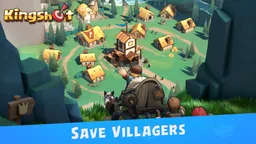
Kingshot review
 Analysis by Appsdrops
I can see why Kingshot makes a strong first impression: it takes medieval strategy and gives it an idle-game rhythm, so there is always a sense of a kingdom waiting for attention. My more useful question is what happens after that initial novelty. For me, its appeal depends less on a single dramatic battle than on whether the small decisions around building and progress remain satisfying when they become part of a routine.
Made by Century Games PTE. LTD., this free strategy game is rated Everyone 10+ and has reached over 50 million installs. It holds a 4.4 average from around 1.6 million ratings, a sign that its blend of strategy and incremental progress has found a broad audience. Optional in-app purchases range from $0.99 to $99.99 per item, so it is worth deciding early whether you want to play at your own pace or are comfortable with spending prompts along the way.
Why the first week feels inviting
The idle strategy framing is a good fit for short visits. Rather than asking me to treat every session as a long tactical appointment, the game makes kingdom-building feel compatible with checking in between other tasks. That lowers the barrier to starting: I can enjoy the sense of development without needing to reserve a whole evening for a complex strategy campaign.
In the opening stretch, the pleasure comes from seeing a medieval realm take shape and from having a clear reason to return. The strategy label matters, but so does the idle side: progress can feel rewarding even when I am not actively playing every moment. That combination is likely to suit someone who likes planning and visible advancement but finds conventional strategy games too demanding in time or attention.
A realistic use case is a brief visit during a lunch break, followed by another check later in the day. I would use those moments to review what needs attention, make a deliberate choice, and leave again rather than open the game expecting a self-contained, deep session every time. That routine makes more sense here than trying to squeeze in a long play period whenever I have a spare minute.
My advice in the first week is to avoid treating every prompt as urgent. In games built around ongoing progress, the feeling that there is always one more thing to collect or improve can turn a relaxing check-in into a chore. I would focus on the choices that support the kind of kingdom I want to develop and let the rest wait. That small boundary helps preserve the game’s casual appeal.
How it compares with other strategy games
Compared with a traditional strategy game that expects sustained attention and careful play in each sitting, Kingshot is easier to fit around a busy day. Compared with a purely casual idle title, its medieval strategy identity gives the progression a more deliberate flavor. That middle ground is its clearest strength: it offers the feeling of managing a realm without requiring every session to become a full tactical exercise.
The trade-off is that players looking for a tightly bounded campaign, a story-led adventure, or a game where every moment is hands-on may find this style less compelling. Idle pacing can make progress feel comfortable, but it can also make the act of checking in more central than the moment-to-moment play. If I wanted a strategy game to challenge me continuously while I play, I would look for a more directly tactical alternative.
What keeps it worthwhile after the novelty
Long-term value comes down to whether routine progress still feels like a choice rather than a duty. The strongest habit for me would be to check in with a purpose: decide what I want to improve, make that decision, and close the game once the visit stops being interesting. This is a practical way to enjoy idle strategy without letting a persistent game quietly claim every spare pause.
Another useful approach is to set a personal spending rule before the in-app purchase offers become familiar. The game is free to start, but purchases can cost from $0.99 to $99.99 per item. I would treat paid options as optional conveniences, not as an assumed part of normal progress, and would avoid buying simply because a timed prompt makes waiting feel uncomfortable. That advice matters especially for players who enjoy collecting incremental gains and may be tempted to speed up every delay.
The game’s lasting appeal is also tied to how much satisfaction you get from gradual development. If you enjoy returning to a growing medieval setting and making small strategic choices, that steady cadence can become a comfortable daily ritual. If you need each session to deliver a clear climax or a fresh challenge, repeated check-ins may start to feel like maintenance rather than play.
A low-friction routine, with limits
I would not recommend making the game the first thing you check whenever you have a spare moment. A better workflow is to choose one or two convenient times in the day, open it when you actually want a strategy break, and stop when you have made the decisions that interest you. This keeps the idle structure useful instead of allowing it to dictate your schedule.
That routine also helps answer whether it suits someone who only plays in short bursts: yes, the idle approach is naturally compatible with brief visits. But short sessions do not automatically mean low commitment. If you feel compelled to return repeatedly or monitor progress too closely, the game can take more attention than its relaxed presentation initially suggests. I would judge it by how it fits your habits after the first few days, not by how easy it is to start.
For younger players, the Everyone 10+ age rating gives a straightforward indication of the intended audience. For anyone sharing a device or managing family spending, the purchase range is the detail I would discuss in advance. The game is free to download, but its optional purchases make a clear household spending boundary sensible.
Where fatigue can creep in
The main risk is repetition. When the pleasure of building a medieval kingdom becomes familiar, progress alone may no longer be enough to make every return feel rewarding. That is not a flaw unique to this game, but it is central to judging an idle strategy title: the same low-pressure loop that makes it easy to pick up can also make it easy to check mechanically.
There is a related tension between patience and convenience. Free play may ask for more waiting than a player prefers, while paid items can make spending feel like the shortcut. I would not assume that paying is necessary to enjoy the game, but I would be honest with myself about whether waiting is part of the appeal or simply an irritation. If it feels like the latter, the game may not be a good fit even if its opening hours are enjoyable.
It is also not the right choice for someone who wants a strategy game that can be completed and put away. Its idle design is built around returning, so players who prefer a clear ending or a self-contained run may be better served by a campaign-focused alternative. I would also skip it if notifications or recurring game routines tend to make entertainment feel like another obligation.
Who should keep it installed
I would keep it installed if I wanted a medieval strategy game that makes room for brief, low-pressure visits and if I enjoyed watching a realm develop over time. It is particularly suitable for players who like having a modest plan when they open a game, but do not want to devote every session to demanding tactical play. Its large audience and 4.4 average rating suggest that many players find that balance appealing, though personal tolerance for idle pacing matters more than popularity.
I would be less enthusiastic about recommending it to someone who wants deep, continuous control, a strongly story-driven experience, or a game that never nudges them toward spending. Those players are not doing anything wrong by preferring another kind of strategy title; they simply want a different rhythm. The best comparison is not whether this is “better” than every strategy game, but whether its return-and-progress structure matches the way you actually like to play.
My long-term verdict
Kingshot earns lasting space on my device only if I treat it as a casual routine rather than a task list. Its blend of medieval kingdom-building and idle progression makes it approachable, and the short-visit format is a genuine advantage for people with scattered free time. Century Games PTE. LTD. has built a strategy game with a broad reach, but the same ongoing structure that supports its habit-forming appeal can become tiring once novelty fades.
I would give it a fair first week, keep purchases firmly optional, and then ask one simple question: do I still enjoy choosing what to do when I return, or am I opening it only because I feel I should? If the answer is the first, its steady pace can make it a pleasant regular game. If the answer is the second, I would uninstall without guilt and choose a more self-contained strategy experience. For me, that is the honest test of whether an idle game deserves a permanent place.
What we like
- Easy-to-learn controls make short sessions accessible.
- A steady flow of rewards helps maintain progression.
- The medieval setting gives the game a distinct style.
- Alliance features encourage coordination with other players.
- Base-building choices add a strategic layer.
What could be better
- Progress can slow without frequent play.
- Some upgrades require long waiting periods.
- Competitive events may favor established players.
- The screen can feel busy with multiple activities.
- Optional purchases may speed up progression.







