

Clash of Clans review
 Analysis by Appsdrops
Clash of Clans is the kind of strategy game I can check for a few minutes between errands, then return to later when I have time to plan a proper attack. Its village-building and battles make a satisfying loop, but the appeal is not simply watching buildings improve: I’m deciding what to protect, what to upgrade, and how to spend a limited attack opportunity. That mix suits players who enjoy gradual progress and tactical choices more than constant action.
A familiar village with plenty to consider
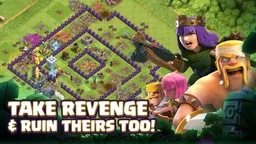
Developed by Supercell, this free strategy game has been available since September 30, 2013. Its longevity is easy to understand once you settle into the rhythm: build a base, gather resources, strengthen defenses, train an army, and take that army into battles against other players. You are not just decorating a settlement. The layout has a practical job, and choices made at home affect how well you fare when someone attacks.
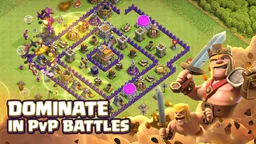
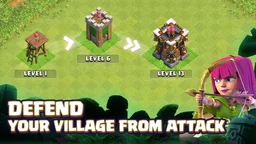
The village gives me two connected problems to solve. First, I need to make progress by choosing what to upgrade and in what order. Then I need to think like an opponent, arranging buildings and defenses so that an attacker cannot simply reach the most valuable targets without resistance. A base that looks tidy is not necessarily a good base; a little deliberate inconvenience for the enemy can matter more than symmetry.
Attacking has its own learning curve. Sending every troop toward the same opening can work against a weak layout, but it is a blunt approach once defenses begin to punish careless placement. I get more from looking at the base first, identifying a vulnerable side, and deciding whether the goal is to break through or secure particular targets. That planning makes victories feel earned, while a poor approach can be costly even when the army looked strong on paper.
There is also a social side to the strategy. Joining a clan can give the game a shared purpose: people can coordinate, discuss attacks, and take part in collective play rather than treating every session as a private building project. That suits friends who like having a regular game to return to together. It is less compelling if you want a purely solo experience with a clear ending and no reason to check back.
How the current build feels
The current version is 18.647.5, and the game remains an established, actively recognizable part of mobile strategy rather than a short campaign with a final screen. Existing players will find a long-running home for continued base development and battles. Newcomers should expect a game built around steady improvement, not an immediate tour of every strategic possibility; learning what to upgrade and how to read a base takes time.
Its reach is substantial: it has more than 500 million installs, an average rating of 4.5, and around 61 million ratings. Those figures indicate that the central loop has broad appeal, but they do not guarantee that its pace will suit everyone. I would treat the popularity as reassurance that there is a large audience, not as a reason to ignore the game’s most important trade-off: progress is designed to unfold over repeated sessions.
The age rating is Everyone 10+, and the game is free to download. Optional in-app purchases range from $0.29 to $239.99 per item, so the purchase range deserves a quick look before handing a device to a younger player. I would approach spending as optional rather than necessary to enjoy the tactical core, and agree on a budget in advance if purchases are a concern. The game’s strategic satisfaction comes from making decisions well, not from buying every available shortcut.
What long-time players gain from its evolution
Clash of Clans has moved through many years of development, and the version number alone tells me that this is a continuing product, not a frozen release. That is useful context for returning players: they are coming back to a game that has kept evolving, rather than expecting the exact experience they remember from an earlier visit. The current build identifies where the game stands today, but a version number by itself does not explain which individual changes are included, so I would not assume a particular new feature from it.
For someone who has played before, the best way to return is to treat the village as a fresh planning exercise. Check what is already upgraded, inspect the current layout, and decide on one priority before spending resources. Trying to rebuild everything at once can turn a relaxing return into a jumble of half-finished projects. A focused plan—such as strengthening one area of defense or preparing an army for a specific kind of attack—makes it easier to see whether the game still fits your routine.
For a newcomer, the long life of the game has a different effect: there is a lot to learn, but you do not need to master every tactic before enjoying early decisions. I recommend changing one thing at a time and noticing what happens. If a defensive layout repeatedly leaves an important area exposed, adjust that section rather than copying a complicated base without understanding it. The useful skill is learning to connect a layout choice to the outcome of an attack.
That approach also helps with upgrades. It is tempting to improve whatever is available, but a little prioritizing keeps the village from becoming a collection of unrelated improvements. I like choosing upgrades that support the next thing I want to do: a stronger defense when I am tired of losing resources, or army preparation when I want to spend a session attacking. This is a small workflow, but it makes short play sessions feel purposeful.
Where the strategy rewards patience
The strongest part of the game, in my experience, is the way building and attacking inform each other. When I lose, I have a concrete question to consider: Was the approach wrong, did I misread the base, or was my own village too easy to enter? That feedback gives the game more staying power than a strategy title where upgrades simply raise numbers without changing how I think.
A practical everyday session might happen while waiting for a friend or taking a break. I can check the village, choose a sensible next task, and leave without needing a long uninterrupted run. Later, when I have a clearer stretch of time, I can focus on an attack and pay closer attention to placement and timing. The game works best for me when I treat those as different kinds of sessions rather than expecting every visit to be equally involved.
One useful habit is to inspect an opponent before committing troops. Even a brief look can reveal whether the obvious route is actually safe or whether defenses make another entry point more sensible. Another is to avoid making several major base changes at once: if the new arrangement performs poorly, it is then hard to tell which change caused the problem. Small, deliberate adjustments make the strategy easier to understand and improve.
The game also asks you to accept imperfect outcomes. A plan can fail, and not every session ends with the satisfying result you wanted. I find that less frustrating when I treat each battle as information rather than proof that the whole approach is useless. If losing makes you want immediate, predictable progress every time, this particular loop may feel demanding. It rewards adaptation, but it does not remove setbacks.
How it compares with other strategy games
Compared with quick tactical games that begin and end in a single match, Clash of Clans ties individual battles to a persistent village. That creates a stronger sense of investment: I care about the base I have shaped and the choices that will support its next stage. The trade-off is that it is less suited to someone who wants a self-contained session with no ongoing development to manage.
Against strategy games that emphasize direct control throughout a long battle, this is more about preparation, reading the opponent, and making decisions before and during an attack. I would choose it over a more action-heavy alternative when I want to plan a base and return to a continuing project. I would choose a different game if I wanted a tightly scripted campaign, a finite set of missions, or a competitive format that does not revolve around tending a village between encounters.
It is also not the best match for someone who dislikes timers or gradual progression. The appeal comes partly from coming back to the same settlement and deciding what to do next; if that feels like obligation rather than anticipation, the long-term structure will wear thin. A session-based strategy game with a clear start and finish is a better choice for players who do not want an ongoing commitment.
Friction points and who should skip it
The most noticeable limitation is the pace. The game asks for patience, and a player who expects every visit to deliver a major breakthrough may find the routine slow. There are also plenty of possible choices, which can be awkward for a beginner who wants the game to tell them the single correct upgrade or the perfect base layout. I prefer the freedom to experiment, but it can make early decisions feel less obvious.
Social play is another matter of fit. A clan can add encouragement and coordination, but it also makes the experience more communal. If you prefer to avoid group expectations, you may be happier focusing on your own village and taking the game at your own speed. Conversely, if the main thing you want is a cooperative experience with friends, clan play is one of the reasons this game can feel more alive than a solitary builder.
The purchase range is worth bearing in mind even though the game is free. Anyone managing a child’s device should check purchase settings and set clear expectations before play. Adults who prefer not to spend can still approach the game as a strategy project, but should be comfortable with its slower rhythm rather than expecting purchases to be the only route to enjoyment.
What I would watch before committing
If you are deciding whether to start, give yourself enough time to learn the relationship between your base and your attacks. Do not judge the whole game by the first few battles, and do not copy a layout just because it looks elaborate. Try making a small, understandable change, then see whether it helps. That gives you a better sense of whether you enjoy its particular kind of problem-solving.
For returning players, I would look at the current version as a sign of ongoing evolution, while keeping expectations grounded in what you can actually see in the game. Version 18.647.5 is the current build, but future changes are not something I can promise. What matters in the present is whether the village-building, tactical attacks, and social layer still make you want to return.
Clash of Clans is a strong recommendation for anyone who likes a persistent strategy game, enjoys improving a base through trial and error, and is happy to make progress over time. I would skip it if I wanted a short campaign, constant action, or an experience with no ongoing upkeep. For me, its best quality is that a battle can teach me something useful about the village I will build next; that connection gives the familiar routine real strategic texture.
What we like
- Frequent updates add fresh challenges and balance changes.
- Clan Wars encourage teamwork and friendly competition.
- Short battles fit well into quick play sessions.
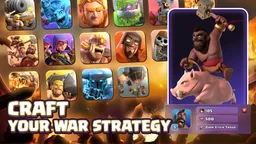
- Multiple troop and spell options support varied strategies.
- Progression offers long-term goals for dedicated players.
What could be better
- Building upgrades can take days at higher levels.
- Competitive progress may encourage in-app purchases.
- Finding a suitable clan can take time.
- Attacks require an internet connection.
- Repeated base upgrades can feel grindy.







