

Doomsday × FAIRY TAIL review
 Analysis by Appsdrops
I’m drawn to strategy games that give me a reason to make small decisions often, rather than asking me to master a complicated system before I can enjoy them. Doomsday × FAIRY TAIL has an appealing starting point: a zombie-threatened world, a shelter to protect, and a crossover with a familiar fantasy series. My overall take is that it is best approached as a long-running strategy game to dip into and develop at your own pace, not as a quick, self-contained adventure with a clear ending.
A strategy game built around survival and progression
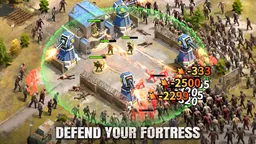
Made by IGG.COM, this is a free strategy game for players who like the idea of building up a position while facing a continuing threat. The central premise is easy to understand: survivors need their last shelter defended from zombies. That gives the game an immediate theme and a clear reason to care about progress, even if the appeal for you will depend on how much you enjoy the routine and planning that strategy games tend to demand.
The FAIRY TAIL crossover adds a distinct flavor to that premise. It puts a recognizable fantasy property alongside a post-apocalyptic setting, which may be the main draw for fans who would not ordinarily choose a zombie strategy game. I would treat the crossover as a point of interest rather than assume it changes the underlying style of play: the core proposition remains survival strategy, not a standalone FAIRY TAIL role-playing adventure.
That distinction matters when deciding what to expect. If you want to spend time with characters and themes associated with the crossover while also engaging with a strategy game, the combination may feel inviting. If you are looking specifically for a story-led adaptation that follows the original series closely, this is not the expectation I would bring to it. The zombie shelter is the organizing idea, and the crossover is part of the game’s identity.
The game was released on September 15, 2021, and its current version is 1.62.0. It requires Android 8.0 or later. It is rated Teen, so I would not choose it for a young child without first checking whether that age range suits your household. On the store, it has a 4.5 average from 2.8 million ratings, alongside 67,000 written reviews and over 100 million installs. Those figures point to a widely played game, but popularity alone cannot tell you whether its pacing or spending model will suit you.
What free access does—and does not—tell you
You can start playing without paying: the game is listed as free. That is the clearest fact to use when judging its initial value. You do not need to buy it just to find out whether a zombie-themed strategy game and a FAIRY TAIL crossover appeal to you. I think that makes a trial run sensible, especially if you are already curious about the setting but unsure about the long-term commitment.
There are in-app purchases, with listed prices ranging from $0.49 to $299.99 per item. That is a wide span, and it is worth taking seriously before you begin. The existence of those purchases does not establish that you must spend to play, nor does it tell you what any particular purchase contains or how much progress it changes. I would avoid treating the most expensive item as a necessary entry cost, and I would decide on a personal spending limit before browsing optional offers.
For value, I separate free access from paid value. Free access gives you a way to test the premise and decide whether you enjoy the game’s ongoing strategy loop. Paid value is a different question: it depends on what you personally want from an optional purchase, and the listed price range alone cannot answer that. If your rule is to play without spending, you can begin on that basis; if you are considering purchases, review each offer in the app store carefully rather than assuming that a higher price means better value.
How to decide whether the time feels worthwhile
A shelter-defense theme can make small choices feel connected: you are not just improving a screen of numbers, but trying to preserve a refuge in a world under threat. That framing is the strongest value the premise offers. It gives players a simple mental model for why strategic progress matters and makes the game easier to explain to a friend than a more abstract management title.
The tradeoff is that strategy games often reward continuity. If you prefer a game that you can finish in a few evenings and then put away, a long-term progression format may feel like an obligation rather than a pleasure. I would approach this one in short sessions at first. That lets you test whether returning to the shelter and its survival challenge feels satisfying, without committing hours or money before you know how the rhythm fits your life.
A realistic use case is a commute or a quiet break when you have enough time to check in on a strategy game but not enough to settle into a long narrative chapter. The useful question is not whether every session is dramatic; it is whether the ongoing decisions hold your attention when you have only a little time. If you find yourself opening it automatically without enjoying the decisions, that is a good sign to pause rather than spend in an attempt to make the routine more exciting.
One practical way to assess it is to separate your first impressions into three questions: do you like the zombie-survival premise, does the strategy structure make you want to return, and does the crossover add something you care about? A yes to only the last question may not be enough, since the game’s main identity is still strategic survival. A yes to the first two gives the crossover room to be a welcome extra rather than the only reason you installed it.
Tradeoffs to keep in mind before settling in
The most obvious tradeoff is the mismatch some players may feel between a fantasy crossover and a zombie-shelter setting. That mix is distinctive, but distinctive does not automatically mean cohesive for everyone. Fans who enjoy seeing familiar fantasy material placed in a different kind of game may be intrigued; players who want an atmosphere that stays consistently bleak or one that remains firmly within the fantasy series may find the combination less appealing.
Another tradeoff is the purchase range. A free download can still include tempting optional spending, and a range reaching $299.99 per item is high enough that I would be deliberate. It is not evidence that you will need to buy anything, but it does mean the game is not a no-purchase environment. If you share a device or payment method with a younger player, use the relevant store purchase controls and have a clear conversation about optional spending. The Teen age rating is also a useful reminder to check suitability rather than rely on the cheerful familiarity of a crossover alone.
There is also a genre question. Compared with a more traditional strategy game that focuses on a single match or a bounded campaign, a shelter-survival game may be better suited to players who enjoy gradual investment and repeated engagement. If you want a compact puzzle with a decisive finish, a turn-based campaign, or a strategy game built around short matches, those alternatives may be a better fit. I would not choose this simply because it has “strategy” attached to it; the survival premise and the desire to return over time are just as important to the decision.
For fans of FAIRY TAIL, it is worth asking whether you want the series as a setting ingredient or as the whole point. A crossover can attract you, but it does not guarantee that the experience will prioritize the source material in the way a dedicated adaptation might. If your main goal is to revisit the series’ world and characters above all else, a game centered directly on that experience may serve you better. If you enjoy crossovers and are open to a different genre, this has a more interesting case.
Who is likely to get the most from it
I would recommend giving it a try if you like strategy games with a survival hook, enjoy the idea of defending a shelter, and are comfortable with a game that may reward regular returns. The combination is particularly appealing if the FAIRY TAIL crossover gives you a reason to explore a genre you might otherwise overlook. With free access, you can test that interest before deciding whether the game deserves a place in your routine.
It may also suit someone who wants a phone game that can occupy spare moments without requiring every session to be a major event. The key is to keep the time commitment intentional. Try it when you have a few calm breaks, notice whether the choices feel engaging, and stop if the experience starts to feel like a checklist. That is more useful than judging it from a single session or assuming that a large player base means it will automatically match your tastes.
I would be more cautious if you dislike ongoing progression, want a fully offline-feeling single-player adventure, or are trying to avoid games with optional purchases altogether. I would also look elsewhere if you expect a faithful, story-first FAIRY TAIL experience or a tightly bounded strategy campaign. Those preferences are not flaws in the game; they simply point toward a different kind of title.
My verdict on whether to install or spend
My recommendation is to treat Doomsday × FAIRY TAIL as a free trial of a specific mix: zombie survival, shelter defense, strategy, and a fantasy crossover. Its 4.5 average and more than 100 million installs show that many people have tried it, but the right reason to keep it is personal enjoyment of the repeated strategic premise. I would install it if that premise sounds fun, then judge the pacing for yourself before making any purchases.
As for spending, I would not buy anything simply to find out whether the game is worth playing. The free entry point is enough to test whether the setting and routine suit you. If you later consider an optional item, compare its actual contents and cost inside the app rather than guessing at value from the price range. My bottom line: try it for free if you want an ongoing survival strategy game with a crossover twist; skip it if you need a short, story-led experience or prefer to avoid optional spending entirely.
What we like
- Fairy Tail characters bring recognizable magic and guild themes to battles.
- The strategy combat gives heroes distinct roles and abilities.
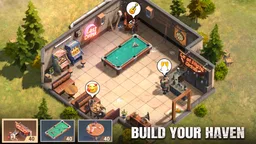
- Base development adds goals beyond fighting.
- Alliance play can make large battles more engaging.
- The game offers a convenient mobile format for quick sessions.
What could be better
- Progress may slow without regular play.
- Competitive modes can favor players who spend money.
- Base upgrades require time and resources.
- Frequent events may make the game feel demanding.
- The game needs an internet connection to play.







