


Plants vs. Zombies™ review
 Analysis by Appsdrops
I keep coming back to Plants vs. Zombies™ for a reason that is easy to underestimate: its central strategy is about making a few careful choices before a lane gets crowded. You place plants to defend your house from advancing zombies, but the interesting part is how each placement changes the decisions you can afford to make next. It is a strategy game that stays readable even when a level becomes tense, and that makes it a particularly comfortable fit for short sessions on a phone.
That focus is also what separates it from many strategy games that ask you to manage a sprawling base, a long roster, or several systems at once. Here, I can look at the lanes, notice where pressure is building, and adjust my plan. The challenge comes from timing and positioning rather than from learning a dense interface. If you want a strategy game that rewards attention without demanding a long setup every time you open it, this is still an appealing choice.
Why lane-by-lane planning works so well
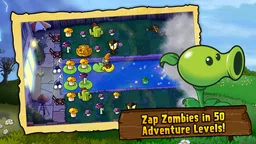
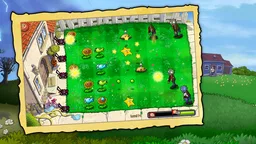
Each lane gives the action a clear shape: threats move toward the house, and my plants have to stop them. That clarity matters. I rarely have to wonder what the immediate problem is; I need to identify where the danger is growing and decide whether to invest in offense, defense, or a stronger response to a particular zombie. The board makes cause and effect easy to read, so a mistake usually feels like a decision I can learn from rather than a hidden rule I failed to notice.
At the same time, the lanes are not independent little puzzles. A plant that seems useful in one spot may leave another vulnerable, and spending resources quickly can limit what I can place later. I get the best results when I think a few moves ahead instead of filling every open space as soon as possible. The useful habit is to treat each placement as a commitment, not just an immediate fix.
The game comes from ELECTRONIC ARTS and belongs to the strategy genre, but its tone is much lighter than that label might suggest. The plants and zombies make the conflict playful, while the underlying choices still reward patience. I can enjoy the comic presentation without needing to treat the game as a serious military simulation. That balance is a large part of its appeal: it is approachable, yet it gives me reasons to reconsider my approach when a level gets difficult.
Reading the board instead of reacting to every zombie
In practice, I try to scan the whole board before responding to the most obvious threat. A zombie nearing a plant may look urgent, but another lane can be quietly accumulating pressure. Spending all my attention on the nearest danger can leave me with too little flexibility elsewhere. The lane format makes this kind of oversight visible, which is useful for newer players and still relevant when I already know the basic rhythm.
One specific tactic I find helpful is to avoid treating the strongest-looking plant as the automatic answer. A cheaper or more modest placement can buy the time needed to build a more stable defense, while an expensive response may solve one problem but weaken the rest of the board. The right choice depends on the situation, and that is where the strategy comes from: not from memorizing one perfect lineup, but from judging what the current lanes need.
I also find that it is worth pausing mentally between waves of decisions, even when the game itself keeps moving. I check which lanes are secure, where my resources are going, and whether my current plan has a clear weakness. This small routine makes losses more informative. Instead of concluding that a level is unfair, I can usually identify a specific choice that left one side exposed or used up options too early.
A good fit for short, attentive sessions
The most natural everyday use case is a spare stretch of time when I want something more engaging than a passive distraction but do not want to commit to a long, complicated strategy session. A few rounds during a commute break or while waiting for an appointment can work well, provided I have enough attention to follow the action. The visual lanes make it easy to get oriented again, and the basic objective does not require me to relearn a complicated set of controls each time.
That said, it is not a game I would choose when I need to divide my attention constantly. Strategy depends on noticing trouble as it develops, and looking away at the wrong moment can undermine a careful setup. It is better for a focused pocket of downtime than for playing while repeatedly switching between other tasks. If I have only a few seconds and cannot pay attention, a simple idle game may be a better match.
The clearest practical improvement is to give yourself a little breathing room before committing to a lane. When there is no immediate emergency, consider whether the next placement will help the entire defense or merely make one row look reassuring. That question is especially useful when the board feels under control: a stable moment is often the best time to prepare, not an invitation to spend resources without a plan.
Where its simplicity helps—and where it can limit you
Compared with strategy games built around large maps, troop movement, or complex economic systems, this one is much easier to read at a glance. I do not need to keep track of a sprawling campaign state just to understand the next decision. That makes it friendly to casual players and to anyone who likes tactical choices but dislikes menus that obscure the action. Its silliness also softens the pressure: losing a lane feels frustrating, but the presentation rarely turns the experience grim.
The same simplicity can be a limitation if you want deep strategic variety or a strong sense of long-term simulation. The lane structure keeps the action focused, but it does not provide the broad map control and interconnected management that some strategy fans want. Players who prefer building a large army, planning across a huge battlefield, or competing directly against other people may find a different strategy game more satisfying.
There is also a real difference between being free to start and spending nothing forever. The game is free, but it includes in-app purchases, with items priced from $0.99 to $7.99. I would approach those purchases as optional spending rather than as part of the basic promise of trying the game. If you are setting it up for a child, it is sensible to review purchase controls on the device first. The content rating is Everyone 10+, so it is worth checking that age guidance against the preferences of the person who will play.
Its audience numbers suggest that it has reached a remarkably broad group: it has over 500 million installs and a 3.7 average from around 5.7 million ratings. Those figures do not tell me whether a particular player will enjoy its pace, but they do underline how familiar the basic idea has become. The volume of feedback is substantial too, with around 117,000 reviews. I would still judge it by whether its focused lane tactics suit your taste rather than by popularity alone.
Who should pick it up, and who may prefer something else
I recommend it most to players who enjoy planning with clear constraints: you have to protect several lanes, choose placements carefully, and respond when a weak spot becomes urgent. It is also a sensible entry point for someone curious about strategy games but put off by complicated controls or long explanations. The playful theme helps, and the core challenge is easy to understand even when the decisions take practice.
It is less suitable for someone looking for an endlessly expanding management game, a competitive multiplayer focus, or a very relaxed experience that can be ignored while it runs. Its challenge asks for attention, and its focused format is a feature only if that is the kind of strategy you enjoy. If your favorite games offer wide-open systems and freedom to experiment across a large world, this may feel too contained.
For me, the best way to approach it is to play patiently and use each difficult level as a lesson in allocation. When a defense fails, I look for the lane I neglected, the resource I spent too early, or the placement that solved a local problem at the expense of the whole board. That makes the game feel more rewarding than simply repeating a setup and hoping for a different result. Its current version is 3.18.0, and it supports Android 7.0 or later, which gives many Android users a straightforward way to try it.
Overall, Plants vs. Zombies™ remains an easy game to recommend if you want compact, readable strategy with a comic personality. I like that it turns simple lane defense into a sequence of meaningful choices, and I appreciate that I can understand a failure well enough to improve on the next attempt. Just go in expecting focused tactical play rather than a sprawling strategy sandbox, and keep in mind that purchases are available. For the right player, that narrow, thoughtful design is exactly what makes it worth returning to.
What we like
- Easy-to-learn controls make the game welcoming for new players.
- A wide variety of plants encourages different defensive strategies.
- Distinct zombie types keep each level feeling fresh.
- Short stages suit quick gaming sessions.
- Charming art and sound give the game lasting appeal.
What could be better
- Later levels can feel difficult without careful planning.
- Some strategies rely on repeating familiar plant combinations.
- The original game offers limited interaction with other players.
- Ads or purchase prompts may appear depending on the version.
- Progress may not transfer between devices or platform versions.







