

Stick War: Legacy review
 Analysis by Appsdrops
I found Stick War: Legacy easiest to understand when I treated it as a battlefield puzzle rather than a game about tapping quickly. Its stick-figure look is spare, but the decisions have weight: I need to build an army, choose when to spend resources, and keep an eye on what is happening across the field. That combination makes it approachable at first glance without making every encounter feel simple.
It is a free strategy game from Max Games Studios, and its long-running appeal is reflected in an average rating of 4.8 from around 3.2 million ratings, with more than 100 million installs. Those figures suggest broad reach, but they do not tell me whether its controls and pace suit every player. The useful question is how well its battlefield decisions work for you, especially if you need a game that is easy to read, comfortable to control, or playable in changing everyday situations.
Reading the battlefield and finding your way
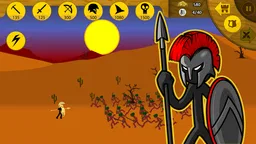
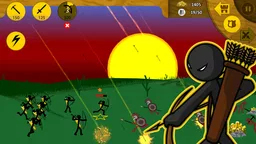
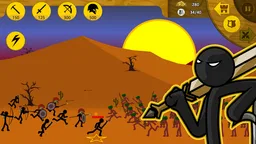
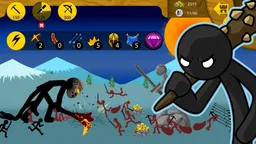
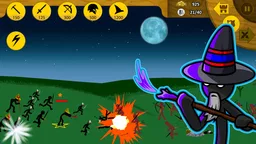
The visual language is direct: units are distinct by their roles, and the battlefield gives me a clear sense of where my forces and the opposing side are. The simple stick-figure art avoids the visual clutter that can make some strategy games hard to parse on a small screen. I can focus on the important question—what should I build or do next?—rather than decoding a dense interface or a mass of decorative effects.
That clarity is helpful, but it does not remove the need to learn. A spear unit, archer, sword fighter, and mage represent different tactical choices, and I get more from the game once I understand why I would choose one over another. In my experience, the best way to learn is to change one decision at a time: try a different unit mix, watch what happens, and adjust the next attempt. That makes setbacks informative instead of simply frustrating.
Navigation and strategy are closely linked here. I am not just selecting an army and watching a battle unfold; I need to make choices as the fight develops. A plan that looks sensible at the start may need changing when the opposing force presses forward. The game rewards paying attention to the whole field, rather than focusing only on the unit I have just created. For new players, that broader view is a useful habit to build early.
One practical tip is to avoid spending resources automatically as soon as they become available. Keeping some flexibility can matter more than committing to a large, fixed army before I know what the encounter is asking of me. I also find it useful to review a failed attempt as a question of timing or composition: did I react too late, or did I put too much emphasis on one kind of fighter? This makes experimentation feel purposeful.
The presentation is restrained, though that can cut both ways. Players who enjoy elaborate animations, a richly detailed world, or a story told through cinematic scenes may find the look plain. I see the minimal art as a practical choice that keeps the action legible, not as a substitute for visual spectacle. Whether it feels clean or bare will depend on what you want from a strategy game.
Controls, pace, and sensory comfort
The game’s central challenge is strategic, but playing it still involves responding to an active battle. That can suit someone who enjoys switching attention between building forces and watching the front line. It may be less comfortable for a player who wants a fully hands-off experience or finds rapid changes on screen stressful. I would approach it in a calm setting at first, so I can learn the rhythm without also juggling other demands.
The uncomplicated art style helps me keep track of units, but a clear battlefield is not the same thing as a complete accessibility solution. Players vary in how they experience small-screen visuals, movement, and touch input. If you have difficulty seeing fine details or making precise taps, try a short session before committing to a longer one. I would not assume the game’s simple appearance guarantees that every important element will be equally easy to perceive on every device.
There is also a useful distinction between strategic difficulty and motor demands. Thinking through which units to make is a different challenge from repeatedly interacting with a touchscreen during combat. If touch input is tiring or uncomfortable for you, the game’s appeal may depend on whether its pace feels manageable in your hands. I found it more inviting when I focused on deliberate decisions rather than treating every moment as a race.
For players who are sensitive to busy action, the spare visual design may be a relief compared with strategy games that layer maps, menus, effects, and numerous moving units on screen. Still, battles can demand attention, and minimal graphics do not mean minimal activity. If visual motion or sustained concentration is a concern, shorter play sessions are a sensible way to find out whether the experience works for you.
Fitting a match into an ordinary day
This is the sort of game I can imagine opening when I have a little time to think, rather than when I want to play entirely on autopilot. A short break at home is a better fit than trying to make decisions while walking, commuting through a crowded station, or listening closely to someone nearby. Strategy asks me to notice what the opponent is doing, and divided attention can turn a manageable battle into a muddle.
For a casual player, a useful routine is to start one encounter when there is enough time to focus, test a single change in the army, and stop when the session no longer feels enjoyable. That approach keeps experimentation from becoming a grind. It also makes the game easier to share with someone who is new to strategy: explain the unit roles, then let them make the next choice instead of taking over every decision.
Its suitability for different contexts is mixed. A phone makes the game easy to keep close, but a small display and touch controls may be less comfortable than a larger screen for some people. At home, I can give the battlefield my attention; in a noisy or interrupted setting, it is harder to follow the flow. I would choose a quieter moment if I want to learn a new tactic rather than merely pass a few distracted minutes.
Because it is free to start and includes in-app purchases ranging from $0.49 to $104.99 per item, I would treat spending as a deliberate choice rather than part of the basic appeal. The game’s strategic loop is the reason to try it, not the expectation that a purchase will make the decisions more satisfying. If you are setting boundaries for a younger player, it is worth discussing purchases in advance and using the controls available through your device or app store.
Where it sits among strategy games
Compared with strategy games built around sprawling maps, long campaigns, or complicated management screens, this one puts the focus closer to the battle. That makes it easier to pick up than a game that first asks me to learn several layers of menus and systems. Its trade-off is that players seeking deep world management or a slower, expansive campaign may prefer a different kind of strategy experience.
It also differs from a purely reflex-driven action game. I am not only reacting to movement; I am weighing the composition and timing of my forces. That strategic layer gives a thoughtful player room to improve through observation. On the other hand, anyone who wants the immediate physical feel of an action game may find the planning and resource choices interrupt the pace they prefer.
Newcomers should not mistake a simple visual style for a game with no learning curve. The basic idea is easy to grasp, but making consistently effective choices takes practice. I recommend treating early attempts as experiments and resisting the urge to judge the whole game by one difficult battle. Experienced strategy players may appreciate the compact tactical focus, while those who want a very gentle, consequence-free experience may find the pressure of changing battles less relaxing.
The age rating is Teen, so I would not choose it automatically for a very young child just because the characters are drawn as sticks. Parents should consider the game’s content rating, the child’s comfort with battle-themed play, and the possibility of in-app purchases. For older players, the main question is less about the art style and more about whether they enjoy planning under pressure.
What may still get in the way
The same active battlefield that makes the strategy engaging can be a barrier. If you need long pauses between decisions, prefer to play while multitasking, or have difficulty tracking several units at once, some encounters may feel demanding. I would not recommend it as a background game for a situation where attention needs to stay elsewhere. It works best when I can give it a little focus.
Touch interaction is another personal consideration. The game is designed for mobile play, but comfort with a touchscreen varies widely, and I would not promise that every player will find the controls equally easy. Someone who experiences hand fatigue, limited dexterity, or difficulty with small targets should test the basic interactions in a short session and see whether they feel sustainable. If not, a turn-based strategy game with less time pressure may be a better match.
There is also a taste-based limitation in its visual presentation. The uncluttered style helps me read the battle, but it does not offer the visual richness or sense of place that some players want from a strategy game. If atmosphere and detailed character designs are central to your enjoyment, another title may hold your interest longer. Here, the appeal rests more on choices and combat flow than on visual storytelling.
Stick War: Legacy is free, rated Teen, and was released on January 31, 2016. It supports devices running Android 7.0 or later, and its current version is 2026.1.1761. Those details make it straightforward to assess basic compatibility, but the more personal test is whether the screen, controls, and battle pace work well for you. Its popularity is substantial, yet a large audience does not make it a universal fit.
My inclusive verdict
I recommend Stick War: Legacy to players who want a mobile strategy game with a readable battlefield and decisions that reward learning through trial and adjustment. Its plain visual style can reduce clutter, and the different unit roles give new and experienced players a concrete way to think about tactics. I especially like it for focused sessions where I can watch the field and make deliberate choices.
I would be more cautious if you need very low-pressure play, have trouble following active battles, or find touchscreen interaction uncomfortable. The best test is a brief session in the setting where you expect to play it: notice whether you can distinguish what is happening, whether the controls feel manageable, and whether the pace leaves room to think. If those parts fit, the game offers a satisfying strategic challenge; if they do not, a slower or less touch-intensive alternative will likely be kinder to your needs.
Max Games Studios has made a strategy game whose simplicity is an advantage, but not a guarantee of effortless access. For me, its strongest quality is that the battle remains understandable while still asking me to make meaningful choices. I would give it a try if that balance sounds appealing—and feel no need to force it if your preferred way to play calls for more time, calmer action, or different controls.
What we like
- Simple controls make units easy to command.
- Multiple campaign stages offer steady progression.
- Survival mode provides a useful challenge after the campaign.
- Unit upgrades add variety to combat strategies.
- Offline play makes it convenient without internet access.
What could be better
- Frequent ads can interrupt play.
- Some upgrades require substantial grinding.
- Later stages can feel difficult without upgraded units.
- Controls may feel imprecise during crowded battles.
- The visual style and missions can become repetitive.







