
Hoop Land review
 Analysis by Appsdrops
Hoop Land is most appealing when I treat it less like a glossy sports spectacle and more like a pocket-sized basketball sandbox. Its retro look puts the focus on the rhythm of a possession: moving the ball, finding an opening and deciding when to take a shot. That gives this sports game a clear identity, and I can see why it has found an audience. It is free to start, but its simple presentation does not mean every player will enjoy its style; anyone expecting a modern, broadcast-like basketball game may find it too pared back.
Made by Koality Game, Hoop Land has a 4.7 average from around 20,000 ratings, with more than a million installs. Those figures suggest it has lasting appeal, but the more useful point for a prospective player is what kind of appeal it offers: this is basketball presented with a retro sensibility, where learning the feel of play matters more than being dazzled by visual detail. I would recommend giving it a few sessions before deciding whether its pace and presentation click for you.
Why the retro approach works
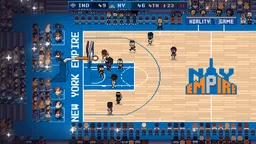
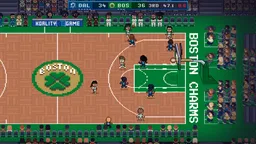
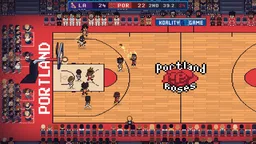
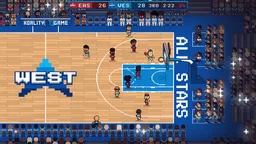
The old-school visual style is not just decoration. It makes the action easy to read, and it gives the game a personality that separates it from the many sports titles that aim for realistic presentation. I find that a useful trade-off on a phone: a game can be quick to understand without looking like a miniature television broadcast. The compact visual language also keeps attention on the court rather than on elaborate presentation between moments of play.
That focus suits basketball particularly well. A possession is a chain of small decisions, and a stripped-back presentation can make those decisions feel immediate. Instead of waiting for spectacle to carry the experience, I am asked to pay attention to what is happening in front of me. If you like sports games because you enjoy the back-and-forth of play, rather than because you want to admire detailed player models, this is a sensible place to start.
The game’s central appeal is also its accessibility. You do not need to be deeply invested in professional basketball to understand the basic pleasure of moving the ball and looking for a chance to score. In that sense, it can work both as a casual pick-up game and as a small sports pastime to return to when you want something more involved than a reflex-only arcade game. Its free price makes that first trial easy, though in-app purchases are available at $4.99 per item.
Good for short sessions, with room to settle in
One practical way to approach Hoop Land is to use a short first session for learning how its movement and timing feel, rather than trying to judge it by a single match. Retro sports games often rely on deliberate controls and clear feedback; a little patience can help distinguish a genuinely awkward action from one that simply takes practice. I would give myself time to get comfortable before deciding whether the game’s rhythm suits me.
It also fits naturally into an everyday break. If I have a few spare minutes while waiting for a ride or taking a pause between tasks, a basketball game can offer a satisfying change of pace without asking me to settle in for a long, story-heavy session. That is a different use case from a deep management game or a console-style sports simulation, where the pleasure may depend on extended play or detailed setup. Here, the appeal is the direct connection to the sport’s on-court action.
A useful tip is to focus on one improvement at a time. Rather than treating every missed opportunity as proof that the game is unfair, pay attention to whether you are rushing decisions or failing to read the opening. This kind of self-check is more valuable in a compact sports game than trying to force a perfect result immediately. If the controls feel unfamiliar, repeated short sessions are likely to tell you more than one long attempt.
Where it differs from the usual basketball options
Most basketball games fall toward one of two ends: highly realistic simulations that emphasize presentation and detail, or very simple arcade experiences that reduce the sport to quick taps and spectacle. Hoop Land’s retro framing gives it a middle-ground identity. It keeps basketball recognizable while avoiding the visual weight of a full simulation. For me, that makes it a better fit for players who want the sport’s basic decision-making in a lighter package.
That choice comes with a limit. Players who want lifelike graphics, elaborate commentary or the feel of watching a broadcast should look elsewhere. A retro aesthetic is part of the point, not a temporary skin over a realistic presentation. Likewise, someone who only wants an extremely simple game with almost no learning curve may prefer a more minimal arcade title. Hoop Land asks for enough attention to make its basketball feel like a game of choices, not just a sequence of taps.
The distinction matters when choosing what to install. If you usually enjoy management, roster-building or long-term team planning, check whether the particular kind of basketball play you want is the on-court experience; the game’s identity is firmly tied to retro basketball simulation. If you want a quick match with a distinct old-school feel, it is more directly aligned with that preference than a management-focused alternative. I would make the decision based on the style of play you actually enjoy, not just the sport named in the category.
The friction to consider before you commit
The biggest possible hurdle is taste. Retro graphics can be charming, but they also leave less room for visual spectacle, and not everyone finds that appealing. If you judge sports games chiefly by realism, the presentation may feel basic rather than purposeful. I would not call that a flaw for every player, but it is a meaningful reason to skip the game if detailed animation and a contemporary look are central to what you want.
The other consideration is how much patience you have for learning a game’s feel. Basketball decisions can be quick, and a player who expects every action to work instantly may get frustrated while adjusting. I recommend treating early play as a chance to learn timing and movement instead of chasing flawless possessions. That approach will not suit someone who wants a completely effortless distraction, but it gives a fairer test of whether the game has staying power for you.
It is also worth keeping the purchase model in mind. Hoop Land is free to download, while optional in-app purchases cost $4.99 per item. I would start without buying anything and see whether the core experience is enjoyable enough to justify spending later. That is a straightforward way to avoid paying for extras before you know whether the retro style and basketball pace are right for you. The game is rated Everyone, so its age classification is broad, though a parent should still decide whether any game is appropriate for a particular child.
Who I would recommend it to
I would point Hoop Land toward basketball fans who enjoy the sport’s flow but do not need a realistic visual package. It may also suit players who grew up with older sports games or simply like a clean, retro presentation. Because it is a sports game rather than a complex team-management tool, it is a more natural choice for someone who wants to spend time playing basketball than studying a roster or simulating a season from the sidelines.
It is also a reasonable option for a casual player who wants a free way to try a basketball game on a phone. The best test is simple: play long enough to understand how the action feels, then ask whether you enjoy making decisions during a possession. If you do, the restrained look can become part of the charm. If you mainly want eye-catching graphics or instant, low-effort action, the same restraint may be exactly what puts you off.
For a family deciding whether to let a younger player try it, the Everyone rating is reassuring as a broad content label. I would still consider the child’s patience and interest: the game is likely to be most enjoyable for someone willing to learn the feel of a sports game, rather than someone who expects every screen to explain itself. That is a practical distinction for any parent weighing a quick casual game against a more guided experience.
A practical way to decide
Try it first as a short-session game, not as a replacement for every basketball title you already enjoy. If its compact retro style makes the action easier for you to follow, keep it as a lightweight option for spare moments. If you find yourself wishing for more realism, deeper presentation or a different kind of basketball experience, that is a good sign to choose another game rather than expecting this one to change into a simulation with a modern broadcast feel.
The game was released on October 24, 2023, and its current version is 1.12.1. It requires Android 7.0 or later, so it is worth checking your device’s software before trying to install it. Those details matter less than the style question, but they can settle the basic compatibility decision quickly. If your device meets the requirement, the more important question is whether a retro basketball game is what you want to play.
My verdict is that Hoop Land has a clear point of view and is strongest when you meet it on its own terms. It offers a retro basketball experience for players who value readable action and the decisions within a possession over realism and spectacle. I would try it if you want a free, distinctive sports game for short breaks, and I would skip it if detailed graphics or effortless arcade simplicity are non-negotiable. Its charm depends on that distinction, but for the right player, the old-school approach is the reason to keep coming back.
What we like
- Responsive controls make passing and shooting easy to learn.
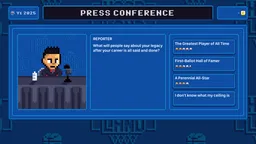
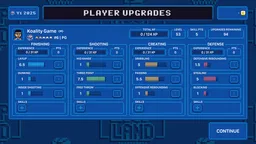
- Team management adds depth beyond the on-court action.
- Pixel-art visuals give matches a distinctive retro style.
- Quick games suit short play sessions.
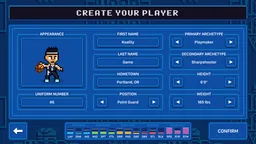
- Customization lets players shape teams and leagues.
What could be better
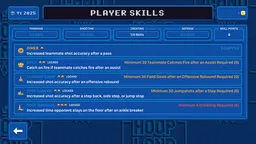
- Learning advanced moves can take practice.
- Pixel-art graphics may not appeal to everyone.
- Matches can feel repetitive over longer sessions.
- Team management may overwhelm players seeking simple games.
- Some modes may take time to unlock or set up.







