
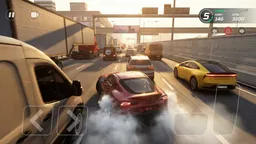

Highway Racer Pro - Car Racing review
 Analysis by Appsdrops
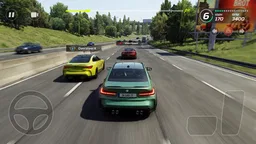
I like racing games that get me into the action quickly, but highway traffic makes that simple promise harder to deliver: the road is busy, speed is tempting, and a small mistake can end a run. Highway Racer Pro puts that tension at the center of its car-racing experience. It is a free game from Spektra Games, built around driving fast cars through highway traffic. My impression is that its appeal lies less in a long career-style journey and more in the immediate question each time I play: how confidently can I handle the next stretch of road?
One quick decision starts the drive
The first thing I want from a highway racer is a clear reason to pay attention from the opening moments. Here, the basic idea is easy to understand: keep moving at speed while dealing with traffic. That makes it approachable even if you usually play racing games only in short bursts. You do not need to learn a complicated racing vocabulary to grasp the risk; the cars ahead are the obstacle, and your steering decisions are the point.
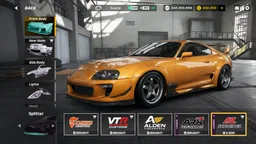
That simplicity is a strength, but it also sets expectations. This is a focused traffic racing game, not an invitation to assume you will get a deep motorsport simulation, a story campaign, or elaborate car tuning. If what you want is the feeling of threading a fast car through highway traffic, the premise is immediately relevant. If you want licensed race series, detailed pit strategy, or a long narrative progression, a more simulation-oriented or career-focused alternative will likely suit you better.
I find the highway setting useful because it makes each decision legible. Rather than thinking about a complex track layout, I can concentrate on the next gap and on whether a move is worth the risk. That can make a run feel tense without requiring a long setup. It also means the quality of the experience depends heavily on whether you enjoy repeating a simple driving challenge and improving your judgement, rather than unlocking a dramatically different activity every time.
There is a practical point for new players: treat the opening runs as calibration, not as a test of courage. Watch how much room you need to change lanes and how quickly traffic demands a response before committing to a risky pass. This is more useful than trying to drive at maximum intensity immediately. A short, controlled start helps you learn the rhythm and gives you a better basis for judging whether the game’s central loop clicks for you.
Reading traffic matters more than showing off
The satisfying part of this kind of driving is not simply going fast; it is making a clean choice under pressure. When I approach traffic, I try to look beyond the nearest vehicle and plan around the next opening as well. That small habit reduces frantic last-second corrections. It is a concrete way to make a run feel more deliberate, and it helps distinguish a controlled pass from a gamble that only happens to work.
One trade-off is that highway racing naturally rewards attention to immediate spacing more than broad trackcraft. Players who love choosing racing lines through corners or managing a car’s behavior over a varied circuit may find the action narrower here. On the other hand, anyone who enjoys close calls and quick reactions may appreciate that the challenge is easy to read at a glance. It is a game to pick up when you want a direct test of focus, not necessarily when you want a detailed lesson in real-world driving technique.
I would also avoid treating near misses as proof that an aggressive approach is always best. A risky pass can feel exciting, but consistency is a better goal when you are learning. Leave yourself a clear escape option instead of aiming for the smallest possible gap. That makes the driving less chaotic and gives you a fairer sense of whether you are improving. It is a useful mindset for anyone who tends to overcorrect when traffic closes in.
The rhythm: action, feedback, and another attempt
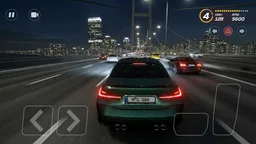
Highway Racer Pro’s core rhythm is easy to picture: enter traffic, react to changing space, feel the consequence of a decision, then decide whether to continue or start fresh. The feedback comes from the road itself. A pass that works reinforces good timing; a poor read makes the danger obvious. That direct connection between choice and consequence is what can make a simple run engaging. I do not need a complicated explanation to understand why a moment went well or badly.
That rhythm is also why I think the game works best in short sessions. I can imagine opening it while waiting for a friend or taking a break, playing a run with full attention, then putting it down without needing to remember a storyline. In an everyday setting, that is more appealing than a game that expects a long uninterrupted block of time. The flip side is that players who want to settle into a multi-stage event or make progress through a substantial campaign may find the quick-run appeal too limited.
For a better session, I would choose one simple goal before starting: make calmer lane changes, avoid forcing a pass, or stay focused through a longer stretch. Changing one habit at a time makes the result easier to judge than chasing speed and risk all at once. This is not a feature I am claiming the game tracks for you; it is a way to make its repeatable driving challenge more rewarding. It turns a restart into useful practice rather than a reflex.
The comparison with other racing games is straightforward. Against arcade racers built around dramatic tracks and spectacle, this one is more about traffic judgement than elaborate course variety. Against realistic driving simulators, it asks for less preparation and gives you a more immediate task, but it should not be mistaken for a full simulator. If you like the highway portion of racing games most—the close passes, quick reactions, and concentration—this narrower focus can be a plus. If variety is your main priority, a broader racer is the safer choice.
What a run gives you—and what it asks in return
The reward here is the satisfaction of handling a difficult stretch cleanly and wanting to see whether you can do it again with better decisions. The game’s premise encourages that small personal contest: can I keep my composure when the road gets busy? I find that a more honest source of motivation than expecting every session to deliver a major unlock or a new chapter. The appeal is strongest for players who enjoy self-improvement through repeated attempts.
There is a downside to that structure. Repetition can become noticeable if you need every session to introduce new tracks, objectives, or surprises. A focused loop is easy to understand, but it may not hold someone who quickly tires of repeating a similar kind of challenge. Before installing, it helps to ask whether you enjoy refining timing and restraint, or whether you need a steady stream of new content to stay interested. That distinction matters more than the game’s racing label alone.
The game is rated for Everyone, which makes its broad, uncomplicated premise easy to share with younger players, though I would still consider the individual player’s comfort with fast traffic and repeated crashes or failed runs. It is free to install, with optional in-app purchases ranging from twenty-five cents to ninety-nine dollars and ninety-nine cents per item. I would approach those purchases thoughtfully: first see whether the driving itself holds your attention, and only spend if an item clearly fits what you want from the game. A free starting point is useful, but it does not mean every optional purchase is necessary.
For anyone wondering whether it is suitable for a quick mobile break, I think the answer is yes if you can give the road your attention while playing. The simple setup is convenient, but traffic racing is not ideal for a moment when you are distracted or trying to do something else at the same time. The game’s tension comes from reacting to what is ahead, so a focused few minutes will likely be more enjoyable than a longer session played half-heartedly.
Restarting is part of the appeal
A reset in a highway racer can feel like a punishment, but it can also be the cleanest way to try a better approach. I would use a failed attempt to identify one decision that went wrong: did I commit too late, chase a gap that was closing, or stop looking far enough ahead? Then I would change that one thing on the next run. This makes restarting meaningful. Instead of simply repeating the same mistake at higher speed, I have a practical adjustment to test.
That approach also helps manage frustration. If a run goes badly, take a brief pause rather than immediately tapping into another attempt while annoyed. Rushing tends to create more rushed decisions. When I return with a specific goal, the next session has a purpose and the game’s compact loop feels more satisfying. This is an especially useful way to play if you are competitive with yourself but do not want a short mobile game to become an unnecessarily stressful chore.
The release date is July 29, 2025, and the current version is 1.3.0. Its average rating is 4.6 from around 101,000 ratings, while the game has passed 10 million installs. Those figures suggest it has attracted a substantial audience, but they do not answer the more personal question of whether you enjoy its particular kind of repetition. I would use them as context, not as a substitute for deciding whether traffic-focused driving is what you want to play.
Before downloading, check that your device runs Android 9 or later. If you are comparing it with another racer, focus on the style of challenge rather than just the number of cars or the word “realistic.” Highway Racer Pro is most clearly aimed at quick, high-attention traffic runs. A game centered on circuits will be better for cornering and race formats; a deeper simulator will be better if you want detailed vehicle handling. Neither is automatically superior—they answer different moods.
Who should keep it installed?
I would recommend giving Highway Racer Pro a try if you like fast reactions, traffic gaps, and the feeling that a better decision can rescue the next run. It is particularly suited to short breaks, players who enjoy repeating a challenge to sharpen their timing, and anyone who wants a more focused alternative to sprawling racing games. Spektra Games has built its identity around a familiar highway-racing idea, and the appeal is clearest when you want to get moving rather than spend time preparing for a race.
I would skip it if your ideal racer needs a deep campaign, varied track layouts, realistic competition structure, or a strong sense of long-term progression. The same is true if you find repeated resets irritating rather than motivating. That is not a flaw every player will feel, but it is the key limitation of a game whose central pleasure comes from making another attempt at a similar driving challenge.
My overall verdict is that the loop makes sense: traffic creates the action, each pass gives immediate feedback, a clean run feels rewarding, and a reset offers a reason to try again with better judgement. It does not need to be your only racing game to earn a place on your phone. For me, it is best understood as a concentrated highway test—easy to start, demanding of attention, and enjoyable when I want to improve one decision at a time.
What we like
- Offers quick races that suit short play sessions.
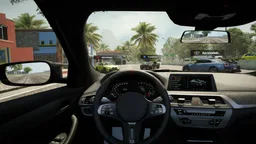
- Multiple camera views help tailor the driving perspective.
- Car upgrades give players goals beyond individual races.
- Traffic dodging makes each run feel tense and reactive.
- Touch controls are easy to pick up for casual play.
What could be better
- Traffic can make collisions feel difficult to avoid.
- Progress may require repeated races to earn enough currency.
- Some vehicles and upgrades can take time to unlock.
- The racing experience focuses more on traffic than rivals.
- Performance may vary across older devices.







