





GT Rivals: Real Racing Sim review
 Analysis by Appsdrops
I can see why GT Rivals: Real Racing Sim might grab a racing fan’s attention quickly: it promises a more grounded kind of mobile driving rather than a cartoonish arcade sprint. The real question, though, is whether that first impression can turn into a regular habit. In my view, it has the right appeal for people who enjoy taking a race seriously, but its lasting value depends on how much you enjoy repeating the fundamentals of racing on a phone.
Why the first week feels promising
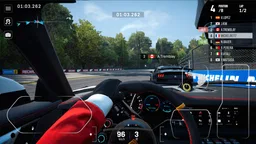
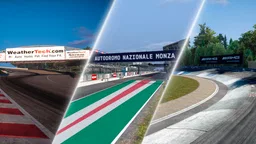
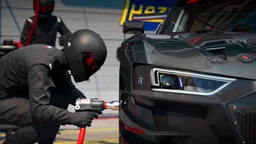
As a free racing game from Digital Racers FZ-LLC, GT Rivals has an easy first step: there is no purchase price to weigh before you decide whether its driving style suits you. Its premise is focused on recognizable cars, famous circuits, and a more authentic racing mood. That focus gives it a clearer identity than mobile racers built mainly around boosts, stunts, and spectacular crashes.
The first sessions are usually when a racing game’s basic loop feels freshest. You are learning how the car responds, how much room a corner needs, and where a clean line matters more than simply accelerating. I like that this kind of game can make a short session feel purposeful: rather than treating every race as a reflex test, you can pay attention to braking points and the way your driving choices affect a lap.
That learning curve is also the main test of whether the game fits you. If you prefer forgiving controls and instant wins, a more arcade-led racer may feel welcoming sooner. A simulation-minded approach asks for patience: small corrections and restraint can matter more than dramatic inputs. I would give it several sessions before deciding, especially if your usual mobile racing games reward aggressive shortcuts or constant boosts.
The game is rated Everyone, which makes its audience broad, but that should not be confused with a guarantee that every player will find the driving easy. The theme is accessible; the satisfaction comes from improving. It is a useful distinction for families or casual players deciding whether to share a device: the content rating is welcoming, while the skill preference is still a matter of taste.
What to pay attention to early
My practical advice is to avoid judging a race only by the finishing position. Notice whether you are entering corners under control and whether a mistake costs you time because you were pushing too hard. That kind of self-check helps separate an unfamiliar handling style from a game that genuinely does not suit you.
It is also worth testing a session when you can give the race your attention rather than playing one-handed in a hurry. Racing games with a more serious tone are less forgiving of distraction, and a commute stop or a few seconds between tasks may not be the best setting to learn the feel of a car. A relaxed first session is a fairer test than a rushed one.
Does it keep earning a place after the novelty?
GT Rivals has reached over one million installs and holds a 4.7 average from around fourteen thousand ratings. Those figures suggest that it has found an audience, but they cannot tell you whether its particular driving style will hold your interest. For me, month-to-month value in a racing game comes down to whether I still want to improve after the novelty of the cars and tracks wears off.
The strongest reason to return is the satisfaction of turning a messy run into a controlled one. That appeal is different from collecting a quick win or chasing a new visual reward. If you enjoy comparing your own decisions from one attempt to the next, a familiar circuit can remain interesting because your focus changes: one day you may work on corner entry, another day on keeping a clean rhythm.
There is a useful everyday scenario here. Imagine you have a quiet half-hour at home and want a game that asks for concentration without requiring a long story session. A few focused races can fit that slot well, especially if you like treating each attempt as practice. By contrast, if you only have a minute while waiting in a queue, this is less compelling than a game designed around quick, low-stakes bursts.
For comparison, the usual alternatives in mobile racing often lean toward either arcade spectacle or broad progression systems. Those can be better when you want immediate action, frequent unlocks, or a forgiving run after a long day. GT Rivals is more appealing when the driving itself is the reason to play. That is a meaningful difference, but it also narrows the audience: players who need constant new goals may find a focused racing loop less rewarding over time.
How to make repeat sessions feel worthwhile
I would set a small goal before each session instead of racing on autopilot. Pick one habit to watch, such as braking earlier or avoiding an overcorrection, then judge the run by that aim as well as the result. This creates a personal progression path even when you are not chasing a visible reward. It is a simple way to keep repeated laps from becoming indistinguishable.
Another sensible approach is to alternate focused play with breaks. If you keep restarting immediately after a poor result, frustration can replace the satisfaction of learning. Stepping away after a couple of careless runs often makes more sense than forcing one more attempt. That advice is especially relevant for a game whose appeal rests on controlled driving rather than rapid-fire novelty.
Price, version, and the cost of staying
The game is free to download, with in-app purchases ranging from $0.99 to $99.99 per item. That spread makes it worth deciding early what you want from the experience before spending. I would first establish whether the driving holds your attention on its own; a purchase is difficult to justify if you are still unsure that you will return next week.
Version 1.1.0 is the current release, and the game requires Android 7.1 or later. Those details are useful when checking an older device before installing, but compatibility alone does not guarantee a comfortable experience. For a game that asks for precise input, a phone that feels sluggish or awkward to hold can make the driving seem worse than it is. I would test the controls on your own device before treating a frustrating session as a verdict on the game.
Since it is free to start, the most sensible approach is to regard optional spending as a separate decision, not as part of the entry ticket. The presence of a high-priced item does not mean you need it to enjoy the core appeal, and I would not spend simply because a race went badly. First make sure you like the handling and the rhythm; then decide whether any purchase genuinely improves the way you play.
Maintenance, fatigue, and who should skip it
There is little point in calling a racing game a long-term keeper if it becomes another obligation. The maintenance burden here is less about a checklist and more about the attention you choose to invest. If you want to get better, you will need to come back with enough patience to practice. If you just want occasional casual play, you can keep the commitment light—but you may also get less from the more deliberate racing style.
The main source of fatigue is repetition without a personal target. Racing the same way, reacting to the same mistakes, and expecting a different result can turn a promising game into a chore. I find that fatigue is easier to avoid when I stop treating every race as a demand for progress. A short, intentional session is more satisfying than a long stretch of increasingly careless attempts.
Another possible friction point is the gap between the game’s realistic presentation and what a player expects from a phone racer. If “real racing” to you means a deep, demanding simulator, a mobile game may not satisfy that expectation. If it means a more serious mood and an emphasis on driving rather than arcade chaos, it may be a better match. Keeping that distinction in mind can prevent disappointment.
I would steer away from it if you mainly want spectacular crashes, easy wins, or constant rewards for every brief session. A more arcade-focused alternative is likely to suit those preferences better. I would also hesitate to recommend it to someone who dislikes repeating a track to improve, or who tends to spend impulsively when a game offers optional purchases. The free entry helps, but it does not remove those personal fit issues.
On the other hand, it is a reasonable pick for someone who likes cars, wants a focused racing game, and enjoys noticing small improvements. The developer, Digital Racers FZ-LLC, has given the game a clear pitch rather than trying to make it everything at once. That focus is its strength when the driving clicks, and its limitation when you want broader variety in the moment-to-moment experience.
My long-term verdict
I would keep GT Rivals on my phone if I found myself returning to improve a lap, not merely because it was installed. Its first-week appeal comes from the serious racing mood and the promise of recognizable cars and circuits; its recurring value comes from whether controlled practice remains enjoyable. The 4.7 average is encouraging, but the more useful question is whether you like the work of getting cleaner and more consistent.
My recommendation is to try it without treating the download as a commitment. Give it a few attentive sessions, use your own device to judge the controls, and set a small driving goal before deciding whether the loop still feels rewarding. If that process is satisfying, the game can earn a regular spot. If you want instant variety or easy entertainment, choose a more arcade-oriented racer instead. GT Rivals: Real Racing Sim is most convincing when you want to race with intention—and least convincing when you want the game to supply all the novelty for you.
What we like
- Accessible controls make it easy to start racing.
- Short events suit quick play sessions.
- A range of cars gives players goals to work toward.
- Multiple tracks add variety to the races.
- The racing format encourages replaying events to improve times.
What could be better
- Progress may depend on repeated races to unlock content.
- Some events can feel difficult without car upgrades.
- Touch controls may lack the precision of a controller.
- Visual quality can vary across devices.
- The game may require an internet connection for some features.







