







Golf Clash - Golfing Simulator review
 Analysis by Appsdrops
Golf Clash - Golfing Simulator is a sports game built around a simple, appealing idea: make a golf shot, see how it lands, and try to outplay another person. I like that it turns a traditionally leisurely sport into something brisk enough for a short break. Its best moments come from reading the course and making a deliberate shot rather than tapping through a long simulation. That makes it easy to pick up, though the competitive framing can also make mistakes feel more costly than they would in a relaxed solo game.
Short rounds, thoughtful shots
In my experience, the central pleasure is the small decision before each swing. You need to judge the lie, the distance, the wind and the shape of the shot, then commit to a direction and power. Aiming at the pin is tempting, but a safer landing area can be wiser when a hazard or awkward next shot lies in the way. That risk-and-reward calculation gives even a compact round some tactical character.
The game is a golf sports game from ELECTRONIC ARTS, and its presentation is much more approachable than a detailed course-management simulator. You do not need to know real-world club numbers to enjoy a match. Still, it rewards attention: a shot that looks nearly identical to the previous one may behave differently when the wind or terrain changes. I found it more satisfying when I paused to read the situation instead of treating every swing as a quick flick.
That design suits short sessions particularly well. If I have a few spare minutes, I can focus on one match rather than setting aside an evening for a full career mode. The trade-off is that quick play can make losses sting: a round may be brief, but the head-to-head result gives every decision a clear consequence. Players who want a calm practice range with no competitive pressure may prefer a more traditional solo golf game.
Learning to manage risk
A useful habit is to plan the next shot before taking the current one. When the ball is far from the hole, the most direct line is not always the best line. I would rather leave myself a comfortable approach than chase an ambitious shot that could end in trouble. This is especially helpful for newcomers, because it replaces vague advice to “aim better” with a practical rule: choose the landing spot that gives you the easiest follow-up.
Wind deserves the same patience. Instead of making a large adjustment at the last moment, I try to compare the expected path with the conditions and then make a measured correction. The game’s shot-making asks you to balance power and accuracy, so rushing can turn a promising position into a poor one. Even when the result is imperfect, watching where the ball finishes helps me understand what to change next time.
Another small but valuable approach is to separate a bad outcome from a bad decision. A sensible shot can still miss, and a risky one can occasionally work. I get more consistent when I judge whether the plan was sound, not just whether the ball landed near the cup. That makes improvement feel more intentional and keeps a single unlucky result from encouraging reckless play on the next hole.
Who will enjoy the format
I would recommend it to someone who likes competitive games in short bursts and enjoys learning a repeatable skill. It is a natural fit for a commute break, a wait between appointments or a quick match while relaxing at home. The global audience is substantial: the game has over 10 million installs, and its average rating is 4.3 from around 2.1 million ratings. Those figures suggest broad interest, but they do not guarantee that its pace or competitive feel will suit every player.
Golf Clash is free to download and is rated Everyone. It has been available since January 18, 2017, and the current version is 3.4.10, with Android support from version 7.0. The game includes in-app purchases priced from $0.49 to $129.99 per item, and its store summary says it includes in-game purchases and random items. I would treat those details as relevant before starting, particularly if you are setting up the game for a child or prefer to avoid optional spending.
The purchase range is wide, but price alone does not tell me what a particular purchase does or how much it affects a match. I would not assume that paying is required to enjoy the core game, nor would I claim that spending has no competitive effect. If you are comfortable with free-to-play games that present optional purchases, you can try it without paying and decide for yourself whether anything on offer is worthwhile. If unexpected spending is a concern, use the purchase controls on your device before handing the phone to a child.
Progress without losing perspective
Like many competitive mobile games, this one can encourage the feeling that each result matters to long-term progress. That can be motivating when I am learning, but it can also make a run of losses feel like a reason to keep playing rather than a cue to take a break. I recommend setting a personal stopping point before starting a session. It is a simple way to keep a quick diversion from turning into an attempt to recover a disappointing result.
When a match goes badly, I find it more useful to review one decision than to replay the whole round in my head. Was the landing area too ambitious? Did I account for the wind? Did I choose accuracy when I needed distance, or the reverse? This kind of focused reflection gives a player something concrete to practise. It also reduces the temptation to treat a purchase as a shortcut to a skill that is mainly built by understanding shots and conditions.
For a beginner, I would put consistency ahead of dramatic shots. A modest line that leaves a manageable next shot is often a better learning choice than a narrow route that only works when everything goes right. Once the course and shot timing become familiar, experimenting makes more sense. That progression is one of the game’s strengths: the basic action is accessible, while making good choices takes more care.
Fairness, spending and the limits of what I can judge
My fairness verdict is deliberately cautious. The confirmed purchase context is clear: the game is free to download, offers items priced between $0.49 and $129.99, and includes random items. Those facts are enough to advise checking purchase settings and thinking carefully before spending. They are not enough to establish how purchases affect competitive outcomes, what random items contain, or whether a player who spends gains a particular advantage.
That distinction matters. I would not call the game pay-to-win without evidence about the effect of purchases, and I would not promise that matches are entirely unaffected by spending. If competitive equality is your deciding factor, try the free experience and pay attention to how the game feels before buying anything. A player who dislikes random-item systems may decide the purchase context itself is a reason to skip it, regardless of whether they intend to spend.
There are also unanswered questions a cautious player may reasonably have: how matchmaking balances experience, how much progress can be made without purchases, and what determines the contents of random items. I cannot answer those from the confirmed facts, so I would not present guesses as a review finding. For a purchase decision, the practical choice is to keep spending optional, read each in-game offer before accepting it, and stop if the value is unclear to you.
How it compares with other golf games
Compared with a full golf simulation, this is the better choice when convenience and head-to-head competition matter more than recreating a complete round with detailed real-world rules. It asks for quick judgement and execution, rather than expecting you to settle in for a long session. On the other hand, someone seeking a patient solo career, a deep practice mode or a serious simulation of course strategy may find a dedicated golf simulator more satisfying.
It also differs from casual arcade sports games that reduce each shot to a simple timing test. Here, choosing where to land and adapting to conditions are part of the appeal, so repeating the same input is not a dependable strategy. That extra decision-making gives matches personality, but it means the game is not ideal if you want an entirely predictable result or dislike losing a contest after a small execution mistake.
My practical suggestion is to try it when you have enough attention for a match, not when you are tapping absent-mindedly through a queue. Keep your first sessions focused on learning shot control and choosing safe positions. If you enjoy the back-and-forth and the process of improving, the competitive structure can be compelling. If the result pressure or the purchase prompts bother you, a single-player golf game is likely a better fit.
My verdict after weighing the trade-offs
Golf Clash - Golfing Simulator works best as a compact, skill-oriented golf contest: easy to approach, but more rewarding when I think about wind, landing spots and the next shot instead of chasing the pin. Its scale and long-running availability make it an easy game to consider, while its free entry keeps the first step simple. The main cautions are the competitive pressure and the presence of optional purchases, including random items; neither should be ignored when deciding whether it suits you.
I would recommend it to friends who want quick golf matches and enjoy improving through small tactical adjustments. I would steer away from it for anyone seeking a quiet, entirely solo simulator or anyone who wants no exposure to in-game purchase offers. If you do give it a try, approach the first matches as practice, play conservatively until you understand the conditions, and decide on spending only after you know what you value in the game. That is the fairest way to judge whether its brisk, competitive style is worth keeping on your phone.
What we like
- Quick matches make it easy to play in short sessions
- Simple controls are approachable for newcomers
- Online duels add competitive variety
- Courses offer distinct layouts and hazards
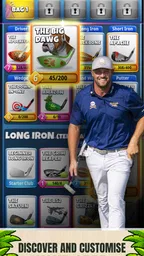
- Clubs and balls support different play styles
What could be better
- Wind makes shot accuracy difficult to judge
- Upgrades can take time without spending
- Matchmaking may pair players with stronger gear
- Limited shots can end a round quickly
- A stable internet connection is required







