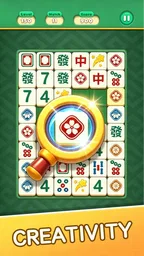
Fun Mahjong Match review
 Analysis by Appsdrops
I like a board game best when it gives me something satisfying to focus on without demanding a long session or a complicated setup. Fun Mahjong Match is aimed squarely at that sort of break: a tile-matching puzzle you can pick up for a little while, with a relaxed tone and offline play as part of its appeal. My impression is that it suits people who want a familiar, low-pressure puzzle rather than a competitive game with a steep learning curve.
A familiar puzzle for unhurried sessions
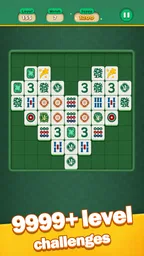
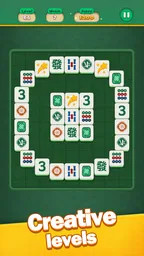
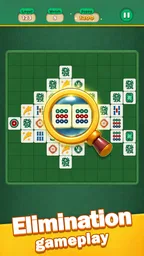
As a board game from EWG STUDIO, Fun Mahjong Match centers on matching tiles. That simple premise is a strength when I want to start playing quickly: I can concentrate on what is visible, consider which pair to clear, and avoid needing to learn a large set of rules first. Its current version is 1.4.3, and the game is free to install, with optional in-app purchases priced from $1.99 to $13.99 per item.
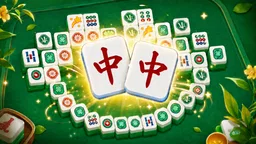
The basic appeal is different from a traditional tabletop Mahjong game. This is a tile-matching puzzle, not a test of the full rule set and turn-taking associated with Mahjong played against other people. If you want a compact solo activity, that distinction makes it approachable. If you want to practice or play the traditional game, this is not a substitute.
I would reach for it during a quiet wait, while taking a short break, or when I want a screen activity that does not require coordinating with friends. Its board-game framing makes it feel more deliberate than a reflex game: the useful question is usually what to match next, not how quickly to tap. That can be calming, though anyone looking for action, story, or social competition may find the experience too restrained.
What the current version tells players
The game was released on April 28, 2026, and its current version is 1.4.3. Those facts establish a point in its product history, but they do not by themselves show what changed between releases. I would not assume a particular new mode, interface improvement, or bug fix from a version number alone. For a returning player, the practical takeaway is simply that this is the version currently offered, not a promise about a specific change.
That distinction matters when deciding whether to return. If you already enjoy tile-matching puzzles, you can judge the present experience on whether it still fits the way you like to play. If you are hoping an update has added a feature you have been waiting for, check the current in-app details or app-store notes before reinstalling rather than treating the version number as evidence that it is there.
The game is rated Everyone, and it has a 4.9 average from around 56,000 ratings, alongside about 427 written reviews. It has passed one million installs. Those figures suggest a broad audience has tried it, but they cannot tell me whether every player likes the same pace or whether the game will fit an individual routine. I would use them as context, not as a replacement for considering what kind of puzzle you actually want.
Making a short session feel worthwhile
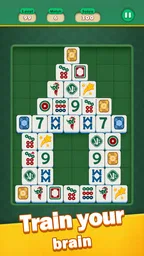
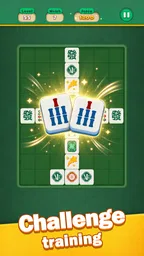
A useful way to approach a tile-matching board is to avoid tapping the first pair that catches your eye. I try to scan for matches that open up more choices, especially when clearing one pair might uncover or expose other tiles. That habit gives each move a little more purpose and helps keep a simple puzzle from becoming a string of automatic taps. It is a general strategy for this style of board, not a claim that the game has a particular hint system or special tile mechanic.
Another practical tip is to treat a session as a mental pause rather than a score chase. When I have only a few minutes, I can make a couple of considered moves and stop when I need to; I do not need to turn the game into a commitment. For a longer break, slowing down and looking across the whole arrangement can make the matching decisions more engaging. The best fit is someone who enjoys noticing patterns, not someone who needs constant new stimuli.
Offline play is a meaningful advantage for this use case. It makes the game easier to consider for a commute, a waiting room, or a place where a connection is unreliable. I would still prepare sensibly: open the game while connected before leaving, and avoid assuming that every store, purchase, or account-related function works without a network. The puzzle itself is presented as an offline option, but that does not mean every surrounding service is necessarily offline.
There is also a small but useful decision before installing: the game is free, but it includes optional purchases. The listed range is $1.99 to $13.99 per item. If I were setting it up for a child or sharing a device, I would check the device’s purchase controls rather than assuming that a free download rules out spending. The Everyone age rating makes the game broadly suitable, while purchase settings remain a separate household choice.
Where it fits among other puzzle games
Compared with word puzzles, Fun Mahjong Match asks for visual scanning rather than vocabulary. Compared with match-three games, its appeal is less about building chains of effects and more about identifying tile pairs and thinking through the board. And compared with a traditional Mahjong app, it is a simpler solo matching experience rather than a way to learn the full game or compete in a multiplayer match.
That makes it a sensible pick if you already like sorting, matching, and calmly narrowing down choices. It is less suitable if you want a puzzle that keeps introducing new rules, a campaign with a strong narrative, timed pressure, or a direct contest with another person. In those cases, I would choose a word game, a deeper strategy board game, or a multiplayer Mahjong title instead. The choice depends less on which game is “better” and more on whether a quiet matching board is what you want right now.
The offline angle also separates it from games that depend on frequent online activity. For someone who wants a short solo diversion, avoiding a required live opponent can be convenient. For someone who enjoys rankings, shared challenges, or the social reading of another player’s moves, that same solo focus may feel limiting. I would not install it expecting a community game; I would install it for the board in front of me.
Who is likely to enjoy it, and who may not
I would recommend it to a friend who likes approachable puzzles, wants to play without arranging a group, and appreciates having an option for disconnected moments. It can also suit someone who wants a familiar kind of concentration without a long tutorial. The game’s straightforward premise is a good match for casual sessions, particularly when the goal is to settle into a small task rather than chase a complex progression system.
I would hesitate to recommend it to a friend who gets bored unless a game keeps adding mechanics or who prefers puzzles with a clear story and a strong sense of advancement. I would also steer a traditional Mahjong enthusiast toward a game built around the full rules if learning or competing at that game is the priority. Tile matching uses the visual language of Mahjong, but the two experiences are not interchangeable.
For a realistic everyday example, imagine having a few minutes before an appointment. I would open the game, focus on the exposed pairs, and use the pause to notice how one choice can affect what remains available. If my name is called, I can put the phone away without needing to finish a multiplayer round. That kind of flexible, self-paced use is where this game’s design makes the most sense.
What I would keep an eye on
For someone already playing, the most helpful thing to watch is whether future versions make a noticeable difference to the experience they personally value: comfort during a short session, clarity while scanning tiles, and reliable access to the offline puzzle. Those are sensible things to look for in any update, not confirmed changes in this one. I would read release notes as they appear and decide based on specific improvements rather than assuming that a higher version number means a new mode.
For a new player, the main gap to consider is whether the simple matching loop will stay interesting after the initial novelty. A 4.9 average is encouraging, but it cannot answer that for you. Try the free game with a short session in mind and notice whether you enjoy weighing up pairs or find yourself wishing for more variety. That is a better test than installing it with expectations of a full Mahjong rule set or a deep strategy campaign.
My overall view is that Fun Mahjong Match is worth considering as a modest, accessible tile puzzle for calm solo play. Its strongest practical case is the combination of a familiar matching idea and offline use; its main limitation is that those same focused qualities may not satisfy players looking for competition or a wider range of systems. I would try it if I wanted a low-pressure board game on my phone, keep purchase controls in mind, and move on to a richer or more social alternative if the simple loop stopped holding my attention.
What we like
- Easy-to-learn matching rules suit casual players.
- Short rounds fit well into spare moments.
- Tile designs are clear and easy to distinguish.
- The familiar mahjong theme feels relaxing.
- Offline play can be useful without an internet connection.
What could be better
- Some levels may feel repetitive over time.
- Hints can make puzzles less challenging.
- Small tiles may be difficult to tap on compact screens.
- Progress may be lost if the app is removed.
- Advertisements may interrupt the flow of play.







