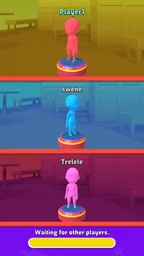

Epic Race 3D – Parkour Game review
 Analysis by Appsdrops
I judge a racing game not only by whether it keeps me entertained, but also by how easily I can understand what is happening and take part. Epic Race 3D is a parkour-style racing game from CASUAL AZUR GAMES, built around quick runs through obstacle courses. Its appeal is easy to grasp: move through a course, react to hazards, and try to finish ahead. That simplicity makes it approachable, though it does not automatically make the game comfortable for every player or every situation.
How the courses communicate what to do
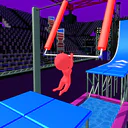
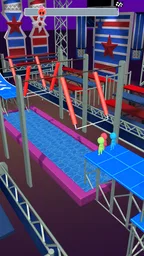
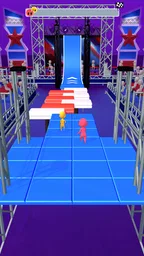
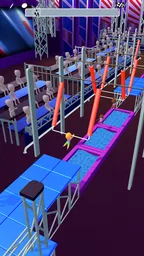
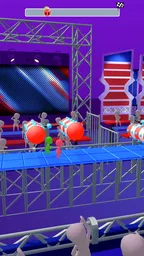
The game’s central idea is immediately legible: this is a race through an obstacle course, not a simulation that expects me to learn vehicle handling or a large set of racing rules. That gives newcomers a useful starting point. I can focus on the visible route and the next obstacle rather than first mastering a complicated interface. The store presents it as a game for everyone, and its age rating is Everyone, which makes the basic premise broadly approachable for families as well as casual players.
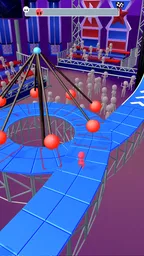
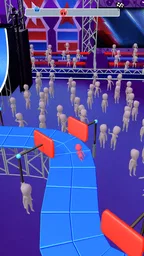
That said, simple goals and readable play are not the same thing. Parkour courses ask for attention to movement and timing, and a player can lose track of a run if hazards or other racers draw their eyes away from the route. I would approach each attempt by watching the next obstacle rather than trying to take in the whole course at once. That small habit can make a fast sequence feel more manageable, especially when I am still learning how the game expects me to respond.
The game’s name and presentation set an expectation of short, energetic races. I think that is a strength for people who want to understand the basic objective without reading a long tutorial. It is less suited to someone who wants an elaborate racing interface with detailed vehicle choices, track strategy, or realistic driving controls. Epic Race 3D sits closer to an obstacle-course challenge than to a traditional car racer, so players should choose it for the running-and-reacting premise rather than for motorsport depth.
For a first session, I would treat early attempts as a way to learn the visual rhythm: identify what is coming, notice where the safe passage appears to be, and avoid rushing merely because the game is a race. A little patience can be more useful than frantic input. This is a practical way to reduce avoidable mistakes, although it cannot remove the need to react when a course asks for quick timing.
Controls, pace, and different motor needs
Motor accessibility depends heavily on the kind of actions a game asks from the player. Here, the parkour-racing concept makes timing and responsive interaction central to the experience. That can suit someone who enjoys quick decisions and short bursts of focused play. It may be frustrating for a player who needs more time to react, has difficulty with precise touch interaction, or finds repeated fast inputs tiring. I would not recommend it as a relaxed, hands-off game.
A useful way to decide whether the pace works for you is to try a few runs when you are not rushed. If the basic movement feels comfortable and the obstacle timing is enjoyable, the game’s direct premise may be a good fit. If you find yourself reacting only after a hazard has already become difficult to handle, that is a sign the game may demand more speed than you want from a casual session. I would not assume that persistence alone will make a fast-response game comfortable for everyone.
For players who use a phone with one hand, or who find touch play uncomfortable, the most sensible check is to try the game on the device and in the grip they actually intend to use. Comfort can change with screen size, hand position, and how long a session lasts. I would start with a short play period, keep the device supported if holding it becomes tiring, and stop if repeated reactions cause strain. Those are practical precautions, not special options built into the game.
Sensory needs matter too. A racing obstacle course naturally puts pressure on visual attention: the player has to distinguish the route and respond to movement. Anyone who finds busy motion distracting may prefer to play in a quiet moment and take breaks between attempts. If rapid visual activity or a strongly competitive pace is uncomfortable, this is probably not the best game to choose for winding down. I would pick a slower puzzle or turn-based game instead.
Where it fits into an ordinary day
One of the clearest use cases is a brief break between other tasks. I can imagine opening it while waiting for a ride or taking a pause at home, playing a few attempts, then putting the phone away without needing to settle in for a long racing session. The short-run format is a better match for those moments than a game that asks me to remember a lengthy campaign or manage a complicated setup.
That same context has limits. If I am standing in a crowded place, walking, or trying to keep an eye on something else, a game that relies on quick visual attention is a poor choice. I would wait until I can sit or stand safely and give the screen my attention. The game may be easy to pick up, but it is not something I would recommend playing while moving through traffic, crossing a street, or supervising a situation that needs my focus.
Connectivity and session conditions can affect any mobile game, so I would not plan around an assumption that every feature works in every environment. The safest expectation is to try it in the setting where you intend to play and see whether that experience suits you. For a short break at home, interruptions are easy to handle; during a commute with unreliable attention or frequent distractions, the rapid-response format may feel less satisfying.
Compared with the usual racing alternatives, Epic Race 3D trades vehicle tuning and lap-by-lap driving for direct obstacle navigation. That makes it easier to approach than a racing game with many controls, but it also means there is less appeal for players who want to study braking lines, customize cars, or build long-term driving skill. If your favorite racing games are about mastering a track over repeated laps, a conventional racer will likely be more rewarding. If you prefer compact courses and immediate reactions, this game’s focus is a clearer fit.
What to know before installing
The game is free to download, with in-app purchases listed at $3.99 per item. I would treat the free entry point as a chance to test whether the pace and control style suit me before spending anything. If a child will play, I would also review the device’s purchase settings together; an Everyone age rating does not replace a household’s own rules about spending or screen time.
Its popularity suggests that many players have found the premise appealing: Epic Race 3D has an average rating of 4.5 from around 595,000 ratings, with about 8,000 written reviews and over 100 million installs. Those figures offer a sense of reach, but they do not tell me whether the timing, visual pace, or interaction style will work for an individual player. I would use them as background, not as a substitute for trying the game.
The game was released on January 5, 2020, and its current version is 2.61.02. It requires Android 7.0 or later. That makes checking the device’s operating-system version a straightforward step before downloading on Android. The product is categorized as a racing game, though its obstacle-course approach makes it feel distinct from car-focused racers. The developer is CASUAL AZUR GAMES.
One non-obvious trade-off is that a straightforward premise can make repeated attempts inviting while also putting the burden on the player’s reactions. If you enjoy noticing a hazard, adjusting your timing, and immediately trying again, that loop can be satisfying. If you prefer a game that lets you pause and plan each move at leisure, you may find the same design pressuring. I would decide based on whether quick retries feel energizing or tiring to you.
Who is likely to enjoy it—and who may not
I would recommend Epic Race 3D to someone who wants a lightweight, easy-to-understand racing diversion and enjoys courses that test timing more than driving technique. It is also a reasonable choice for players who like trying a short challenge during a break and do not need a deep simulation. The broad age rating and free download make it easy to consider, while the purchase options are worth keeping in mind if a child shares the device.
I would steer away from it if you need slow-paced play, have difficulty with rapid touch responses, or want controls and presentation designed around a specific accessibility requirement. I would also suggest a different game if your idea of racing is vehicle selection, realistic handling, or long races with room to settle into a rhythm. The game’s central appeal is its brisk obstacle-course format, and that is also the main reason it will not work for everyone.
A measured inclusive verdict
My overall view is that Epic Race 3D lowers the barrier to understanding the objective, but not necessarily the barrier to performing well. A clear, compact premise helps players know what they are trying to do; quick reactions and sustained attention can still exclude people who need a calmer pace or more forgiving interaction. I appreciate the difference between “easy to understand” and “easy for everyone to play”—this game offers the first more clearly than the second.
If the idea of short parkour races sounds fun, I would try it in a comfortable setting, begin with a few unhurried attempts, and pay attention to whether the timing feels enjoyable rather than stressful. If it does, the free download is a simple way to see whether its rhythm suits you. If the visual pace or motor demands are a poor match, choosing a slower racing or puzzle game is a sensible decision, not a failure to give this one a fair chance.
What we like
- Quick rounds make it easy to play in short sessions.
- Simple controls are accessible to players of different skill levels.
- Obstacle courses reward timing and careful observation.
- Unlockable character styles add a personal touch.
- Bright visuals make hazards easy to spot.
What could be better
- Races can feel repetitive after several rounds.
- Progress relies heavily on repeating familiar course patterns.
- Advertising may interrupt the flow between races.
- Later opponents may make progress feel uneven.
- The game offers limited depth beyond its core races.







