




Epic Plane Evolution review
 Analysis by Appsdrops
I enjoy racing games that make it easy to get moving without asking me to learn a complicated control scheme first, and Epic Plane Evolution aims for that quick, accessible appeal with an aerial twist. It is a free racing game from VOODOO, rated for Everyone, and its central idea is simple: take the action into the sky rather than onto a conventional road. That makes it an easy game to consider for a short break, though the appeal will depend on whether you want a light, repeatable arcade experience or a deeper flight simulator.
What the flying-race idea offers
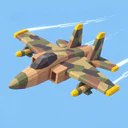
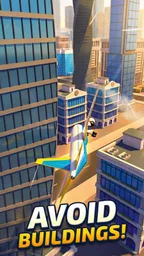
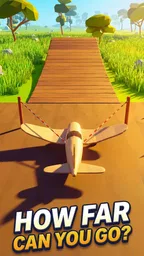
The game’s premise puts aircraft and forward momentum at the center of its racing identity. I find that a useful distinction from the usual mobile racers, where cars, tracks, and familiar driving controls define nearly every run. Here, the fantasy is about taking a plane through an evolving race rather than mastering realistic piloting. If you like the feeling of quick progress and a clear visual goal, that framing is immediately approachable.
That accessibility also sets expectations. This is best approached as an arcade game, not as a substitute for a flight simulator or a detailed competitive racer. Players looking for realistic aircraft handling, careful route planning, or a large catalogue of technical tuning should choose a different kind of game. The draw here is the broad, playful idea of plane evolution, not a promise of aviation realism.
I would recommend trying it when you have a few spare minutes and want something more visually distinctive than another road race. A short session between errands, for example, suits the premise better than settling in for a long, story-led campaign. The game’s store tagline is “Conquer the skies!”, but what matters in practice is whether its simple aerial-racing loop keeps you curious from one attempt to the next.
Progress without turning it into a chore
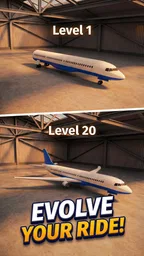
“Evolution” in the title naturally sets an expectation of change over time. That can make progress feel satisfying when a run gives you a visible sense of moving forward, but it can also create pressure if you find yourself repeating the same actions mainly to reach the next improvement. I suggest treating advancement as a bonus to the racing rather than assuming every session must produce a major unlock or breakthrough.
A practical way to judge the loop is to play a few brief sessions and notice what motivates you: the immediate movement, the feeling of building toward something, or simply seeing how a run turns out. If the first minutes are enjoyable on their own, the game has a better chance of fitting casual play. If you only feel rewarded when a progress bar or upgrade advances, the experience may start to feel like a task.
That distinction is especially useful for younger players or anyone sharing a device. The age rating is Everyone, which makes the game broadly accessible, but an age rating does not tell you whether its pacing will suit a particular child. I would watch how they respond to repeated attempts and in-game purchase prompts, and agree on a spending rule before handing over a device with payment access.
Fairness and the cost of playing
The game is free to download, while in-app purchases range from $0.99 to $99.99 per item. That is a wide span, so I would not treat “free” as a guarantee that every optional purchase is inexpensive. The sensible approach is to start without spending, see whether the core experience is satisfying, and only consider a purchase if its purpose and price are clear in the game.
For families, I recommend checking purchase controls on the device before letting a child play unsupervised. That is a general precaution for any free game with paid items, not a claim about how this particular game handles confirmations. For my own use, I would avoid buying anything during a first session: play long enough to understand what the game asks of you, then decide whether paying would improve a part you genuinely enjoy.
On fairness, I would separate two questions that are often bundled together. One is whether a player can enjoy the game without paying; the other is whether spending changes competitive outcomes. The available purchase information establishes that paid items exist, but it does not establish what they do or whether they affect competition. So I would not assume that purchases are purely cosmetic, nor claim that paying creates an advantage. If competitive balance is your deciding concern, look for clear in-game explanations before spending or treating a result as a test of skill.
This caution matters because “racing” can mean different things on mobile. Some games emphasize head-to-head competition and tightly controlled vehicle performance; others are more about quick arcade runs and personal progress. If you need a transparent, clearly explained competitive ruleset, choose a game that spells out how upgrades and paid items interact with races. If you are content with a casual aerial theme, the purchase range alone need not rule this one out, but it is a reason to keep spending deliberate.
How it compares with familiar racers
Compared with a conventional car racer, Epic Plane Evolution is appealing precisely because it changes the setting and the fantasy. That can be refreshing if you are tired of road circuits, but it is not automatically a better fit for someone who wants precise steering, recognizable motorsport, or detailed vehicle setup. I would think of it as an alternative mood rather than a direct replacement for a serious racing game.
It also sits apart from flight simulators. A simulator rewards patience and control over a plane’s behavior; an arcade racing game is generally more interested in quick feedback and forward motion. If you want to learn about flying, this is not the choice I would make. If you want the idea of racing in the air without committing to a technical learning curve, it makes more sense.
That difference gives the game a clear use case: a player who likes the familiar rhythm of mobile racing but wants a less ordinary theme. It is a less obvious choice for someone who mainly plays to compete with friends, compare lap times, or fine-tune a vehicle. I would choose based on the kind of satisfaction you want, rather than assuming every racing game serves the same purpose.
What I would check before settling in
The game was released on May 6, 2023, and its current version is 1.14.1. It has passed 10 million installs, with a 4.1 average from around 129,000 ratings. Those figures suggest that many people have tried it, but popularity cannot tell you whether its particular pace or style will suit you. I would use them as context, not as a substitute for a short personal trial.
It runs on Android 8.0 or later. Before downloading, I would check the operating-system version on an older spare phone, especially if the device is shared with a child. A game can be a good match in principle and still be a poor choice if the device is outdated or the player dislikes its visual style. The low-commitment way to decide is to try it during a moment when you can pay attention, rather than installing it just because the title sounds appealing.
VOODOO is the developer, and the game’s store summary gives a concise sense of its sky-focused ambition. I would still judge the actual experience by how it feels in hand: whether the action is understandable, whether attempts remain entertaining, and whether progression encourages another run without making play feel compulsory. Those are more personal tests than a rating or install count can answer.
Who is likely to enjoy it
I think it is worth a try for casual players who enjoy arcade racing, want a plane-centered theme, and are happy to play in short bursts. It may also work for someone looking for a simple game to pass time while waiting, provided they do not expect every session to deliver a substantial new feature. The Everyone rating makes it broadly approachable, while the free entry point lets a curious player test the basic appeal before deciding whether to keep it.
I would skip it if your main priorities are realistic flying, deep vehicle customization, an explicitly fair esports-style competition, or a campaign with a strong narrative. I would also be cautious if spending pressure tends to spoil free-to-play games for you. The presence of a large maximum item price does not prove that the game pressures players, but it does make it sensible to set boundaries and avoid impulse purchases.
For a realistic everyday scenario, imagine having ten minutes before a meeting and wanting a game that does not demand a long setup. This is the sort of title I would sample in that window: see whether the aerial racing is fun immediately, then stop when the break is over. If you find yourself eager to return because the runs themselves are enjoyable, that is a good sign. If you are only returning to chase an unclear reward, another racer may be a better use of your time.
My trust verdict
My overall view is cautiously positive. Epic Plane Evolution has a clear, unusual angle for a mobile racing game, and its free download gives curious players a straightforward way to find out whether that angle clicks. I appreciate the potential for quick, accessible play, but I would keep expectations firmly in arcade territory and make spending decisions only after understanding what an item offers.
The most useful rule is simple: enjoy the flying-race concept for its own sake, not because you assume a purchase is needed to make it worthwhile. With in-app purchases spanning from $0.99 to $99.99 per item, deliberate choices matter more than the fact that installation costs nothing. If you want a casual change from car racing and are comfortable judging the game on a few short sessions, I think it is reasonable to try. If you need detailed flight mechanics or fully transparent competitive balance, I would pick a more specialized alternative.
What we like
- Quick rounds make it easy to play in short sessions.
- Simple controls are approachable for casual players.
- Plane upgrades give each run a clear sense of progression.
- Bright visuals make the action easy to follow.
- The arcade format offers straightforward pick-up-and-play fun.
What could be better
- Gameplay can feel repetitive after extended play.
- Progress may rely on repeated runs.
- Limited strategic depth may not suit simulation fans.
- The upgrade path can take time to complete.
- Frequent action may feel hectic on smaller screens.







