





EA College Football Mobile 27 review
 Analysis by Appsdrops
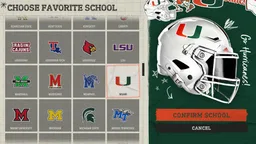
I like sports games that give me a reason to return beyond playing one match, and EA College Football Mobile 27 seems aimed at that longer-running kind of engagement. It is a free sports game from ELECTRONIC ARTS built around managing and coaching a college football team. That focus matters: it is not simply a promise of quick action on the field, so I would approach it as a team-management game first and judge it by how satisfying its ongoing decisions feel.
The name can be easy to mix up with a full console-style football title, but the mobile game’s central pitch is different. You guide a team rather than expecting a direct copy of a large-screen match experience. If you enjoy thinking about a roster, making coaching choices, and gradually shaping a team, that sounds appealing. If what you want is immediate, hands-on football with little management between plays, this may not be the best fit.
Finding a repeatable team routine
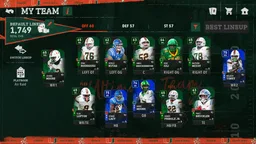
My best approach to a management-focused sports game is to treat each visit as a short coaching session, not as a checklist I have to clear. I would first get comfortable with the team-management flow, then make one considered decision at a time and check how it affects the next session. That keeps the game’s central appeal—building and guiding a team—from turning into a blur of taps and purchases.
For a realistic everyday use, imagine opening the game during a short break. Rather than trying to do everything, I would check the current state of the team, handle the most useful coaching or management task available, and leave the bigger decisions for when I can pay attention. This is especially practical for anyone who enjoys football strategy but does not always have time for a long play session.
A simple habit can also help prevent impulsive choices: decide what you want your team to improve before spending any in-game resources. When a game combines team progression with optional purchases and random items, it is easy to confuse a tempting offer with a decision that genuinely supports your plan. I would set a personal limit before playing and treat purchases as optional extras, not as the default way to make progress.
EA College Football Mobile 27 is free to install, and its in-app purchases range from $0.99 to $199.99 per item. That is a broad range, so I would check each purchase carefully and avoid assuming that a low-cost item represents the game’s overall spending commitment. The game includes random items, which makes a deliberate budget particularly sensible if you prefer predictable value. You can enjoy the management premise without treating every offer as necessary.
What I would check before settling in
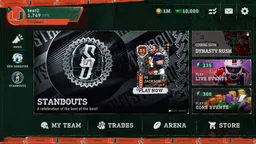
I would begin by looking through the available settings and control options rather than assuming the initial setup will suit me. The point is not to hunt for undocumented shortcuts; it is to make sure the way I interact with the game feels comfortable and that I understand any choices presented before committing to them. A few minutes spent learning the interface can make later team decisions easier to follow.
Because the game is about coaching and managing, I would also pay attention to the difference between a decision that changes how I guide the team and an item that is simply offered as a purchase. That distinction is useful in any game with paid items, but especially here: the appeal is supposed to come from having a team to shape, not from repeatedly reacting to store prompts. If a screen presents several choices at once, I would pause, read them, and come back later rather than tap through on autopilot.
Another useful setting check is the age and content context. The game has an Everyone rating, so its stated audience is broad. That does not remove the need for family conversations about optional spending: parents may want to agree on purchase rules before a younger player starts. I would make those expectations clear in advance, since in-game purchases are part of the experience even when spending is not the reason to play.
Small habits that make management clearer
For me, the most useful pattern in a team game is to keep decisions connected. If I am making a coaching choice, I would first ask what I am trying to achieve with the team, then avoid changing direction just because another option appears. This makes it easier to tell whether I enjoy the management itself or am only responding to whatever the game puts in front of me.
I would also use a brief mental note between sessions: what did I change, and what do I want to review next time? That sounds basic, but it prevents a common mobile-game problem—returning after a day away and making another decision without remembering the previous one. It is particularly helpful when progress is spread across short sessions, because consistency matters more than trying to do a lot at once.
When random items are involved, I would separate curiosity from necessity. If an item is offered, I would consider whether it fits my team plan and whether I am comfortable with the uncertainty before spending anything. For players who prefer knowing exactly what they are paying for, random-item offers may be less appealing than a game with straightforward, fixed purchases. That is not a reason everyone should avoid this one, but it is a real preference worth considering.
The game is currently at version 3.0.0. I would keep the app updated through the app store so I am playing the current release available to me, while still judging the experience by the decisions and routines the game actually offers rather than expecting an update number to guarantee a particular feature. The useful test is whether I enjoy returning to manage the team, not whether the game sounds like a larger football simulation.
Where it differs from other football games
Compared with football games that put the match itself at the centre, this one is better suited to someone who likes the choices around a team. That changes the kind of satisfaction to expect. Instead of choosing it solely for the feeling of controlling every moment of a match, I would choose it for the coaching and management angle and for the appeal of following a team over repeated visits.
That focus is also its main limitation. If you want a detailed on-field simulation, a broad collection of modes, or a particular control scheme, do not assume this mobile title will provide those things just because it carries a college-football name. I would compare it with other sports management games if planning and team-building are what you enjoy, and with a more directly playable football game if you want to spend most of your time in the action.
It also may not suit someone who dislikes free-to-play structures. The game costs nothing to start, but optional purchases and random items can make the experience feel less comfortable for players who prefer a single upfront price and a fully predictable path. I would not spend just to keep pace with an imagined ideal team. If the free management loop is not enjoyable on its own, paying more is unlikely to fix that mismatch.
Who should try it—and who may want another option
I would recommend giving it a look if you follow college football, enjoy coaching decisions, and like checking in on a team over several short sessions. It is also a reasonable match for mobile players who prefer a strategy-minded sports experience to a constant stream of direct action. ELECTRONIC ARTS is the developer, and the game has a 4.5 average from around 3,100 ratings, with over 100,000 installs. Those figures suggest a substantial audience, though they cannot tell you whether its particular management focus is right for you.
The game is less compelling for someone who wants to jump straight into a realistic match and leave team decisions aside. It may also frustrate players who would rather avoid purchase prompts, random items, or the discipline of checking how each management choice fits a longer plan. In those cases, I would look for a football title that emphasises direct play or a sports game with a more fixed-price approach.
One practical way to decide is to try the free version with a clear boundary: spend a few sessions learning the management rhythm, but do not make a purchase just to test whether you like it. Notice whether you find yourself thinking about how to guide the team between visits. If that ongoing decision-making is the fun part, the game has a good chance of holding your interest; if you mainly wish it would get to the match, that is a sign to choose a different style of football game.
My take after weighing the trade-offs
EA College Football Mobile 27 makes the most sense as a compact team-management game for college-football fans, not as a guaranteed substitute for a full football simulation. I like the idea of building a repeatable coaching routine around short visits, and the free entry makes it easy to see whether that rhythm suits you. The strongest advice I can give is to make your own team goals first, check purchase choices carefully, and let the management loop—not the pressure to buy—decide whether you keep playing.
With 639 reviews and a Everyone age rating, it is positioned for a broad mobile audience, but the best match is still quite specific: people who enjoy guiding a team and returning to see how their choices feel. If you want fast, hands-on football above all else, I would pass. If you enjoy the quieter satisfaction of coaching decisions and can be comfortable around optional random-item purchases, it is worth trying without spending first.
What we like
- Quick matches make it easy to play in short sessions
- Team customization adds a personal touch to the season
- Collecting players gives roster building a clear goal
- Touch controls are designed for mobile play
- College teams and stadiums create an authentic football atmosphere
What could be better
- Progress may require frequent play to keep up with events
- Limited energy can restrict how many matches you play
- Building a top roster may take considerable time
- Online features depend on a stable internet connection
- In-app purchases may speed up progress for paying players







