






Drive Mad: Physics Racing review
 Analysis by Appsdrops
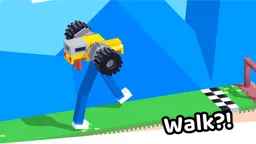
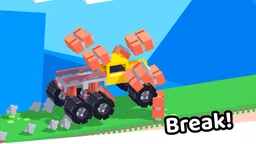
I went into Drive Mad: Physics Racing expecting a quick driving game, and its central idea is easy to grasp: steer crazy cars across impossible roads and try to make it to the other side. The appeal is the challenge of handling unusual vehicles on tricky routes, rather than a long setup before the fun begins. It also supports offline play, which makes it a handy choice when you want a racing game without needing to stay connected.
Impossible roads, immediate challenge
The premise is wonderfully direct. You drive, react to the road, and work out how to get through a course that is designed to test your control. That simplicity makes the game approachable, while the physics-based driving gives each attempt a sense of uncertainty: a move that seems straightforward can still demand careful timing and adjustment. I like that the concept is clear from the outset, so the challenge itself stays in the spotlight.
As a racing game, it takes a playful route rather than aiming for a realistic driving simulation. The impossible-road setup gives it a distinct identity, and the focus on crazy cars suggests a more lighthearted experience than a conventional race built around polished tracks and strict competition. If you enjoy games where success comes from learning how to handle an awkward situation, this is the sort of premise that can keep you curious from one attempt to the next.
The game’s short store description is simply “Drive Mad,” while its broader pitch sums up the experience as crazy cars on impossible roads. That message does a good job of setting expectations: this is about negotiating strange driving challenges, not about managing a garage or planning a long racing career. I found the straightforward setup appealing because it makes the game easy to understand even if you have only a few minutes to play.
Controls, physics, and the pleasure of trying again
Physics-based driving is the heart of the experience. Instead of treating a car as something that only needs to turn around corners, the game asks you to pay attention to how it moves across difficult terrain. The resulting challenge can feel delightfully unpredictable. A road that looks manageable may require a more measured approach, and the satisfaction comes from adjusting your driving rather than simply rushing ahead.
That kind of design works best when you enjoy experimentation. I’d approach each difficult stretch as a small problem: observe what the road is asking of you, make a controlled attempt, and learn from the result. The point is not to assume that every obstacle will be cleared on the first try. It is to enjoy the process of figuring out how to handle an unusual car on an unusual route. For players who find that loop rewarding, the central idea has plenty of immediate charm.
It is also a game that can fit casual sessions. The concept does not require a lengthy explanation, and offline play means you can enjoy it without relying on an active connection. That makes offline racing a practical part of its appeal: it suits a quick break, a quiet moment away from a network, or a stretch of travel when you want something interactive to focus on.
Free to start, with optional purchases
Drive Mad is free to download, with in-app purchases listed from $0.99 to $22.99 per item. That gives players a useful baseline for thinking about spending: you can begin without paying for the game itself, while optional purchases are part of the available business model. The listed range is broad enough that I would check the in-app purchase details in the app store before buying anything, particularly if you prefer to keep your gaming costs predictable.
Those purchase facts alone do not tell me what each item contains or whether spending changes the challenge. I would not assume that an optional purchase is necessary, nor would I promise that the whole experience is equally accessible without one. The sensible approach is to treat the free download as a chance to see whether the driving and road challenges suit you, then review the purchase information carefully if you are considering spending.
For families, the game has an Everyone content rating, which gives a broad indication of its intended audience. That rating is useful context, but it is separate from purchase decisions. If a child will be playing, I recommend checking the device’s purchase controls and discussing in-app spending in advance. That is a practical precaution for any free game with optional purchases, not a claim about how this particular game handles them.
Progress without assuming a pay-to-win system
Progress in a challenging driving game often comes from learning: understanding how a vehicle responds, becoming more careful with timing, and making a better attempt after a setback. That is the kind of improvement I would look for here, given the focus on physics and impossible roads. The experience can feel rewarding when a difficult section finally makes sense, because the player’s own adjustment is part of the achievement.
At the same time, I would avoid guessing about progression systems or how purchases relate to them. The purchase range confirms that items can be bought in the game, but it does not establish whether they unlock content, change vehicle handling, reduce difficulty, or provide any competitive advantage. Without those specifics, the fair conclusion is a limited one: spending is available, but its effect on progress should be judged from the item descriptions shown in the app itself.
This distinction matters for players who want a challenge that feels earned. A free starting point is appealing, but it does not automatically answer whether every route or feature can be reached without paying. I would try the game first, pay attention to any purchase prompts, and decide whether the experience is satisfying on its own before considering an optional transaction. That keeps the decision grounded in what you actually see while playing, rather than assumptions about the business model.
Fairness for solo play and competition
The game is presented as a driving challenge, and its offline support makes solo play an obvious part of its appeal. That can be a welcome change if you want to concentrate on mastering a route rather than comparing results with other players. The basic enjoyment here comes from handling the road and learning how to control the car, so a player can appreciate the core idea without needing a competitive setting to make it meaningful.
When it comes to competitive fairness, I would be cautious about making claims. The known purchase facts do not explain whether the game includes multiplayer, leaderboards, rankings, or any other comparison between players. They also do not establish whether purchases affect a competitive outcome. So I cannot fairly label the game pay-to-win or declare its competition balanced. What I can say is that the publicly stated purchase range makes it sensible to check how any item works before treating a result as a pure test of driving skill.
If you mainly want a solo physics challenge, that uncertainty may not weigh heavily on your decision. If you are choosing a game specifically for head-to-head racing or score-based rivalry, look at the game’s current in-app information first and confirm that its competitive options match what you want. The distinction is important: enjoying a demanding driving game is not the same thing as knowing how its competitive systems operate.
Who may enjoy the ride?
I think the game is best suited to players who like simple premises with demanding execution. The idea is immediately understandable, but unusual roads and physics-based driving leave room for trial and error. If you enjoy trying a route, adjusting your approach, and taking satisfaction in a successful run, the concept should make sense quickly. The offline option also makes it convenient for people who want a game that does not depend on a constant connection.
On the other hand, players looking for realistic motorsport, detailed vehicle management, or a heavily explained progression path may want to check the game themselves before committing. The central pitch is about crazy cars and impossible roads, so its personality is built around an exaggerated challenge. I would choose it for that distinctive hook, rather than expecting it to serve as a substitute for a simulation racer.
A strong start, with sensible expectations
The game has found a sizeable audience: it has over 10 million installs, an average rating of 4.8 from around 93,000 ratings, and more than 950 written reviews. Those figures suggest broad interest, though popularity is not a guarantee that every player will enjoy its style. The strongest reason to give it a try is still the idea itself: a free, offline-capable driving game built around cars and roads that are meant to be a little absurd.
WebVentures B.V. is the developer. The game was released on September 9, 2024, and its current version is 2.3.2. It requires Android 7.0 or later. Those details help establish what kind of device support and release context to expect, while the Everyone rating makes its intended audience broad. As always, it is worth checking the app store on your device for compatibility and the latest purchase information before installing.
My overall take is positive, with one clear qualification: the core concept sounds fun and accessible, but purchase effects and competitive systems should not be guessed at. I like the combination of immediate driving challenges and offline availability, and the physics-focused premise gives the game a memorable angle. Try it for the impossible roads, enjoy the learning curve, and make any spending decision only after checking what an item actually offers. If that style of challenge is your kind of fun, it is an easy game to consider; if you need confirmed details about multiplayer fairness or progression purchases, inspect those specifics before making it your next regular racer.
What we like
- Simple controls make it easy to start playing.
- Short levels suit quick gaming sessions.
- Vehicle physics create unpredictable and funny moments.
- Level variety keeps challenges from feeling too repetitive.
- The game works well for players who enjoy trial and error.
What could be better
- Some obstacles require repeated attempts to learn their timing.
- Rough landings can end a run very quickly.
- Later stages may feel frustrating for casual players.
- Vehicle handling can seem inconsistent on uneven terrain.
- Progress may depend on replaying levels to improve results.







