



Dream League Soccer 2026 review
 Analysis by Appsdrops
I would recommend Dream League Soccer 2026 to someone who wants a football game they can pick up for a quick match, but who also enjoys working toward a stronger team over time. My first impression is that it aims for a middle ground: more involved than a simple kick-and-score arcade game, yet easier to approach than a simulation that expects you to manage every detail before you can enjoy playing.
It is a free sports game from First Touch Games Ltd., and its FIFPRO licensing gives it an authentic football identity. The audience is substantial, with an average rating of 4.5 from around 15 million ratings and over 100 million installs. Those figures suggest broad appeal, but they do not mean every player will enjoy its pace or progression. The useful question is whether you want to build a team and learn its match rhythm, rather than simply play a fully open-ended football sandbox.
What to expect from your first matches
The best way to approach the game is as a series of small decisions, not as a test of how quickly you can sprint toward goal. Passing, finding space, and choosing when to advance matter more than trying the same direct attack every time. When I slow down and look for a sensible route forward, matches feel more rewarding; when I rush possession, I tend to make my own chances harder.
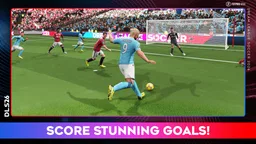
That balance is a strength for newcomers. You can begin with the basic pleasure of controlling a football team, then pay more attention to the shape of an attack as you become comfortable. A satisfying early goal usually comes from making two or three deliberate choices—keeping the ball, moving it into a better position, and taking the opportunity when it appears—rather than relying on one button or one repeated trick.
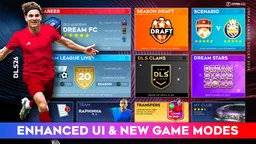
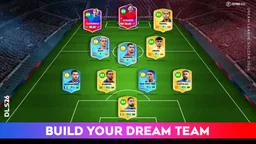
The game is also a better fit for people who like a reason to return after a match. Improving a squad and seeing how that changes your options can make a short session feel connected to a longer project. If you only want an instant, consequence-free kickabout, that progression may feel like an extra layer rather than a benefit. The difference is important: this is not just a match launcher, but a football game built around both playing and developing a team.
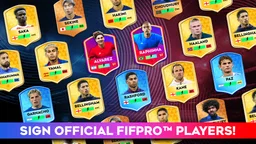
FIFPRO licensing helps give the football setting familiar names and context, but I would not choose it on licensing alone. The main draw is the combination of recognisable players with hands-on match control. If your ideal game is about making tactical adjustments and watching a detailed simulation unfold, a management-focused alternative may suit you better. If you want to play the football yourself, this is the more natural direction.
Getting set up without overthinking it
Dream League Soccer is free to install and is rated Everyone, so it is approachable for a wide range of players. It requires Android 6.0 or later on Android devices. The current version is 13.430, and the game includes optional in-app purchases ranging from $0.09 to $99.99 per item. I would treat those purchases as optional spending, not as a requirement for learning the controls or deciding whether the matches are enjoyable.
For a first session, I would keep the goal modest: get through the opening steps, play enough to understand how your team responds, and avoid spending money while you are still figuring out what you like. That makes it easier to judge the game on its football rather than on the early temptation to accelerate progress. If you are considering a purchase, first ask whether it solves a problem you have actually encountered or simply promises to make a new game feel faster.
A practical setup habit is to give yourself time for a complete match instead of opening the game in the middle of another task. A few minutes spent learning how passing and movement work can make the next match much less frustrating. Once you have a feel for the controls, shorter visits are more useful: you can focus on one match or one small team goal without trying to understand everything at once.
The game has attracted over 100 million installs, but a large player base does not tell you whether its particular style suits your hands or preferences. I would especially encourage first-time players to experiment gently. Try a calmer approach before deciding that your team feels weak; some early difficulty can come from asking players to force attacks before you have learned how to keep possession and create room.
Your first meaningful success: build one good attack
For a newcomer, I would define success as creating a chance through a controlled sequence, not necessarily winning every early match. Keep the ball moving, look for a teammate who is not crowded, and resist the urge to send every possession straight toward the goal. That small change gives you a clearer read on how your team behaves and makes missed chances easier to diagnose.
After a match, think about where attacks broke down. Did you lose the ball while trying to move forward too quickly? Did you reach a shooting position without a clear angle? Making one adjustment in the next game is more helpful than changing everything at once. This is a simple way to turn a frustrating loss into practice, and it avoids the common trap of blaming the whole team for a single rushed decision.
One useful trade-off is between attacking quickly and keeping control. A direct move can catch an opponent out, but forcing it repeatedly can leave you with few options when the route closes. I prefer to use a quick forward pass when the opening is obvious and otherwise keep the ball moving until a better lane appears. That is not a guaranteed recipe for scoring; it is a steadier way to learn what your players can do.
There is also value in treating the first few sessions as a test of fit. If the pleasure comes from controlling a developing squad and seeing your decisions play out, keep going. If you are mainly annoyed by the need to improve over time, the game’s longer-term structure may not be for you. Recognising that early can save you from spending simply because you feel you need to catch up.
Where new players can get confused
The first common misunderstanding is expecting every match to reward constant forward pressure. Football games can make sprinting and shooting feel like the obvious plan, but here a rushed attack can leave you with poor options. When a move stalls, I would rather recycle possession and try again than force a low-quality attempt. Patience is not passive play; it is a way to give yourself a better chance to choose the next action.
Another point of friction is separating player improvement from player skill. A stronger squad may help, but it cannot automatically fix poor timing or careless possession. If matches feel difficult, change one part of your approach before assuming that spending is the answer. Try safer passing, pay attention to where the attack loses momentum, and see whether the problem happens in the same situation more than once.
Newcomers may also wonder whether the game is suitable for a short daily routine. It can be, provided you are comfortable with the idea that a brief session may be about learning or making gradual progress rather than achieving a dramatic result. A realistic everyday use case is playing one match during a break, then returning later with a specific aim—such as keeping possession longer or choosing better moments to shoot. That makes a quick session feel purposeful without turning it into a chore.
The range of in-app purchase prices is worth keeping in mind, especially for younger players or anyone who prefers a strict budget. The game is free to start, but optional purchases can reach $99.99 per item. I would set a personal limit before browsing purchase options and make sure that the game is enjoyable without paying. The clearest reason to spend would be a considered preference, not frustration after a difficult match.
Finally, do not confuse the game’s familiar football presentation with a promise that it behaves exactly like watching a real match. It is still a mobile game, designed around direct interaction and progression. If your priority is a deep coaching experience, or a football title where the main attraction is elaborate tactical planning, look at alternatives in those styles. If you want to take control and play through your own attacks, this one is easier to recommend.
Who will enjoy it, and when I would choose something else
I think it works best for players who enjoy football, want to control matches themselves, and like seeing a team develop. It is also a sensible choice for someone new to mobile football games who is willing to learn through play instead of expecting to master everything in the opening session. The game’s broad audience is reflected in its 4.5 average rating, though personal preference still matters more than popularity.
I would skip it if you want every player, team, and decision available without a progression journey, or if you dislike the idea of optional purchases appearing alongside free play. I would also look elsewhere if your preference is a manager-style game where you make plans but do not directly play the action. Those are not flaws so much as different expectations: Dream League Soccer puts the match itself at the centre.
Compared with a very simple arcade football game, it asks for more patience and gives team development a larger role. Compared with a detailed sports simulation, it is a more direct way to get into a match. That makes it a useful middle choice for someone who wants more substance than quick taps but does not want football to feel like a spreadsheet of decisions. The right comparison depends on whether you value hands-on play, easy sessions, or deep management most.
A steady next step after the first game
Once you have managed one controlled attack, build on that rather than chasing every option at once. In your next session, notice which kinds of moves feel reliable and where you tend to lose the ball. Choose one small focus, such as passing before pressure closes in or waiting for a clearer shooting opportunity. This gives you a practical way to improve without needing a guide or a spending plan.
If you enjoy that process, let the team-building side unfold at a pace that feels comfortable. The game is most satisfying when a better performance feels connected to what you learned, not just to how quickly you advanced. If it stops being fun, there is no need to treat every setback as a signal to buy something or play longer. A football game should still earn its place in your free time.
Overall, I see Dream League Soccer 2026 as a welcoming but not entirely effortless football game: easy to start, more satisfying when you play thoughtfully, and best for people who enjoy a gradual team journey alongside their matches. First Touch Games Ltd. has made a free sports title with a clear appeal, while the optional purchases and progression make it worth approaching with a little self-control. I would try it if you want to play the football yourself, learn by doing, and turn a single well-built attack into a reason to come back.
What we like
- Build and customize a club with a large roster of licensed players.
- Multiple formations let you adjust tactics to suit your squad.
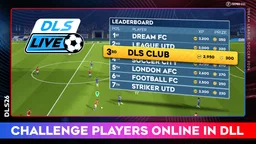
- Online events offer challenges beyond the standard career mode.
- Club facilities can be upgraded to support long-term progress.
- Touch controls make passing and shooting accessible on mobile.
What could be better
- Player transfers and upgrades can require substantial in-game currency.
- Online play depends on a stable internet connection.
- Ads and optional purchases may interrupt or speed up progression.
- Match outcomes can feel influenced by uneven difficulty spikes.
- Team-building takes time if you prefer not to spend money.







