






Dice Yatzy - Classic Fun Game review
 Analysis by Appsdrops
I can see Dice Yatzy working best in a shared household moment: someone has a few minutes before dinner, another person is waiting for a ride, and a quick dice game gives them something easy to do together. It is a free board game from FunCraft Games, built around Yatzy rather than a sprawling collection of activities. That focus is its appeal. You can get to the familiar choices of a dice game without asking everyone to learn a complicated ruleset first.
How it fits into a shared day
In my experience, a Yatzy round suits the gaps in a day better than games that demand a long, uninterrupted session. It is the sort of activity I would suggest while waiting for food or relaxing on the sofa: take a turn, weigh a choice, and let the game continue at its own pace. The dice add enough uncertainty to make a result feel lively, while the scoring choices give players a reason to think rather than simply tap through.
The key household question is who is actually playing together. The store summary presents it as a game to enjoy with friends, but that alone should not be taken as a promise about every kind of multiplayer arrangement. If you want to play face-to-face on one device, check how the current game flow handles turns before settling in. If everyone expects to play from separate phones, confirm the available options in the app itself. I would not plan a family game night around a particular mode until I had checked it.
That small bit of preparation matters because “playing together” can mean different things. Some people want to pass one device around; others want a shared online match or a way to pick up a game later. Those are not interchangeable experiences. Dice Yatzy is easiest to recommend when the household is happy with its actual play options, rather than assuming it works like a full board-game platform.
Why a familiar dice game works here
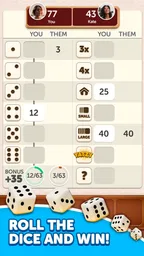
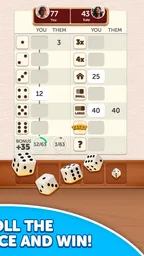
Yatzy is approachable because the basic loop is recognizable: roll, decide what to keep, and choose where the result belongs on the scorecard. The tension comes from managing imperfect rolls. A promising combination might be worth pursuing, but holding out for it can leave fewer attractive scoring choices later. That makes each turn a small decision, even when the game is light enough for casual company.
One useful habit is to look at the scorecard before committing to a direction. When playing with others, it is easy to focus on the dice in front of you and forget that the remaining scoring options shape what counts as a sensible risk. I find it more satisfying to treat a weak roll as a prompt to protect a useful category, rather than automatically chasing the biggest possible score. That approach also gives newer players a practical way into the strategy without a long explanation.
For a household with mixed experience, this is a real strength. A first-time player can understand the basic rhythm by watching a turn, while someone familiar with dice scoring can think ahead. It is less suitable if your group wants a deep strategy game where careful planning reliably outweighs luck. Dice keep the outcome uncertain, which is part of the charm but also means a thoughtful player can still have an unlucky round.
Setting expectations on a shared device
Before handing a phone or tablet around, I would agree on whose device it is and who is responsible for any account or purchase prompts. Shared-device play can blur those boundaries: a child may be taking turns on an adult’s phone, while saved settings or store activity belong to the device owner. I would not assume that the game separates household members into individual profiles or provides family controls. Check the actual setup and keep purchases under the device owner’s supervision.
The game is free to install, but it includes optional in-app purchases, with items ranging from about fifty cents to fifty dollars. That is worth discussing before a younger player uses a shared device, especially if the device is already set up for purchases. A simple household rule—ask before buying anything—can prevent an otherwise casual game from turning into an unexpected spending discussion. The presence of optional purchases does not mean a purchase is necessary to understand the basic appeal of Yatzy.
There is another practical boundary: decide whether a shared session is meant to be a quick one-off or a continuing game. If the players take turns at different times, make sure everyone understands how the app treats progress before relying on it as a household scorekeeper. I would avoid assuming that a result or game state will be available to every person who uses the device. For a casual round, that uncertainty is easy to sidestep: finish the game together and treat the score as part of the moment.
Coordinating turns and keeping the game friendly
When several people are taking part, the best coordination is often very simple. Agree who goes next, keep the device in one place, and make sure the active player gets to consider the scorecard before tapping. That last step is easy to overlook: a hurried choice can lock in a less useful category, and then the player may feel the app—not their decision—caused the poor result. Giving each person a moment to read the options makes the game feel fairer.
I also like setting a natural stopping point before starting. A complete game is more satisfying than abandoning a scorecard halfway through, but not every household has time for a long session. If you only have a short break, agree to play one round or stop after a clear finish rather than leaving the device circulating with no plan. This is especially useful when children are sharing with adults, since a defined endpoint prevents “one more turn” from stretching into an argument.
For friends or relatives who are not in the same room, coordinate expectations before inviting them to play. Confirm whether the current version supports the way your group wants to connect, and whether everyone needs their own device. The description emphasizes playing with friends, but I would treat that as a reason to inspect the available play flow, not as a guarantee of a specific connection method. If the group mainly wants reliable remote coordination, a game with clearly documented invites and turn notifications may be a better fit.
Age suitability and trust
Dice Yatzy is rated Everyone, which makes its basic theme a comfortable fit for a broad age range. The activity is centered on dice and scoring rather than a complex fictional world, so I can picture it being introduced to a child who enjoys taking turns and counting. Still, an age rating is not a substitute for an adult checking the app on the device a child will use. In particular, look at the purchase flow and decide what supervision makes sense in your household.
The game has a 4.8 average from around thirty-seven thousand ratings, alongside about three thousand six hundred written reviews. It has passed one million installs, which suggests it has found a substantial audience for this familiar style of play. I take those figures as useful context, not a guarantee that every household will enjoy it. Ratings cannot tell you whether your family prefers quick dice decisions, longer strategy sessions, or a game that keeps an ongoing record across multiple players.
Its release was on November 9, 2023, and the current version is 1.2.26742. It supports devices running Android 8.1 or later. If you are setting it up on an older family tablet, check compatibility before planning a shared session. Keeping the app current is sensible too, particularly when the household depends on a particular device to host a game. I would make that check before guests arrive rather than troubleshooting during the only free moment everyone has.
Where it stands against other board games
Compared with a word game, a card game, or a heavier digital board game, this one asks very little from a new player. The familiar dice-and-scorecard structure is easy to explain, and each choice is compact. That makes it a good candidate for a mixed-age group or a casual break when nobody wants to read a rulebook. It is also more luck-driven than games where players build a plan over many turns, so I would not choose it for a group that wants every result to reward deliberate long-term tactics.
Compared with a physical dice set and paper scorecard, the app removes the need to find and track those materials. That convenience is valuable when you are away from home or sharing a small table. The trade-off is that a screen becomes the center of attention, and the game experience depends on the app’s available play flow. If your group enjoys passing real dice around, chatting without looking at a phone, or making house rules, the tabletop version may be more sociable and flexible.
There is also a difference between a focused Yatzy game and a broad board-game collection. Dice Yatzy makes sense if this specific dice pastime is what your household wants to play. If people regularly disagree about what to play, or want several distinct games in one place, a collection may be more useful. I would choose the focused option when ease and familiarity matter more than variety.
Who I would recommend it to
I would recommend it to someone who already enjoys Yatzy, wants a quick digital version, or needs a low-friction game to share during a quiet moment. It is especially appealing when the players are comfortable with a little luck and enjoy making small choices under uncertainty. The game’s board-game identity gives it a more deliberate feel than a reflex challenge, while the dice keep the mood casual.
I would be more cautious if your priority is a guaranteed remote multiplayer setup, an extensive range of games, or strong household account separation. I would also look elsewhere if your group dislikes outcomes that depend heavily on luck, or if you want a game that works comfortably without a phone becoming the shared focus. Those are not faults so much as differences in what the experience is built around.
My practical advice is to install it before a planned group session, check how the available play options match your household, and decide who handles the device and purchases. Then use a short first game to see whether everyone enjoys the pace. If they do, the simple rhythm of rolling, choosing, and comparing scores gives Dice Yatzy a natural place in an everyday shared routine. If they want deeper planning or more ways to play, a different board game will serve them better.
My household verdict: Dice Yatzy is a sensible choice for a familiar, low-commitment dice game, especially when players can agree on how to share the device and take turns. FunCraft Games has kept the idea focused, and that focus is both its strength and its limit. I would keep it in mind for relaxed sessions with friends or family, while checking the actual play setup and purchase boundaries before making it the centerpiece of a shared-device game night.
What we like
- Quick rounds make it easy to play during short breaks.
- Familiar rules are simple for new players to learn.
- Dice rolls add a satisfying element of chance.
- Score tracking helps players compare results across rounds.
- The classic format offers a relaxed alternative to complex games.
What could be better
- Luck can outweigh careful choices in a single round.
- Repeated rounds may feel predictable over time.
- A poor roll can leave limited scoring options.
- Players seeking deep strategy may find the rules too simple.
- The game may offer little appeal to players who dislike dice games.







