


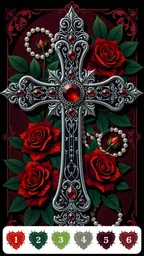

Dark Aesthetic Color by Number review
 Analysis by Appsdrops
I’d choose Dark Aesthetic Color by Number when I want a quiet, visual puzzle with a distinctly gothic mood rather than a conventional board game built around competition or strategy. Its appeal is specific: filling numbered areas with color while working through dark, decorative imagery. That makes it an easy game to pick up for a short break, though it is less suited to anyone looking for tactical decisions, social play, or a demanding challenge.
What to consider before you start coloring
The first question is whether color-by-number is the kind of activity you enjoy. The basic pleasure comes from matching colors to numbered spaces and watching an image take shape. You do not need to invent a composition or plan several moves ahead, so the game can feel relaxing when you want your attention occupied without a high mental load. If you find repetitive tapping soothing, this format is a good fit; if you want every session to test your skill, it may feel too gentle.
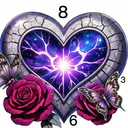
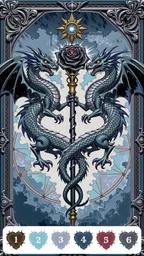
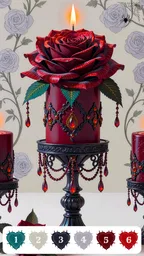
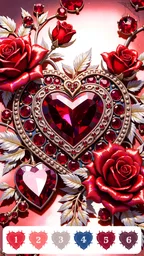
The second question is whether the visual theme will keep you interested. This is not a general collection of bright, everyday pictures: the game leans into dark, gothic-colored objects, symbols, and ornaments. I find that clear identity more appealing than a rotating assortment of unrelated art, but it also narrows the audience. Someone who likes moody decorative imagery may find the pages cohesive; someone who prefers cheerful animals, landscapes, or realistic scenes may be happier with a broader coloring game.
It is a free board game from Joyarc Coloring Games, with optional in-app purchases priced from $0.99 to $39.99 per item. That gives you a way to try the central idea before deciding whether to spend, but the wide range makes it sensible to check each purchase carefully rather than assuming every option costs about the same. It is rated for Everyone, and it runs on Android 7.0 or later. The current version is 1.2.0.
Those details matter in practical ways. A parent considering it for a child can see that the age rating is Everyone, while still deciding whether the darker visual style is a good match for that child. A player using an older Android device can check the minimum operating system before installing. And if you are browsing with limited patience for trial and error, the free entry point makes it easier to test whether the art and coloring rhythm suit you before considering an in-app purchase.
A small, low-pressure ritual
I can see this working especially well as a short evening routine: open a picture while waiting for a call to start, color a few sections, then stop without needing to remember a complicated plan. The numbered structure helps make that kind of pause feel complete. Rather than leaving a strategy game halfway through a match, you can make visible progress on an image in whatever time you have.
That same quality makes it useful during quiet waiting periods, such as a commute as a passenger or a break between tasks. I would treat it as a focused screen activity, not something to play while walking, driving, or doing anything that requires attention elsewhere. For the best experience, choose a moment when you can look closely at the image: tiny numbered sections are easier to handle when you are not constantly glancing away.
Why the gothic direction works
Color-by-number games often rely on variety to hold attention. This one makes a different bet: the dark aesthetic is part of the reason to return. A consistent visual mood can make the collection feel more like a themed activity than a pile of unrelated coloring pages. If you enjoy gothic decoration, symbols, and ornate objects, that focus gives you a more distinct reason to choose it over a generic coloring app.
There is also a useful trade-off in the subject matter. Dark imagery can make color choices feel more atmospheric than they would in a pastel or cartoon scene, and a finished picture may suit someone who likes decorative art. But the theme is not automatically a sign of deeper gameplay. The central activity remains matching numbered spaces with colors, so the style adds character rather than turning coloring into a strategic puzzle.
For a smoother session, I would start with a picture that looks manageable instead of choosing one solely because its finished artwork is striking. A detailed ornament may be satisfying, but many small spaces can make it a slower task. If you have only a few minutes, a simpler-looking design is more likely to give you a quick sense of progress. Save the more intricate image for a longer break, when you can enjoy filling it without rushing.
How it compares with other kinds of board and coloring games
Against classic board games, this is a different kind of pastime. There is no reason to expect the turn-taking, opponent interaction, or tactical planning that makes a tabletop-style digital game engaging. If your idea of a board game is weighing moves against another player, a chess-like game or a multiplayer board title will be a better match. This one is closer to a relaxing puzzle activity dressed in a board-game category than a contest of strategy.
Compared with open-ended digital coloring, the numbered approach provides structure. You do not have to decide which shade belongs in every space, so it can be less intimidating than a blank canvas or a free-painting tool. The flip side is that it offers less room for personal interpretation: the satisfaction comes from completing the image as directed, not from making your own palette or altering the composition. I would choose freeform coloring if creative control matters more than guided completion.
It also differs from puzzle games that ask you to solve a changing problem. A logic or tile puzzle tends to reward finding an answer; a coloring page rewards steady progress and visual completion. That distinction is important if you are deciding what to install for a particular mood. When I want a challenge, I would reach for something with more consequential choices. When I want a calm task that occupies my hands and eyes, this game makes more sense.
Where it may frustrate you
The main limitation is inherent in the format: coloring by number can become repetitive, especially if you prefer games with varied mechanics. The gothic theme helps give the experience a personality, but it cannot make every coloring session feel fresh for every player. If tapping through numbered areas starts to feel like a chore, there may not be enough strategic variation to bring you back.
Detailed pictures can create another small friction point. When an image contains many narrow areas, identifying and filling them takes more care than coloring broad sections. I would avoid starting a highly detailed page when I am tired or trying to finish quickly. Taking a break partway through is a better approach than rushing through small spaces and turning a relaxing activity into a test of patience.
Purchases are worth considering with a clear budget in mind. The game is free to start, but optional items span a substantial price range, so I would not tap a purchase option casually. First spend enough time with the free experience to decide whether you enjoy both the coloring process and the specific art direction. If the core loop is not satisfying, buying more content is unlikely to fix that mismatch.
Who should choose it—and who should look elsewhere
I would recommend it to someone who likes gothic-style decoration, wants an uncomplicated coloring activity, and values a clear path from unfinished page to completed image. It can also suit a casual player who wants something more directed than a blank drawing app but less demanding than a competitive puzzle. The free starting point is helpful for making that decision without committing to a purchase first.
I would skip it if you mainly want multiplayer play, deep board-game tactics, or a steady stream of difficult problems. I would also look elsewhere if you are particular about choosing every color yourself, since numbered coloring is designed around following a set scheme rather than making a wholly personal artwork. And if you prefer lighthearted or realistic pictures, the dark decorative theme may simply not be the one you want to spend time with.
There is a modest sign of an established audience: Dark Aesthetic Color by Number has over 100,000 installs, a 4.7 average from around 2,000 ratings, and 349 written reviews. It was released on May 9, 2025. Those figures suggest that plenty of people have tried it, but I would still judge it by the match between its style and your own taste; a strong average cannot tell you whether you personally enjoy gothic art or repetitive coloring.
My recommendation
For me, the best reason to install this game is not the board-game label but the combination of guided coloring and a consistent dark aesthetic. It offers a low-pressure way to finish an image in short sessions, and its subject matter gives it a more recognizable character than a generic coloring activity. The trade-off is that the underlying play stays simple, and the theme is a genuine preference rather than a universally appealing extra.
Try it if you want a calm, structured activity and the gothic artwork sounds inviting. Give a few sessions to the free experience before paying for anything, and choose less intricate pages when you only have a short break. If you want strategic competition, open-ended art tools, or more cheerful imagery, another game will serve you better. For the right player, though, this is a straightforward way to turn a spare moment into a small, finished piece of dark decorative art.
What we like
- Dark backgrounds make the numbered artwork easy to view at night.
- Coloring offers a calm activity that requires little artistic experience.
- Numbered sections provide clear guidance for beginners.
- Completed images can suit users who enjoy gothic-style artwork.
- The simple tap-to-fill format is easy to learn.
What could be better
- Small numbered areas may be difficult to tap accurately.
- The dark palette may feel repetitive to some users.
- Coloring by number offers limited creative freedom.
- Some artwork may take patience to finish.
- The app may feel less appealing to users who prefer bright designs.







