







Courtside - Social Sportsbook review
 Analysis by Appsdrops
I went into Courtside expecting a straightforward sports game, but its appeal is better understood as a compact sports-picks experience with casino and card-ripping elements in the mix. That combination gives each visit a clear starting point: choose what to engage with, see how the experience responds, then decide whether there is a reason to come back. I like that it aims for quick bursts rather than asking me to settle in for a long sports simulation. The trade-off is that anyone looking for hands-on team control or a conventional season mode may find the central idea less satisfying.
Making the first move feel approachable
Courtside is a free sports game from Courtside Games, and its short description, “Courtside,” leaves the experience to explain itself once you start exploring. The broader concept brings together sports picks, casino-style play, and card rips. That makes it feel distinct from a typical score-tracking app or a traditional sports game, but it also means newcomers should take a moment to understand what each activity is asking them to do before committing attention to it.
My practical advice is to treat the first session as a tour, not a test of sports knowledge. Look at the available choices, work out which parts are about making a pick and which are about the casino or card-ripping side, and then focus on the activity that makes immediate sense to you. That small pause helps avoid the common mistake of tapping through a sports-themed interface without understanding what kind of decision comes next.
The game’s sports focus gives it a natural fit for people who already enjoy following matchups and debating outcomes. It is less obviously suited to someone who wants to control players, build a lineup through a long campaign, or simply check live scores. Those are different needs, and a dedicated sports simulator or score app would be the clearer choice for them. Courtside’s draw is the interactive layer around sports interest, not a replacement for watching or following a game.
There is also a useful distinction between enjoying sports and wanting to make picks. If you like comparing possibilities and seeing how a choice plays out, the core idea may click quickly. If you prefer sports content with no decision-making attached, the picks angle could feel like unnecessary friction. I would decide which kind of engagement I want before opening it during a busy moment, rather than expecting it to behave like a passive feed.
Why the opening choices matter
The first action in an experience like this sets expectations for everything afterward. A pick creates anticipation; a casino-style activity suggests a different kind of quick outcome; a card rip leans into the reveal itself. They may all sit under the same sports umbrella, but they invite different moods. I find it helpful to choose one lane for a short visit instead of bouncing between them just because each is visible.
That is a small workflow tip, but it makes a difference. When I know whether I am here to think through a sports choice or enjoy a quick reveal, the session feels more deliberate. It also gives me a fairer sense of whether the game’s central loop suits me, rather than judging it after a scattered first impression.
Feedback that keeps the session moving
The appeal of a short-loop game depends on feedback: I make a move, the experience responds, and I can tell what happened without turning the session into homework. Courtside’s mix suggests several forms of that rhythm, from following the result of a pick to the immediate reveal associated with a rip. The strongest use case is a small pocket of free time when I want an interactive sports diversion, not a deep analysis tool.
For example, if I have a few minutes before a game begins, I can use that gap to make a sports-related choice and then return later with the live event in mind. That creates a natural reason to check back: I am curious how the pick feels in context. By contrast, if I am already watching closely and want detailed statistics, expert commentary, or comprehensive live coverage, I would keep a dedicated sports information app nearby. Courtside’s entertainment loop is not the same thing as an information service.
A second useful scenario is a brief break during a commute or between errands. The combination of choices and reveals can suit a short visit better than a game that requires a long uninterrupted run. Still, I would avoid making a decision while distracted. Sports picks are more enjoyable when I understand what I am choosing, and casino-style play is best approached as entertainment rather than a dependable way to get value. That mindset keeps the experience in proportion.
One trade-off is that a fast response can make an activity feel immediately engaging while leaving little room for depth. If the satisfying part for you is studying tactics, managing a roster, or improving a player through repeated matches, the quick feedback rhythm may feel thin. Courtside seems better suited to people who enjoy anticipation and outcome than to players who want a detailed sports-management challenge.
What counts as a reward here
Reward does not have to mean a specific prize to make a loop satisfying. In Courtside, the appeal can be the suspense of seeing a pick resolve or the reveal at the end of a card rip. That makes the emotional payoff immediate: I have made a choice, waited for the response, and received a clear moment of closure. For a quick entertainment session, that can be enough.
My caution is to separate the feeling of a satisfying reveal from any assumption that every action produces lasting progress. A card-opening moment can be fun on its own, while a pick can be interesting because it gives me a reason to follow a real sporting event. I would not approach either as a guaranteed route to a particular outcome. This is a better fit for people who enjoy the moment-to-moment experience than for someone expecting a predictable reward schedule.
Another practical tip is to decide before playing what would make the visit feel complete. Perhaps I want to make one considered pick, or I simply want to explore the card-ripping experience. Having a personal stopping point helps keep a short break short, especially when the loop is designed around curiosity about what happens next. I appreciate that kind of self-set boundary in any activity built on anticipation.
How the session resets—and why I might return
A good reset gives me a reason to start again without requiring me to forget the last session. Here, the obvious invitation is a new sports moment, another choice, or another reveal. That makes the game naturally tied to changing sports interest: a matchup I care about can bring me back, while a quiet period with no event on my mind may leave the experience with less pull.
This is where it differs from a conventional sports game. A career or season mode often creates a persistent goal that carries forward between sessions. Courtside’s concept is more about returning for another discrete interaction. That can be a strength if I want something easy to pick up and put down, but a weakness if I need long-term progression to stay invested. I would choose a sports simulator with campaign structure if continuity and player development are the main reasons I play.
It is also worth considering the social setting. If friends are already talking about a game or comparing opinions, sports picks can give that conversation a playful focus. If I am looking for a full multiplayer match or a rich community space, I should not assume the game will fill that role just because it is sports-themed. The better expectation is a personal, repeatable activity that can sit alongside sports fandom, rather than a substitute for watching together or competing directly in a full game.
Courtside is rated for Everyone 10+, which makes it broadly accessible to older children and adults while still being a sports-and-casino-inspired experience that families may want to discuss in context. It is free to play, so the barrier to trying the core idea is low, but I would still approach any casino-style element thoughtfully and keep play within personal limits. Free access does not by itself tell me how every in-game interaction works, so I would read the choices on screen carefully before proceeding.
Who should give it a try
I can see Courtside working best for sports fans who enjoy quick decisions, suspense, and reveal-driven entertainment. It may also suit someone who wants a sports-themed activity that can be opened for a short visit rather than a full match. The game has an average rating of 4.9 from around 4,200 ratings, with about 558 written reviews, and it has passed 100,000 installs. Those figures suggest a positive reception, though my decision would still rest on whether the picks-and-reveals loop sounds enjoyable to me.
The current version is 1.0.22, and the game supports Android 7.0 and later. It was released on February 16, 2026. I mention those details because compatibility and recency can matter when deciding whether to install, but neither changes the more important question: do I want a sports entertainment loop built around choices and outcomes, rather than a simulation, a score feed, or a statistics dashboard?
I would skip it if I dislike casino-style presentation, feel uncomfortable with pick-based play, or want a clearly structured sports campaign. I would also pass if my main goal is to research a match in depth. A specialist score or analysis app is more useful for that job, and a traditional sports game is a better fit for direct control. Courtside makes most sense when I want the extra anticipation around sports, not when I need those other tools.
My verdict on the loop
Courtside has a recognizable cycle: take an action, wait for feedback, enjoy the outcome or reveal, then decide whether a new sports moment is worth another visit. That rhythm is easy to understand and well suited to short sessions. The variety implied by sports picks, casino-style play, and card rips gives the experience more than one flavor, though it also asks me to be clear about what I am in the mood for.
My recommendation is measured but positive for the right person. If you follow sports and like adding small, outcome-focused interactions to that interest, Courtside is worth trying as a free game from Courtside Games. If you want strategy that unfolds over a long campaign, reliable sports information, or a no-stakes alternative to casino-style entertainment, I would choose something else. The best reason to return is simple: a new sporting moment gives the loop fresh context, and the next choice offers another brief dose of anticipation.
What we like
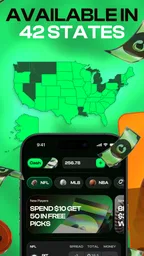
- Sportsbook-style layout is easy to browse on a phone
- Social features add a community angle to sports picks
- Useful for following sports wagering conversations
- Can help users discover popular picks from others
- Designed for quick access to sports-related content
What could be better
- Availability may depend on your location
- Sportsbook content may not be suitable for minors
- Social picks are not guaranteed to be accurate
- Features may be limited without an active community
- Frequent sports updates can encourage regular checking







