

Chess Online & Offline review
 Analysis by Appsdrops
Choosing a chess app is less about finding the flashiest board and more about finding a comfortable place to think, practice, and play. Chess Online & Offline aims to make that choice straightforward: it is a free board game from Splend Apps, with an online focus and an inviting pitch for everyone from beginners to grandmasters. I find its appeal clearest for players who want chess to remain the main event, rather than one feature in a crowded collection of unrelated games.
A practical way to choose a chess app
Before settling on any chess game for Android, I’d start with a simple question: what do you want from a session? Some players want to sharpen their thinking at their own pace; others are looking for competitive online play, a convenient way to enjoy a familiar board game, or a place to return to chess regularly. The right choice depends on which of those needs matters most to you.
It also helps to consider how much commitment you want. A focused chess app can be a better match than a broad board-game collection if chess is what you actually play. On the other hand, players who value a very particular training routine or a wide variety of game modes may prefer to compare several options before choosing. I wouldn’t assume that every chess app offers the same experience just because they share a board and pieces; their strengths can differ substantially.
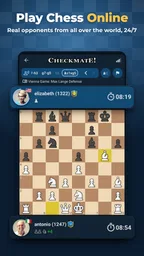
Chess Online & Offline presents itself as an option for a broad range of players. Its store summary calls it an ultimate chess experience for beginners and grandmasters, while its short description emphasizes chess online. That positioning makes it easy to understand the central idea: this is a chess-first game, with online play at the heart of its identity. The title also signals offline play, making it worth considering if you want a chess app that speaks to both kinds of sessions.
For a newcomer, the familiar rules are a helpful starting point, but the best choice still depends on how supported you feel as you learn. If you already know how to play, your priorities may be different: you might care more about finding opponents, keeping the interface comfortable, or simply having chess ready when you feel like playing. I’d decide based on the experience you want to repeat, not on a promise that any app can suit every level in exactly the same way.
What stands out about this option
The biggest advantage here is focus. Rather than asking you to navigate a catalogue of unrelated activities, the app is built around chess. That makes it a natural candidate for someone searching for a chess app with online play and a straightforward board-game identity. The large community around it is another encouraging sign: it has more than 10 million installs, alongside an average rating of 4.7 from around 561,000 ratings. Those figures suggest that many players have given it a try and that its overall reception is strong.
Popularity isn’t proof that an app will suit your preferences, of course. I treat it as a useful signal, not a substitute for thinking about how I like to play. Still, for someone choosing among unfamiliar chess games, a well-established audience can make an app feel like a sensible place to begin. Chess is more enjoyable when the app fits comfortably into your routine, and a recognisable, focused option has an obvious advantage over downloading something that doesn’t match your main interest.
The free price is also easy to understand as a starting point. You can try the game without an upfront purchase, while in-app purchases are available at $4.99 per item. That arrangement can work for players who prefer to explore first and decide later whether any paid extras matter to them. I’d keep the distinction clear: free to download does not mean every possible purchase is included, so it’s worth checking the app’s purchase details before buying anything.
Its broad age suitability is another practical point for households looking for a board game that can appeal to different generations. Chess already has a simple core idea—move pieces, plan ahead, and respond to your opponent—and the game’s all-ages positioning makes it approachable as a general entertainment choice. I’d still encourage beginners to take their time learning the rules and to choose opponents and play habits that feel comfortable for them.
How it compares with other kinds of chess apps
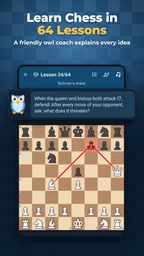
Alternatives usually fall into a few broad camps. Some are designed around teaching and structured practice; others put the emphasis on playing opponents online. There are also chess apps that are part of larger collections of classic board games. None of those approaches is automatically better. A training-focused choice may fit a learner who wants lessons to lead the experience, while a multi-game app may be more convenient for someone who likes to switch between different pastimes.
Chess Online & Offline is most compelling when you want a dedicated chess experience with online play prominently in view. If your main goal is to spend time playing chess rather than browsing a broad library, that focus could be exactly what you’re after. If, instead, you’re looking for a particular curriculum, extensive coaching, or a specific kind of competitive structure, compare alternatives carefully and make sure their actual features match your expectations. I wouldn’t choose based on a category label alone.
That comparison is especially useful for new players. A beginner may value clear guidance and a gentle learning curve more than a large player community. Someone who already understands the game may care more about the ease of starting a match. And a casual player may simply want to open a chess app whenever the mood strikes. There’s no single ideal profile, so I’d use your own habits as the deciding factor rather than assuming that the broad “for beginners and grandmasters” message means everyone will use the app in the same way.
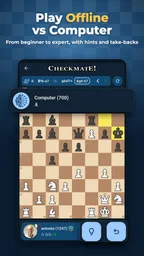
The title includes both online and offline play, which is a helpful signal for people who don’t want their chess sessions to feel limited to one setting. Even so, it’s wise to check the current app-store description for the details that matter to you before settling in. That’s a sensible habit with any game: it helps you judge whether the experience matches your plans, whether you’re playing casually or building chess into a regular routine.
Getting started and deciding whether to stay
Trying a new chess app carries a small but real switching cost. You may need to get used to its look and controls, settle into a new way of starting games, and decide whether it feels comfortable enough to keep on your device. For a familiar game like chess, the rules carry over, but your experience of using the app still depends on how naturally it fits your preferences. I’d give it a fair trial rather than making a decision after a single quick visit.
A low-pressure first session can tell you a lot. Notice whether you can get into the kind of chess session you want without frustration, and whether the presentation keeps your attention on the board. If online play is your main reason for downloading it, judge it by how well it meets that expectation in your own use. If you’re approaching it as an occasional game, ask whether it’s easy to return to when you have a few minutes to spare.
Players moving from another chess app should think about what they would lose as well as what they hope to gain. If your current choice already supports the way you like to learn or play, switching only makes sense if this one better matches your priorities. Conversely, if you’re tired of a general gaming app and want chess to take centre stage, a dedicated option may feel like a more natural home. The key is to compare experiences, not just names or popularity figures.
The game is listed as free, with optional in-app purchases priced at $4.99 per item. That gives cost-conscious players a way to start without paying upfront, while still making it wise to review purchase prompts with care. I’d treat optional spending as a separate decision from whether the basic game suits you. Try the free experience first, then decide whether anything paid is worth considering for your own needs.
Who should give it a try?
I’d recommend giving this game a look if you want a free chess game with an online emphasis and a broad, all-ages appeal. It may be a particularly sensible starting point if you’re returning to chess, exploring mobile chess for the first time, or looking for a focused board game rather than a grab bag of activities. Its strong audience response adds confidence that it has attracted plenty of players, although personal fit matters more than any rating.
More experienced players can consider it too, especially if they want a dedicated chess app and are comfortable judging the experience for themselves. The “grandmasters” part of its pitch is an invitation to a broad audience, not a guarantee that every advanced player will find every preferred tool or mode. If you have specific competitive or training needs, compare several options and confirm that the one you choose supports them.
For families, casual players, and anyone who enjoys classic board games, the all-ages rating and familiar chess concept make the game an approachable candidate. I’d still recommend matching the app to the people who will actually use it. A shared household device, a focused practice routine, and quick solo sessions all create different expectations, and those expectations are what should guide your choice.
My recommendation
Overall, Chess Online & Offline is a convincing option to consider if your priority is a chess-first mobile game with online play in its identity. It is free to start, has a large audience, and is positioned for players across experience levels. Those qualities make it an easy app to shortlist when you want a straightforward route into mobile chess rather than a broad collection of games.
I wouldn’t call it the automatic winner for every player, because the best alternative depends on whether you value learning tools, a particular competitive setup, or variety beyond chess. But if your goal is simply to find a welcoming, focused online chess game and see whether it fits your routine, this one makes a strong case for a trial. My advice is to start with the free experience, pay attention to how it feels in actual sessions, and keep it if it makes you want to come back to the board.
What we like
- Play against AI or friends without an internet connection
- Online matches make it easy to find opponents
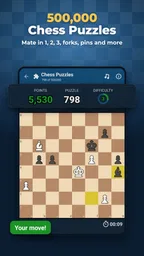
- Useful for practicing tactics and planning ahead
- Chess rules are familiar and easy to get started with
- Works well for quick games during spare moments
What could be better
- AI difficulty may not suit every skill level
- Online play depends on a stable connection
- Small screens can make pieces harder to select
- Ads may interrupt the experience
- No physical board or face-to-face interaction







