

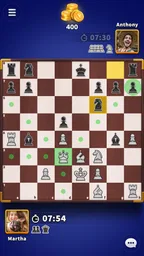
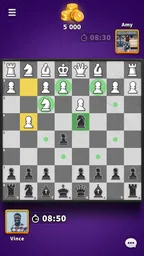
Chess Clash: Online & Offline review
 Analysis by Appsdrops
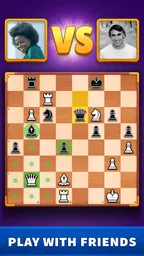
I enjoy chess most when I can fit a game into the day without turning it into a project. Chess Clash: Online & Offline is built for that kind of casual access: it is a free board game from Miniclip.com, with options for two-player and multiplayer play. My impression is that its appeal lies in making a familiar chess match feel easy to pick up, rather than trying to replace the depth of a dedicated chess-learning tool.
What the free download does—and what purchases mean
The game is free to install, so you can try it without paying upfront. It also offers in-app purchases, with listed prices ranging from $0.99 to $99.99 per item. That range is worth noticing before you play: free access and optional purchases are different things, and the presence of purchases does not mean you need to spend to enjoy a chess match.
I would treat the paid items as a reason to check the purchase screen carefully, not as a reason to assume that spending is required. If you are downloading it for a quick game or to see whether its style suits you, start with the free experience and decide for yourself whether anything offered later feels worth buying. I would not budget for a specific item until I had seen exactly what it provides in the app.
That makes the initial value proposition straightforward: you can try a chess game at no download cost, while the possible cost of optional items depends on what you choose. The game is rated for Everyone, which makes its audience broad, though that rating does not tell you whether its play style or purchase options will suit every household.
A familiar game with a social emphasis
Chess Clash belongs to the board-game category, and the core activity is immediately recognizable: think through a position, choose a move, and respond to an opponent. Its focus on two-player and multiplayer play gives it a more social framing than a chess app used only for solo study. That distinction matters if you want a match with another person, but less if your main goal is structured lessons or deep analysis.
I find that this kind of game is most useful when the barrier to starting a match is low. A short session can fit into a break, a quiet evening, or a wait between errands. You do not need to set aside a long block of time to get value from a single game, although chess can still demand patience once a position becomes complicated.
The game has a 4.5 average from around 153,000 ratings, and it has been installed over 10 million times. Those figures indicate that it has attracted a substantial audience, but they cannot tell you whether you will enjoy its feel or whether the available play options match your habits. I would use them as context, not as a substitute for trying it.
Where it fits into an ordinary day
One realistic use is a quick match with a friend or family member when you have a few spare minutes and want something more thoughtful than a reflex game. Another is keeping it available for casual play when you feel like testing a position against another player. The strongest practical reason to choose a dedicated chess game is that the rules and board remain the focus; there is no need to learn a new genre before you can enjoy a match.
For a beginner, I would approach each game as practice in making decisions, not as a promise of guided instruction. Before moving, take a moment to check whether the opponent can capture the piece you are about to leave exposed. After the match, think about one turning point rather than trying to analyze every move. That simple habit can make casual play more rewarding even if you are not using a formal training program.
For a more experienced player, the social angle may be the main attraction. A game against another person can force you to adapt in ways that rehearsing familiar puzzles does not. But if you need tools for reviewing variations, tracking a training plan, or studying openings in depth, a specialist chess platform is likely a better fit than a game whose central promise is accessible multiplayer play.
Useful tradeoffs before you settle in
The most important tradeoff is convenience versus depth. A casual board-game presentation can make it easier to start playing, but it is not automatically a substitute for the analysis and teaching tools that serious improvement often requires. If your goal is simply to enjoy chess with another person, that limitation may not matter. If you want detailed feedback on why a move was inaccurate, choose a tool designed around study.
There is also a difference between having multiplayer available and having a dependable opponent at the moment you want one. If you are choosing the game specifically to play with a particular person, make sure your expectations match the play options you see in the app. For an in-person game, a physical board may be simpler; for a remote match, an online chess service with the exact friend-play workflow you want may be more suitable.
One practical way to keep a casual session focused is to agree on a time limit or a simple goal before starting, such as playing one game or practicing careful development. Chess can stretch longer than expected when neither player wants to concede, so a little structure helps it fit into a short break. This is especially useful if you are playing casually rather than sitting down for a dedicated study session.
Purchase choices deserve similar restraint. Because the game is free to start and has optional items at a wide range of listed prices, I would avoid buying anything just because it is presented during a session. First decide what you want from the game, then check whether a particular purchase clearly supports that purpose. If it does not, continuing to play for free is a perfectly reasonable choice.
Who is likely to get the most from it?
I would recommend giving it a try if you already enjoy chess and want a convenient way to play against other people, or if you are curious about chess and prefer learning by playing rather than beginning with lessons. The broad Everyone rating and free download make it approachable for a mixed-age household, though parents should still review the in-app purchase options before letting a child make purchases independently.
It is less compelling for someone who wants a quiet, offline-only chess companion, a robust coaching plan, or a detailed record of improvement. The store description presents two-player and multiplayer chess, but that alone does not make the game a study suite. If your priority is sharpening competitive play, compare it with dedicated chess-training apps; if your priority is sharing a physical game in the same room, a real board may be the better choice.
Chess Clash was released on October 1, 2021, and its current version is 8.16.0. It requires Android 7.0 or later. Those details help Android users check basic compatibility, while the free entry point makes testing it less of a commitment than buying a paid game outright. They do not change the central decision: whether you want casual chess play or a more specialized tool.
My verdict: try it for play, not as a chess course
After weighing its free access, social focus, and optional purchases, I see Chess Clash as a sensible choice for casual chess matches rather than a one-stop solution for every kind of chess player. It is easiest to recommend to someone who wants to play without paying at the outset and is happy to keep the experience centered on matches.
I would skip it if you are looking for extensive coaching, deep position analysis, or a guaranteed match with a specific person through a particular setup. I would also be cautious about purchases until you know what each item offers. But if your aim is simply to make chess easier to pick up during an ordinary day, the free download gives you a low-commitment way to see whether its style works for you.
What we like
- Quick matchmaking makes it easy to start a game.
- Offline play is useful when an internet connection is unavailable.
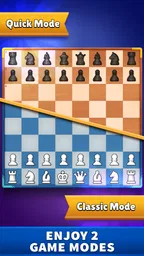
- Multiple game modes offer variety beyond standard matches.
- The interface is easy to navigate for new players.
- Short matches suit casual play during spare moments.
What could be better
- Some modes and features may require an internet connection.
- Ads can interrupt the experience for free players.
- Match difficulty can vary noticeably between opponents.
- Limited board customization may disappoint some players.
- In-app purchases can give paid options more visibility.







