



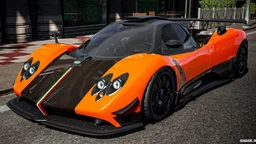
Car Parking Multiplayer 2 review
 Analysis by Appsdrops
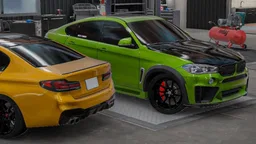
I like racing games that give me something to do after the finish line, and Car Parking Multiplayer 2 has a clear appeal: it puts driving, parking, car tuning and multiplayer play in the same package. The name suggests a simple parking challenge, but I found the more interesting question is how comfortably you can switch between careful manoeuvres, casual driving and showing a car to other players. It is a free racing game from olzhass, and it suits players who enjoy spending time with their vehicles rather than chasing a single narrow objective.
Building a comfortable driving routine
My best starting point is to treat each session as a short routine rather than trying to do everything at once. I first get used to the controls, then practise moving and positioning the car, and only after that do I head into multiplayer or spend time adjusting a vehicle. That order makes a difference: when I already know how the car responds, it is easier to tell whether a tuning change helped or whether I simply made a poor turn.
Parking is a useful change of pace from ordinary racing. It asks for patience and deliberate placement, so small corrections matter more than speed. I find that taking a moment to line up before reversing is more reliable than trying to rescue a bad angle with several quick inputs. If you normally play racing games by holding the accelerator and aiming for the next bend, this more measured rhythm can feel unusually demanding at first.
The game’s mix of activities works especially well when I have a little spare time but do not want a long, high-pressure race. I can focus on a parking attempt, take a relaxed drive, or use multiplayer as a reason to bring out a car I have been tuning. That flexibility is a genuine strength, though it also means the experience is less focused than a racing game built around a tightly structured campaign.
In everyday use, I would approach a quick session like this: choose one goal before starting, such as practising accurate reversing or testing a change to the car, and leave the other activities for another visit. It stops the menu of possibilities from turning into aimless driving. For me, a clear small objective makes the game more satisfying than simply switching modes whenever something gets difficult.
Start with control, not speed
When I am learning a car or returning after a break, I make my first few movements deliberately. A parking space is not just a destination; it is a test of whether I can judge the car’s position and correct smoothly. I try to avoid making several large steering adjustments in a row, because that obscures what the controls are doing. A slower approach gives me better feedback and makes later attempts feel less like guesswork.
This habit is useful for multiplayer too. If I enter a shared session without a feel for the car, I am more likely to make clumsy manoeuvres in front of other players and less likely to enjoy the social side. Practising first is not a requirement, but it makes the switch between solo driving and showing off a tuned vehicle more comfortable.
Settings that are worth a first look
Before settling into a longer session, I recommend checking the available control and display settings and choosing what feels natural on your device. The important point is not to assume that the default arrangement will suit every player. A control layout that feels fine while driving in a straight line may be awkward when you need to make a careful parking correction, so test your choices during a low-stakes manoeuvre rather than discovering the problem mid-session.
I also avoid changing several options at once. If steering suddenly feels more manageable, I want to know which adjustment made the difference. I make one change, repeat the same kind of turn or parking approach, and keep it only if the result is clearer. That simple comparison is more useful than repeatedly opening settings and changing things by instinct.
Visual comfort matters in a driving game because you need to judge where the car is relative to the space around it. I take a moment to settle on a view I can read easily, then keep it consistent while learning a new vehicle. Constantly changing perspective makes it harder to compare one attempt with another. Once I understand the car’s size and response, experimenting with a different view becomes more informative.
Players on older or less capable devices should be especially practical: prioritize a smooth, readable experience over visual adjustments that make driving harder to follow. I would rather see a parking attempt clearly and control the car comfortably than spend a session chasing the most elaborate presentation. The game requires Android 11 or later, so checking that basic compatibility before installing can save time.
Repeatable habits make tuning more useful
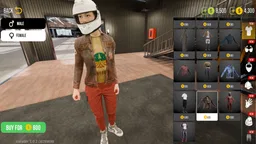
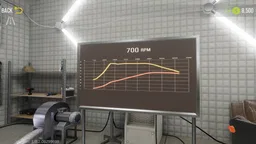
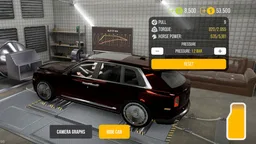
The tuning side is most rewarding when I treat it as a series of small experiments. I start with a car I already enjoy driving, note how it behaves, and then make a limited change before trying the same sort of driving again. If I alter several things between attempts, I cannot tell what improved the car or what made it harder to handle. Keeping the test consistent gives tuning a purpose beyond making a vehicle look different.
A useful pattern is to tune for the activity I actually plan to do. A car I want to move carefully through a parking task does not have to be configured for the same feel I want when driving around with other players. I do not assume one setup is ideal everywhere; instead, I judge it by whether it helps with the next specific task. That makes a collection of adjustments easier to understand and keeps experimentation from becoming random.
There is also a practical stopping point. If a change makes the car less predictable, I undo it rather than insisting that a more dramatic setup must be better. The best choice is the one that lets me place the vehicle where I intend, not the one that looks impressive in a menu. For newer players, I would spend time becoming comfortable with the basic handling before investing effort in fine-tuning.
Multiplayer is better with a purpose
The multiplayer element gives the game a different social energy from a conventional solo racer. I enjoy it most when I arrive with a reason to be there: perhaps I want to drive a newly adjusted car, or I simply want a change from practising alone. Because the game combines driving and car presentation, it can appeal even when I am not trying to win a race. That makes it a more relaxed fit for players who like sharing a hobby as much as competing.
At the same time, multiplayer is not automatically the best place to learn everything. When I am still figuring out controls, a quiet practice session is less distracting. Once I am comfortable, other players can make the experience feel more alive, but I would not choose this game primarily for a tightly controlled competitive ladder or a short, race-after-race format. Its appeal is broader and more free-form than that.
For a real-world routine, I might use a short break to practise parking, then return later when I have more time to adjust a car and take it into a shared session. That separation keeps the two activities from competing for attention. It also helps me decide whether I genuinely enjoy the tuning and social driving, rather than assuming I should enjoy every part just because it is available.
Where patience can turn into friction
The same breadth that makes the game flexible can make it feel less directed. If you want a clear sequence of races that steadily introduces new challenges, you may find the open mix of parking, tuning and multiplayer less compelling. I would not recommend it as the first choice for someone who wants every session to have an obvious finish line or who prefers a pure, fast-paced racing loop.
Precision also asks something of the player. Parking manoeuvres can be frustrating when you are impatient, and changes to a car are not automatically improvements. I have to be willing to repeat an approach, make a smaller correction and learn what the vehicle is doing. If that kind of trial and error sounds like work rather than fun, a simpler arcade racer may be a better fit.
There is a financial consideration as well. The game is free to download, but it offers optional in-app purchases ranging from $0.99 to $41.99 per item. I would treat spending as a personal choice, not as a prerequisite for enjoying the basic idea of driving and parking. If you are cautious about purchases, check the in-app options before playing and avoid buying anything until you know which parts of the game you actually use.
Its audience rating is Everyone, which makes it broadly accessible, but that does not mean every player will enjoy its pace. Younger or casual players may like the variety and car focus; players seeking realistic driving practice should remember that a mobile game is still a game, not a substitute for learning to drive. I see it as a way to enjoy vehicle control and parking challenges, not as instruction for real roads.
How it compares with other racing games
Compared with a standard mobile racer, this game puts more emphasis on what happens between point-to-point contests. Car parking and tuning give me reasons to linger with a vehicle, while multiplayer adds a social option beyond simply improving a race result. That combination is its strongest distinction. If you usually lose interest when a racing game offers only repeated laps, the change of activity may keep you engaged longer.
On the other hand, a dedicated racing game is likely to be a better choice if you want a more concentrated competitive structure. A focused parking title may suit you better if the manoeuvres themselves are all you care about. Here, the trade-off is breadth: I get several kinds of car-centred play, but I should not expect each one to have the depth or direction of a game devoted solely to that activity.
The game has an average rating of 4.1 from around 219,000 ratings, and it has passed 10 million installs. Those figures suggest a sizeable audience, but they cannot tell me whether its pace matches an individual player’s taste. I would use them as context, then make the decision based on whether I enjoy the specific blend of parking, customization and multiplayer driving.
Who I would recommend it to
I would recommend Car Parking Multiplayer 2 to someone who likes cars as objects to drive, adjust and share, not just as tools for winning races. It is a particularly good fit if you enjoy learning the feel of a vehicle, correcting your approach, and returning to a task with a slightly better plan. The game is also a reasonable choice for casual sessions because I can focus on one small activity without needing to commit to a long racing session.
I would steer away from it if you want a polished, strictly race-focused progression or dislike repeated precision challenges. Players who are easily distracted by open-ended choices may also prefer a game that tells them exactly what to do next. For those who do give it a try, my practical advice is to begin with the controls, pick one activity per session, and make tuning changes one at a time.
Car Parking Multiplayer 2 is free, rated for Everyone and currently at version 1.3.4.3. It was released on August 19, 2024, and olzhass continues to develop it. My overall impression is that its best moments come from patient, repeatable play: learning a car, making a deliberate adjustment and seeing whether it helps. If you enjoy that hands-on process more than a nonstop race, this is a distinctive way to spend time with a mobile driving game.
What we like
- Large open world gives players room to explore between parking challenges.
- Online multiplayer lets you meet and interact with other drivers.
- Vehicle customization adds options for personalizing cars.
- Driving and parking tasks offer variety beyond free roaming.
- Realistic controls provide a satisfying challenge for careful drivers.
What could be better
- Ads and in-app purchases may interrupt or limit the experience.
- Online sessions can be affected by lag or connection drops.
- Some vehicles and customization options require substantial grinding.
- Traffic and collision behavior can feel inconsistent.
- Large environments may run poorly on older mobile devices.







