
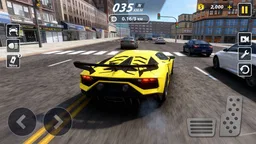
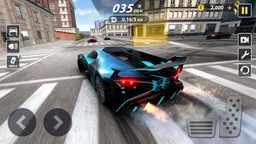
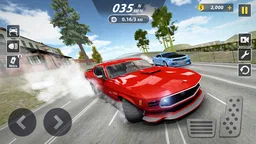
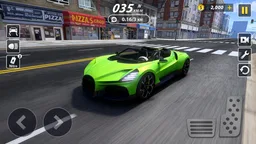
Car Driving City: StreetPro review
 Analysis by Appsdrops
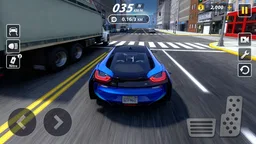
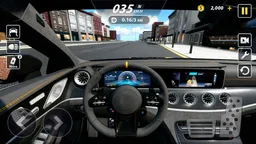
The appeal of Car Driving City: StreetPro is easy to understand: you get into a car, head out into a city, and make your own fun from the drive. That open-ended setup is the game’s main draw, but it also means your enjoyment depends on whether you like setting your own pace rather than being guided through a tightly planned racing campaign. I’d recommend it to someone who wants a casual driving game to dip into, not to a player looking for a detailed motorsport simulator.
Taking the first drive
My first instinct in an open-world driving game is to treat the first few minutes as a test, not a race. I try to get a feel for how the car responds, how much room the streets give me, and whether I can enjoy simply moving through the city. That approach suits StreetPro’s city-driving premise: it gives you a broad activity to explore rather than defining the whole experience around a single finish line.
There’s a useful distinction here between “open world” as a promise of freedom and open-world driving as a satisfying activity. If you enjoy choosing your own route and inventing small challenges—such as seeing how smoothly you can handle a stretch of road—the city setting gives you a natural playground. If you need a clear objective immediately, that freedom may feel more like a lack of direction. I’d give the game a short trial drive before deciding whether its loose structure clicks for you.
StreetPro is a free racing game developed by BROWNE CURTIS HENRY, and it is intended for a general audience with an Everyone age rating. Its broad premise makes it approachable for players who want cars and city streets without first committing to a complex competitive game. The trade-off is that the basic idea alone does not tell you how much structure or variety you personally want from a driving game.
Read the road before chasing speed
A practical way to start is to make the opening drive about control rather than distance. Notice how the car turns and accelerates, and pay attention to whether you can correct a mistake without losing the fun of the drive. This is more useful than immediately trying to drive as fast as possible: a little familiarization helps you tell the difference between a handling challenge and simply not knowing how the game responds.
It also gives you a way to create a goal when the game leaves the choice to you. Try a clean trip through a part of the city, then repeat it with a different approach. If that small self-set challenge feels rewarding, the open-ended format is probably a good fit. If you keep waiting for the game to tell you what to do next, a mission-led racer may suit you better.
I would not approach StreetPro expecting the same focus as a realistic driving simulator. The appeal described by its premise is casual city driving with room to roam, so the more useful question is whether you enjoy moving around and making your own objectives. Players who prioritize precise vehicle behavior, formal competition, or a long sequence of explicit goals should compare it with games built around those needs.
How the drive keeps moving
The most satisfying rhythm in this kind of game comes from a simple sequence: take an action, notice the result, decide whether to adjust, and try again. A turn that goes wide can prompt a calmer approach on the next street; a smooth stretch can encourage you to keep going. StreetPro’s city-driving concept supports that immediate feedback loop, where the road itself provides the next small decision.
That rhythm is also where an open-world game can feel uneven. A player who enjoys experimenting may treat every drive as a fresh run, while someone who wants a clear score, a rival, or a defined finish may not find enough reason to repeat the same activity. I would judge it by whether the act of driving is enjoyable on its own, rather than assuming that the city setting automatically supplies a complete progression system.
Make short sessions deliberate
For a quick play break, choose one modest intention before you start: get comfortable with the handling, explore a stretch of city, or focus on keeping a drive smooth. That gives the session a beginning and an end without requiring the game to supply a long checklist. It also makes it easier to stop when you have had enough, instead of wandering without noticing whether you are still enjoying yourself.
This works especially well in everyday situations where you have a few minutes to spare but do not want to settle into a demanding competitive event. A brief session can be about the feel of driving rather than completing a campaign. The limitation is that this style depends on your willingness to supply the goal. If you prefer games that clearly mark progress each time you play, StreetPro’s open-ended appeal may be less compelling.
One useful habit is to change just one thing between attempts. If a route felt awkward, try taking it more carefully rather than changing your entire approach. If it felt easy, add a small personal constraint, such as focusing on smoother turns. Keeping the experiment narrow makes the feedback easier to read and gives you a reason to try again without pretending the game has a formal challenge system that it may not offer.
What counts as a reward here?
In a self-directed driving game, reward does not always have to mean unlocking something. It can be the satisfaction of handling a road better, finding a route you enjoy, or simply finishing a short drive with a sense that you were in control. That is a modest but real kind of payoff, and it is the one I would look for first when deciding whether StreetPro deserves a place on your phone.
The important caveat is that personal goals are not a substitute for structured progression for every player. If you play games to earn clear milestones or compete against others, you may find the self-made reward less motivating over time. I would not download it expecting a particular collection of unlocks or competitive modes; instead, decide whether free-form driving is enough to make you want to return.
This also explains why the game may work better as a casual alternative than as your only racing game. It offers a different kind of appeal from a track racer, where the focus is usually on repeating a defined course, or a mission-based driving game, where objectives provide the next step. StreetPro’s strength is the freedom to take a drive on your own terms; its weakness is that freedom can feel thin when you want the game to set the agenda.
When to stop, and why to return
A good stopping point is part of a good short-session loop. Once the drive has become repetitive or you have stopped paying attention to the road, take a break rather than forcing another run. If you return later, choose a different small goal or revisit the kind of driving you found enjoyable. That reset keeps the experience from becoming a long, aimless session and makes each return feel like a fresh decision.
For example, imagine waiting for a ride or taking a quiet break between tasks. StreetPro can suit that moment if you want to spend a few minutes steering around a city and do not need a long story or a competitive commitment. It is less suitable if you have only a tiny window and expect an immediate, clearly marked objective, or if you want a game that rewards every brief visit with visible campaign progress.
That is the core loop verdict: the action is setting off and steering through an open city; the feedback is how the car and streets respond to your choices; the reward is the satisfaction of a better or more enjoyable drive; and the reset is deciding what small experiment to try next time. The loop works best when driving itself is the point. If you need the reward to come from a structured event or a defined progression track, a more directed racing game will likely hold your attention better.
Who should give it a chance
I would suggest trying it if you like casual car games, enjoy exploring at your own pace, or want a driving experience that can be approached in short bursts. It is also a reasonable option for someone who wants a free game to sample before deciding whether open-city driving is their thing. The app has a 4.7 average from around 36,000 ratings and has passed 10 million installs, signs that many players have found something appealing in it, though those figures cannot tell you whether its particular style matches your taste.
It is an easier recommendation for a player who can invent small goals than for someone who needs the game to provide a steady stream of them. If you want formal races, detailed vehicle simulation, or a strong sense of campaign advancement, look for a title that explicitly centers those elements. StreetPro is not a replacement for every kind of racing game; it is a better fit when the freedom to drive around is the feature you actually want.
Before you install
The game is free, which makes it straightforward to try without paying up front. It was released on April 21, 2026, and version 3.2.4 lists Android 7.0 as the minimum operating system requirement. If you are deciding on an older device, check that requirement before downloading; meeting it does not by itself guarantee that every device will feel equally smooth, so your own experience may vary.
My overall recommendation is cautious but positive: try Car Driving City: StreetPro if an open city and self-directed driving sound relaxing or fun. Give yourself a few short drives to learn the handling and see whether you naturally come up with reasons to continue. If you do, the simple action-feedback-reset loop can make it an enjoyable casual pick. If you are still waiting for a more structured challenge, that is a useful sign to move on to a racing game with clearer goals.
What we like
- Easy-to-learn controls make casual driving approachable.
- City streets offer room to explore at your own pace.
- A variety of vehicles adds replay value.
- Short driving sessions suit quick play breaks.
- The city setting gives races an urban feel.
What could be better
- Driving physics may feel simplified to experienced players.
- Traffic can make some routes feel crowded.
- Vehicle progression may require repeated play.
- Visual details may vary across mobile devices.
- Touch controls can take time to get used to.







