BMX Playground review
 Analysis by Appsdrops
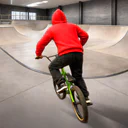
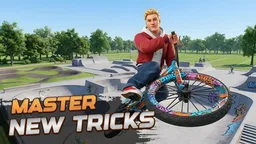
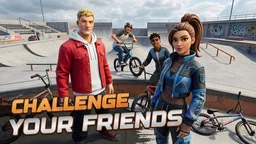
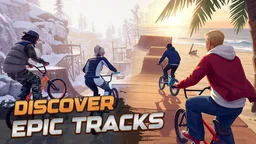
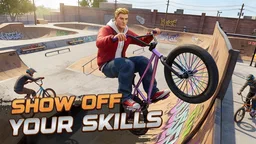
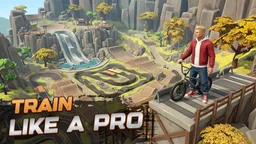
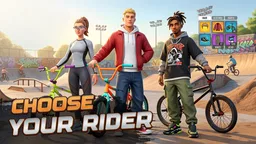
I like BMX games best when they let me experiment without turning every ride into a long sequence of menus and goals. BMX Playground looks aimed at that kind of casual session: it is a sports game built around riding, flips, and freestyle tricks in an open playground. That setup sounds appealing if, like me, you sometimes want to pick up a game, try a few ideas, and put it down without committing to a full match or career. The important question is whether that freedom feels rewarding enough to return to. From the game’s premise, its value rests less on a deep sports simulation and more on the pleasure of making a ride your own.
What the free entry point means
BMX Playground is free to download, so there is no upfront price to decide whether its freestyle approach suits you. It also offers in-app purchases priced from $2.99 to $3.99 per item. I would treat those as optional spending rather than assume they are necessary: the listed purchase range alone does not tell me what each item provides or whether it changes the core experience. If you are careful about spending, the sensible approach is to start with the free access and decide later whether anything on offer is worth paying for.
That distinction matters for a game whose appeal is built around open-ended riding. A free starting point makes it easier to try the basic idea before investing money, but it does not automatically mean every part of the experience is available at no cost. I would check the purchase prompt carefully before confirming anything, especially if a younger player will use the device. The game is rated Everyone, but that age rating does not remove the need for ordinary in-app purchase safeguards.
The developer is Lemon Global, and the game has a 4.4 average from around 6,300 ratings, with over 5 million installs. Those figures suggest that many players have tried it, but they cannot tell me whether its particular control feel or freestyle focus will suit you. I would use them as background, not as a substitute for trying the game yourself. Its current version is 1.27, and it requires at least OS 7.1, so it is worth checking your device’s compatibility before downloading.
Why the playground format can work
The strongest idea here is the freedom to focus on movement rather than a conventional sports result. Instead of measuring a session only by winning or losing, I can imagine treating a ride as a small experiment: approach a feature, try a jump or flip, notice what went wrong, and make another attempt. That loop is a good fit for short breaks because a single attempt can feel like a complete activity even when it does not end in a perfect stunt.
It also changes how I would judge progress. In a match-based sports game, improvement often means learning tactics that help beat an opponent. In a freestyle playground, the satisfying milestone is more personal: landing a trick consistently, linking movements more smoothly, or finding a route through the space that suits your style. That can make the game approachable for someone who is curious about BMX but does not want to learn a full set of team rules or manage a competition calendar.
There is a useful trade-off in that simplicity. A free-roaming stunt game can invite experimentation, but it may not provide the same clear purpose as a structured season, leaderboard chase, or story campaign. If I need a steady stream of defined objectives to stay interested, I may find the open format less compelling after the novelty wears off. If I enjoy setting my own small challenges, though, that lack of a rigid target can be the point.
Make short sessions more satisfying
For a quick session, I would avoid trying to master everything at once. Pick one kind of movement to work on, repeat the same approach, and change only one part of the attempt at a time. That makes it easier to tell whether a better result came from timing, approach, or simply a more controlled run. It is a practical way to turn a loose playground into a personal practice space, rather than tapping through stunts at random and hoping something clicks.
Another useful habit is to treat failed attempts as information instead of wasted time. In a stunt game, a spectacular miss can be entertaining, but repeating the same miss without changing your approach quickly becomes frustrating. I would use a few tries to learn the rhythm of a feature, then move elsewhere if it stops being fun. That keeps the game’s open setup feeling like a choice rather than a demand to grind one difficult trick.
A realistic use case is a short wait between errands. I could open the game, spend a few minutes trying to improve one jump, and leave without needing to remember a complicated mission or coordinate with other players. That is where the format seems most naturally useful: a self-contained burst of play. It is less obviously suited to a long evening if you prefer layered progression, a strong narrative, or a competitive goal that gives every session a clear endpoint.
How it differs from other sports games
Compared with a conventional racing game, BMX Playground’s stated focus is not simply getting to a finish line first. Compared with team sports, it does not center on passing, positioning, or outscoring an opponent. Its identity is the rider and the stunt attempt. That makes it a more natural choice for players who want to play with motion and tricks, while someone looking for realistic race tactics or head-to-head competition may be happier with a game built specifically around those things.
It also sits apart from highly structured BMX or sports experiences that emphasize event schedules and objective lists. The open playground idea promises room to improvise, but freedom can be a weakness when a player wants the game to tell them what to do next. I would not choose it as a replacement for a simulation-minded title if careful athletic realism is the main draw. I would choose it when the fantasy is less about reproducing a real competition and more about trying bold moves in a low-pressure space.
Where the experience may lose momentum
The same open-ended design that makes casual experimentation attractive can leave the experience feeling thin for players who need variety delivered by the game itself. A playground gives you room to make your own fun, but it also asks you to supply some of the goals. If you do not enjoy setting personal challenges, repeating a trick, or exploring a space without a prescribed route, the central loop may not hold your attention for long.
Stunt games also depend heavily on responsiveness. When a move is easy to understand but difficult to control, that can create a satisfying skill curve; when the controls feel imprecise, it can make failure seem arbitrary. I would pay attention during the free trial period to whether an unsuccessful landing feels like something I can learn from. If it does, persistence can be rewarding. If it feels random, buying optional items would not fix the underlying mismatch between the game and your preferences.
There is another practical trade-off: open-ended play is not automatically relaxing. Repeating a move can be calming when I am in the mood to practice, but it can become repetitive if I want fresh events or a changing challenge. The best way to assess that is not to judge the game by one impressive stunt or one frustrating miss. Spend a few short sessions with different self-set goals. If you still find yourself wanting to return, the sandbox style is probably working for you.
I would also keep expectations grounded around the word “playground.” It signals a freer style of play, not necessarily a complete BMX career or a detailed lesson in the sport. That distinction helps avoid disappointment: the attraction is trying stunts, not using the game as a substitute for riding a real bike or learning formal BMX technique. Anyone seeking a grounded simulation should compare it with a title that clearly prioritizes realism before spending time or money.
Who is most likely to get value
I think the best fit is someone who enjoys arcade-style sports games, likes trying tricks for their own sake, and is happy to create small goals. It may also suit a casual player who wants a game that can be opened for a brief break without needing to arrange a match or follow a lengthy story. Since it is free to download, that sort of player can test the premise before deciding whether it earns a place on their device.
It is a weaker fit for players who want structured progression to lead every session, a realistic training tool, or a clearly defined competitive mode. It may also disappoint anyone who expects the free download to settle every question about paid content. The in-app purchase range is $2.99 to $3.99 per item, but I would only spend after seeing what a particular purchase contains and deciding that it adds something I personally want. The price range by itself is not a reason to buy.
For families, the Everyone rating makes the game suitable for a broad audience, while purchase controls remain a sensible precaution. The game has had 5 million or more installs, but popularity does not guarantee that every child or adult will enjoy repeating freestyle attempts. I would let a player try the free version first and see whether they like making their own challenges. That is a better test of fit than assuming a sports label means it will appeal to anyone who likes sports.
My verdict on whether to keep playing
BMX Playground makes the most sense as a free-to-try freestyle diversion, not as a promise of a deep sports career. I like the idea of a space where the pleasure comes from trying a stunt, learning from a miss, and shaping a short session around a personal goal. For a player who enjoys that kind of self-directed loop, the no-upfront-cost entry point is useful and the game could make a welcome change from races and matches.
I would skip it if you need a steady sequence of objectives, serious BMX realism, or competition to keep you engaged. I would also avoid buying anything until the free experience has shown that its movement and repetition suit you. The most reliable test is simple: after a few brief sessions, do you find yourself thinking of another trick to attempt, or are you waiting for the game to give you a different kind of activity? If it is the former, it is likely delivering the sort of value you want; if it is the latter, a more structured sports game is probably a better choice.
What we like
- Simple controls make it approachable for newcomers.
- Short runs are convenient for quick play sessions.
- Trick variety gives players room to experiment.
- Unlockable content offers goals beyond basic riding.
- The BMX theme gives the game a clear identity.
What could be better
- Trick timing may take practice to master.
- Repeated courses can make sessions feel predictable.
- Progress may depend on replaying familiar challenges.
- Small mistakes can interrupt a clean run.
- Players seeking realistic BMX simulation may find it basic.







