



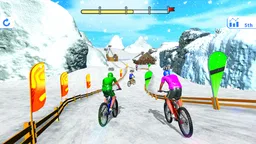
BMX Cycle Extreme Bicycle Game review
 Analysis by Appsdrops
I can see BMX Cycle Extreme Bicycle Game fitting a familiar shared-device moment: someone has a few minutes to spare, another person is waiting for the phone, and a quick burst of bike racing sounds more appealing than settling into a long game. Its focus on stunt riding and tricky courses gives each attempt a clear purpose, which makes it easy to pick up without making it the kind of game I would recommend as a household’s main social activity.
That distinction matters. This is a racing game from PlayFlix, presented as a solo-feeling challenge rather than a place for a group to plan together. I’d consider it for casual turns on a family tablet or a spare phone, while keeping expectations modest: its appeal is the ride itself, not a broad set of shared-device tools. The free price removes an upfront purchase decision, but it doesn’t automatically make it suitable for every person who might reach for the device.
How it works as a shared-device game
The most useful way to think about a BMX stunt game in a shared setting is as a short-turn activity. One player can try a course, hand the device over, and let the next person take a turn. That naturally creates a small challenge between players—who can get further or ride more cleanly—without requiring anyone to learn a complicated team routine.
There is a trade-off: passing a device around is not the same as having built-in multiplayer. I would not choose this title when the main goal is simultaneous play, cooperative riding, or an online race between friends. Instead, it suits a household where people are happy to take turns and compare how their attempts went. Keeping turns brief also helps avoid the common problem of one person holding the shared device for longer than everyone expected.
A practical approach is to agree on a simple handover point before starting: one attempt, one course, or a set amount of time. That is not a game feature; it is just a sensible way to make a quick arcade-style session work on a device other people need. If a child is waiting for a turn, a clear stopping point is more useful than assuming a racing game will end after a predictable number of minutes.
What to expect from the riding
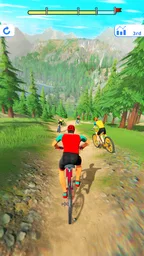
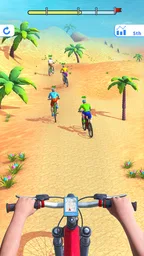
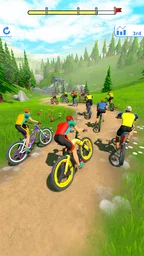
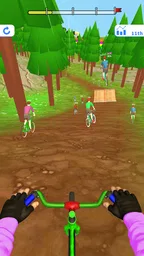
The central draw is balancing speed and control while attempting stunts on demanding tracks. That gives the game a different feel from a conventional circuit racer, where the main task is usually to stay on a predictable route and beat other vehicles around a lap. Here, the track itself is part of the challenge, so a run is more about responding to obstacles and getting through a stunt-focused course than settling into steady racing rhythm.
That design can make a failed run feel like a prompt to try again: a player can focus on what went wrong in that section rather than treating every attempt as a long race. My advice for a first session is to resist rushing simply because the game is about extreme riding. Pay attention to how the bike responds, and treat early attempts as practice. On a narrow or awkward section, control is likely to matter more than trying to force speed.
This also sets a limit on the audience. If you prefer realistic cycling, a detailed career structure, or close competition against other riders, a stunt-course game may feel thin beside a more simulation-oriented racing title. If you want a direct, arcade-like obstacle challenge, its premise is much easier to understand and enjoy.
Getting started without turning setup into a project
The game is free and is listed for Android devices running version 7.0 or later. Before installing it on a shared phone or tablet, I’d check that the device meets that requirement and that there is enough room for another game. I would also make sure the person responsible for the device is comfortable with the app being available to everyone who uses it.
On a household device, the simplest boundary is often a conversation rather than a complicated setup: who may play, whether turns are allowed, and whether the game should be closed when someone else needs the device. I would not assume that a racing game automatically offers separate household profiles or tools for supervising play. If separate progress or account boundaries matter to your family, check the available device and store settings before sharing access.
It is worth considering how the game fits into the device’s existing routine, too. A phone used for school, work, or calls is not always a good place for an impulsive install, even when the game costs nothing upfront. On a tablet set aside for games, by contrast, a quick stunt-riding option may be a more natural fit. The right choice depends less on the title’s premise than on who relies on that device and when.
Taking turns and keeping expectations clear
For siblings or friends sharing one screen, I’d use a straightforward rotation instead of leaving the session open-ended. A player can take a run, say what they were trying to do, and pass the device along. That small bit of commentary turns the handoff into part of the fun and gives the next player a useful starting point without pretending the game has a built-in coaching system.
There is also a good reason not to make every turn a contest. A player who is new to stunt racing may need several attempts just to understand the track, while someone more experienced may already be moving confidently. Alternating between “try to beat the last run” and “see how far you can get” keeps the game welcoming for mixed skill levels. It is a particularly practical approach when younger players and adults are using the same device.
If coordination is the priority, choose a game designed around shared play instead. BMX Cycle Extreme is better suited to passing the device around than organizing a household team. That is not a flaw for someone who wants a quick personal challenge, but it is a meaningful distinction when deciding what to install for a group.
Age context and a sensible trust check
The game carries a Teen content rating, so I would treat that as a useful starting point when deciding whether it belongs on a child’s device. It should not replace a parent’s own judgement about what a particular child is ready to play. In a shared household, it is sensible for an adult to review the app-store page and the device’s settings before making it available to younger users.
Its bicycle-stunt theme may sound light, but a Teen rating is still a reason to pause rather than assume that the game is aimed at every age. If younger children use the same device, decide whether they should have access and whether an adult should be nearby. That gives the family a clear boundary without claiming the game includes parental controls or other supervision features.
The title has an average rating of 4.6 from around 172,000 ratings, and it has passed 50 million installs. Those figures suggest that many players have tried it, but they do not answer the household-specific questions that matter most: whether the stunt handling feels enjoyable to your family, whether the device is appropriate to share, and whether a teen-rated game fits your own rules. I’d use the rating as context, not as a substitute for a quick supervised trial.
Where it sits among racing alternatives
Compared with a standard car racer, this game puts the attention on a bicycle and stunt-oriented routes rather than familiar laps and vehicle-to-vehicle competition. That makes it a more distinctive pick for someone who likes navigating awkward tracks. Compared with a cycling simulator, it is the more accessible-sounding choice for a player seeking an exaggerated arcade challenge rather than a careful recreation of real riding.
Those comparisons also make the decision clearer. Choose a traditional racer if you want the recognizable rhythm of overtaking opponents around a circuit. Choose a simulation-focused cycling game if realistic riding is the point. Consider this one when the fun is attempting a difficult stunt course and learning how to handle it. I would not expect it to replace every kind of racing game; it serves a narrower, more specific mood.
For everyday use, that niche can be a strength. It offers a different option when someone has already had enough of ordinary track racing, and the unusual obstacle focus gives players something concrete to discuss while taking turns. The limitation is that a player who does not enjoy retries or stunt challenges may quickly prefer a game with a broader range of activities.
Version, longevity, and who should skip it
The current version is 3.3.8, and the game was released on November 23, 2023. I’d check the app store for the current device compatibility and version details before installing, especially on an older phone. A game can be a good fit in principle and still be a poor choice for a device that is shared for more important daily tasks.
I’d recommend giving it a try if you enjoy arcade racing, like the idea of bike stunts, and are content to focus on individual runs. It is also a reasonable candidate for a household that wants a take-turns game rather than an app everyone needs to play at once. Since it is free, trying it does not require an upfront purchase, though that alone should not settle the question of whether it belongs on a shared device.
I’d skip it if your priority is realistic cycling, structured competition with friends, or a game that can keep a group involved simultaneously. I’d also look elsewhere if your household needs confirmed separate accounts or built-in family management within the game itself. Those needs call for a different kind of product, and it is better to choose around them than hope a stunt racer will serve a purpose it was not made for.
My household verdict
For the right family or group of friends, BMX Cycle Extreme Bicycle Game is an easy-to-understand option for short, turn-based play. Its strongest idea is the combination of bike riding and stunt-heavy course challenges, which separates it from ordinary circuit racing. PlayFlix has made a game that can suit a quick break, but I would frame it as a personal challenge people can share by passing the device—not as a built-in multiplayer or family-coordination experience.
With an average rating of 4.6 and a Teen rating, it has plenty of audience interest, but my recommendation still depends on the player and the device. I’d install it for someone who enjoys retries and arcade-style riding, set clear turn-taking expectations on a shared screen, and check the age fit before younger users play. If those conditions sound right, it is worth considering; if you need realism, group competition, or defined account boundaries, another racing game will be a better match.
What we like
- Responsive controls make basic cycling maneuvers easy to learn.
- Short levels suit quick play sessions.
- Varied obstacles keep individual courses engaging.
- Bike stunts add a rewarding challenge for skilled players.
- The game can be played offline.
What could be better
- Frequent ads may interrupt the flow of play.
- Some levels rely on precise timing and repeated attempts.
- Bike upgrades can take time to unlock.
- The camera can make obstacles harder to judge.
- Course variety may feel limited over longer sessions.







