






Backgammon - Board Game review
 Analysis by Appsdrops
I find Backgammon most appealing when I want a familiar board game that asks me to think without demanding a long stretch of attention. A turn can be quick, but the dice make every decision a small exercise in weighing risk against opportunity. This Easybrain game is free to download, and that makes it easy to try if you already enjoy backgammon or are curious about learning it. Its value depends less on how much it costs upfront than on whether its particular take on the classic suits the way you like to play.
What you get without paying
The game is a board game from Easybrain, built around backgammon rather than a collection of unrelated diversions. It is available for free, so you can start without an upfront purchase. In-app purchases are listed at $14.99 per item; I would treat those as optional spending rather than assume you need them to enjoy the core game. If you are deciding whether to install it, the sensible approach is to try the free experience first and only consider a purchase if you encounter something you genuinely want.
That distinction matters: “free” describes the price to get started, not a promise that every possible extra is included at no cost. I would check the purchase details in the app store before buying anything, especially if you are installing it for a child or sharing a device. The game is rated Everyone, and its broad age rating fits a traditional board-game theme, but an age rating is not the same thing as a guarantee that every player will understand the rules immediately.
It has a 4.6 average from around 201,000 ratings, and it has been installed over 10 million times. Those figures suggest that many people have tried it, but they cannot tell you whether you will like its pace, presentation, or any optional purchases. I see them as useful context, not a substitute for deciding whether backgammon itself is your kind of game.
A classic that rewards deliberate turns
Backgammon gives you a more thoughtful rhythm than a purely luck-driven dice game. Dice determine which moves are available, but the choices still matter: you can push toward bearing off, protect exposed pieces, or accept a risk in order to gain position. I like that tension because it makes even a short session feel like it contains a real decision rather than just a roll and a tap.
The central trade-off is easy to explain but hard to master. Playing cautiously can keep your pieces safer, yet it may leave you behind in the race. Taking a chance can create a stronger position, but a vulnerable piece may become a target. For a new player, that means a loss does not always mean a bad decision; sometimes a reasonable move simply meets an unfavorable roll. Learning to separate those two things is part of what makes the game satisfying over time.
The app’s value, then, is not just in reproducing a board and dice. It gives you a convenient way to return to a game whose decisions become more interesting as you learn to spot patterns. I would not call it a replacement for sitting across from a friend with a physical board, but it can make the basic appeal of backgammon easier to fit into an ordinary day.
Small habits that make play more useful
If you are learning, I recommend slowing down before each move rather than tapping as soon as the dice appear. First ask whether a move leaves a single piece exposed; then consider whether advancing a group or strengthening a point serves your longer plan. That simple two-step check helps turn each turn into practice, even when the dice do not cooperate.
Another useful habit is to notice what your opponent’s next roll could do, not only what your current roll allows. A move that looks efficient now may leave an easy opening. Conversely, a cautious setup can be worthwhile even when it does not immediately move you closer to finishing. Thinking one turn ahead is a practical way to get more out of a short session, and it makes the game feel less like reacting to dice.
For casual play, I would use it in a spare few minutes rather than begin when I know I will need to stop immediately. A match can be interrupted by everyday life, but backgammon is more enjoyable when I can follow the changing position instead of rushing every choice. If you are playing beside someone else, it can also be a low-pressure way to teach the basics: explain why a move is exposed or protected, then let the next roll show how that choice plays out.
Where the trade-offs show
The main limitation is inherent to backgammon: luck can have a visible effect on a match. If you want a board game where careful planning consistently outweighs chance, chess or another strategy game may suit you better. Backgammon still rewards judgement, but it does not let you control the dice, and that can frustrate players who expect every outcome to be directly earned.
It is also a focused experience. If you are looking for several different game modes or a broad library of board games in one download, this is not the obvious choice; its appeal is specifically the backgammon format. Likewise, people who dislike taking turns or thinking through a board position may find the pace slow rather than relaxing. I would choose a faster casual game if I only wanted immediate action with little planning.
Because optional items have a listed price of $14.99 per item, I would not assume that every purchase is good value for every player. The price alone does not explain what an item provides, so I would make a decision based on its in-app description rather than buying on impulse. The free starting point is the clearest value proposition: you can see whether the game’s core appeal works for you before paying for anything.
The current version is 2.0.0, and the minimum operating system requirement is version 8.0. Those details are worth checking against your device before installing, particularly if you are using an older phone or tablet. I would also keep expectations grounded: version information can help with compatibility, but it does not tell you how the game will feel on a particular screen or how much time you will want to spend with it.
Who is likely to get the most from it?
I would recommend it first to someone who already knows the basic rules and wants a convenient way to play backgammon on a phone. It also makes sense for a beginner who is comfortable learning through repeated turns and occasional mistakes. The rules have a clear goal, while the decisions leave room to improve, so you can get a basic grasp without needing to treat every match as a serious competition.
It can fit a short break between tasks, a quiet evening, or a shared moment when someone nearby wants to learn a traditional game. One practical approach is to use a few turns to practice recognizing safe and exposed positions, rather than focusing only on winning. That makes a session worthwhile even if the dice send the match in an unexpected direction.
I would steer away from it if you want a purely deterministic contest, a large variety of game types, or a game that never asks you to pause and weigh a move. A physical backgammon set is a better option when the social ritual of rolling dice and moving pieces around a table is the point. A broader board-game app may be better if you want to switch between several different classics without leaving one game.
My verdict on its value
Backgammon - Board Game makes the most sense as a free way to spend time with one enduring board game, not as a promise of an all-purpose entertainment package. I like the combination of quick turns and meaningful choices, and I think the game is particularly useful for practicing how to balance a safe position against a more ambitious move. Its best value is for players who enjoy the distinctive mix of planning and dice-driven uncertainty.
My advice is simple: try the free game if backgammon sounds appealing, take your time learning how exposed pieces and future rolls affect a decision, and postpone any optional spending until you know what you want from it. If luck-driven swings annoy you or you need a wider selection of games, skip it in favor of a more deterministic strategy title or a broader board-game collection. For a casual backgammon fan, though, it is a straightforward place to play without paying upfront.
Easybrain’s game was released on December 24, 2021, and its Everyone rating makes it a broadly approachable choice for families and casual players. That does not mean every child will find the strategy intuitive, so I would explain the basic goal and let them learn through play. For adults who already know the rules, it is an easy recommendation when the goal is simply to fit a familiar, thoughtful board game into a spare moment.
What we like
- Classic backgammon rules are easy to learn.
- Matches suit both quick sessions and longer play.
- Dice rolls add variety to each game.
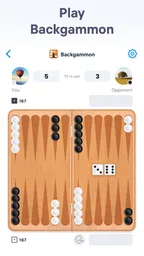
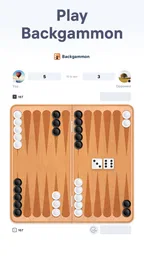
- The board layout is clear and easy to follow.
- A good option for practicing strategy against a computer.
What could be better
- Dice luck can outweigh careful planning in some matches.
- The computer may not provide a challenge for advanced players.
- Beginners may need time to understand doubling cube strategy.
- Gameplay depends on the quality of the available opponent modes.
- A small screen can make moving checkers less comfortable.







