
Roadie Driver review
 Analysis by Appsdrops
Roadie Driver is a business app built around a straightforward idea: connect people who need to send something with drivers already heading in the right direction. That makes it worth a look if you’re curious about delivery work or want to understand Roadie’s driver-facing service. Its appeal is easy to grasp, but the practical value depends on whether the app’s delivery opportunities fit your plans and expectations.
Free to download, with value tied to the work
The key point about cost is simple: Roadie Driver is free. You can download the app without paying an upfront purchase price, so trying it does not require buying the software. That is useful for anyone who wants to explore the service before deciding whether it deserves a place in their work routine.
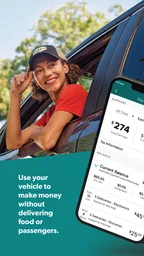
Free access is not the same as guaranteed earnings, though. The app’s central purpose is to connect senders with drivers going that way; the value for a driver therefore comes from the delivery work they can actually take on, not from the download itself. I’d treat the no-cost entry point as a low-commitment way to investigate the platform, rather than as a promise of income or a substitute for checking whether the work suits you.
The distinction matters when comparing business apps. Some tools create value by organizing tasks or helping a person run an existing operation. Roadie Driver is more directly tied to a service marketplace: it aims to bring together people with things to send and drivers whose routes may line up. The concept is appealing because it puts existing travel at the center of the arrangement. Whether that translates into worthwhile work for a particular driver is a separate question.
A clear idea with a practical purpose
Roadie’s description is refreshingly plain. People have items to send; drivers are already going that way. The app’s role is to make that connection. I like that the core purpose is understandable without needing a long explanation, especially for someone browsing business apps and trying to work out what a service actually does.
That clarity also sets expectations. This is not presented as a general-purpose business suite or a broad productivity tool. It is a driver-focused app connected to deliveries. If you are looking for route planning, bookkeeping, communication tools, or other specific features, don’t assume they are part of the experience simply because the app belongs to the business category. The useful question is whether its central driver-and-delivery connection matches what you need.
The service model has an intuitive potential advantage: when a driver is already traveling in a certain direction, a delivery that fits that journey could make the trip more useful. That is the logic behind the concept, not a guarantee that every trip, item, or driver will find a match. I see that as both the app’s strongest selling point and the main reason to keep expectations grounded.
What the free access does—and doesn’t—tell you
Because there is no upfront app price, the decision to try it can be relatively simple. You are not weighing a purchase against a promised feature set. Instead, you are deciding whether it is worth exploring a driver service that connects delivery needs with people already traveling in the same direction. That can be a sensible starting point for someone researching flexible work options.
Still, free does not automatically mean cost-free in every broader sense. Time, travel, and the practical demands of delivery work all matter when judging whether an opportunity is worthwhile. Those considerations are part of evaluating any driver-based service, rather than facts about a particular app charge. I would focus on understanding the actual work available to you and deciding whether it fits your circumstances before relying on the service as a source of income.
It is also useful to separate the app’s price from the value of the platform. The app can be free to install and still be useful only when its connections lead to work that makes sense for a driver. On the other hand, someone who is simply interested in how the service works may find the free download valuable as a way to explore the concept. The same product can serve those two audiences differently.
Reputation and reach in context
Roadie Driver has an average rating of 3.8 from around 26,000 ratings, with roughly 13,000 written reviews. Those figures suggest a substantial amount of user engagement, but an average score is only a broad snapshot. It cannot tell me whether the app will suit your situation, and it should not be treated as a guarantee of a particular experience.
The app has over a million installs, which indicates that it has reached a sizeable audience. It is free, rated for Everyone, and the listed minimum operating-system requirement is version 12. Its current version is 2.149.1. These details can help you decide whether it is relevant to your device and whether you want to investigate it, but the main value question remains the same: does the delivery connection work for the kind of driving you do?
Roadie, Inc. is the developer, and the app is aimed at drivers rather than senders alone. That distinction is worth noticing if you encounter the service while searching for a way to ship an item. The driver app’s purpose is to serve the people making deliveries, so a sender looking for a shipping option may need to consider the appropriate side of the service instead.
Tradeoffs behind the simple pitch
The biggest tradeoff is that the appealing premise depends on a match. A sender needs to have something to move, a driver needs to be heading in a compatible direction, and the opportunity needs to make sense to the people involved. The basic concept is easy to understand, but the practical usefulness rests on those real-world connections. That makes it less predictable than an app whose value comes from a fixed tool you can use whenever you need it.
Another consideration is that the app’s purpose is specific. If delivery driving is not relevant to you, the central feature of the service will not offer much value, no matter how clear or accessible the app may be. Likewise, if you expect a broad business-management package, the simple description points to a more focused role. I would approach it as a channel for connecting drivers and delivery needs, not as an all-in-one business solution.
There is also a difference between being able to download an app and having a useful opportunity nearby or at the right time. A free installation lowers the barrier to exploring the service, but it does not remove the need to judge whether the available work fits your route and routine. For that reason, I would avoid making plans around assumed earnings based only on the concept or the app’s popularity.
These tradeoffs do not make the idea unattractive; they simply define what kind of value it can provide. Roadie Driver makes most sense when its core matching concept is relevant to your driving. If you are approaching it with that in mind, the free entry point gives you a straightforward way to learn whether the service deserves further attention.
Who is most likely to get value?
The clearest audience is a driver interested in delivery opportunities and open to work that may align with journeys they already take. For that person, the app’s purpose is directly relevant, and the no-cost download makes it easier to investigate without an upfront software purchase. The service may also interest drivers who want to understand a different way of connecting deliveries with travel already in progress.
It may be less useful for someone who is not interested in delivering items, or for a driver who needs predictable work before considering any new platform. The concept depends on a suitable connection between a delivery and a driver’s direction, so I would not treat the app as a guaranteed source of regular work. It is better viewed as an option to explore and evaluate against your own needs.
Senders may find the underlying idea appealing too, but this particular app is called Roadie Driver and is intended for the driver side of the service. If your goal is to arrange a delivery rather than drive one, make sure you are looking at the right part of the service. That small distinction can save time and prevent mismatched expectations.
My verdict: worth exploring, not worth assuming
My overall take is that Roadie Driver makes a clear pitch and removes one common hurdle: there is no upfront price to download it. Its value lies in connecting people with things to send and drivers already heading that way. That is a practical, easy-to-grasp idea, especially for drivers who are curious about delivery work that may fit their travel.
I would recommend giving it a closer look if you are a driver and the service’s purpose matches your plans. I would not choose it on the basis of the rating or install count alone, and I would not assume that free access means guaranteed earnings. The sensible approach is to explore the app, assess whether its opportunities suit your circumstances, and decide from there.
If you are not interested in delivery driving, you can probably skip it. If you are, the lack of an upfront app cost makes trying it a reasonable first step. The best reason to consider Roadie Driver is its focused driver-to-delivery connection; the best reason to stay cautious is that the value depends on finding work that genuinely fits your route and routine.
What we like
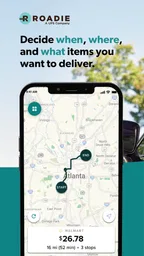
- Drivers can choose which delivery gigs fit their schedule.
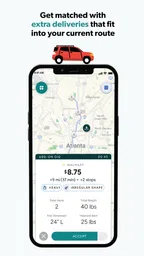
- The app shows delivery details before drivers accept a gig.
- Route guidance helps drivers navigate to pickup and drop-off locations.
- Drivers can track gig progress from the app.
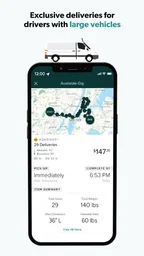
- The platform supports a range of vehicle types for deliveries.
What could be better
- Gig availability can vary significantly by location.
- Drivers may need to cover fuel and vehicle maintenance costs.
- Some gigs require lifting or handling bulky items.
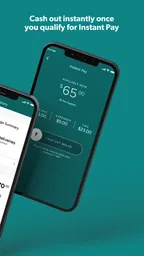
- Payment timing and terms may differ by gig type.
- The app depends on a reliable internet connection.





