






Fiverr - Freelance Service review
 Analysis by Appsdrops
I see Fiverr as a practical way to find freelance help when a task is too specialized, time-consuming, or simply outside my skill set. Its main appeal is choice: instead of searching through individual freelancers across the web, I can browse a marketplace built around many kinds of services. That convenience comes with a trade-off, though. A large catalog does not make every offer equally suitable, so the app works best when I know what I need and take time to compare options.
Finding a freelancer without turning it into a project
Fiverr is a business app from Fiverr, and it puts freelance services within reach from a phone. I can use it to look for help with a defined piece of work rather than start by trying to build a long-term working relationship. That makes it useful for one-off needs: polishing a presentation, getting design assistance, or asking someone with a specific skill to handle a task I would otherwise put off.
The app is free to install, and it is rated for Everyone. It has been available since March 11, 2014, and its reach is substantial: it has more than 50 million installs. The average rating is 4.3, based on around 362,000 ratings, with roughly 28,000 written reviews. Those figures suggest that it is a well-established marketplace, but they are not a substitute for checking whether an individual freelancer’s offer fits my particular job.
In my experience, the marketplace format is its most useful feature. I can begin with the outcome I want, explore different service offers, then narrow down the choice by reading what each one includes. That is a more focused starting point than asking a broad search engine for recommendations and trying to assess unrelated results. Still, the app cannot decide what “good” means for my project. I have to bring a clear brief and sensible expectations.
Why the marketplace approach can save time
The strongest case for Fiverr is convenience when I need a discrete deliverable. Suppose I am preparing a small business launch and have already written the copy but need a logo concept or a short promotional video. I can use the app to explore relevant services, compare the scope of different offers, and decide whether one appears to match the task. That is more useful than searching for a general-purpose freelancer when I only need one specific result.
A practical tip is to define the job before browsing. I write down the format I need, what material I can provide, and what would count as a successful result. Then I compare offers against that brief instead of choosing the first attractive listing. This helps expose an important difference between services that may sound similar: one offer might suit a quick, tightly scoped request, while another could be a better fit for a more involved assignment.
I also find it helpful to separate essential requirements from preferences. If a deadline, file type, language, or particular style matters, I make that clear when assessing an offer and communicating about the work. A vague request can lead to mismatched expectations even when the freelancer is capable. The app can bring the two sides together, but a precise brief is still my responsibility.
Where careful comparison matters most
Fiverr’s size is both an advantage and a source of friction. A broad range of services gives me more chances to find a specialist, but it can also make the first round of browsing feel noisy. Similar-looking offers may differ in scope, and a catchy description alone does not tell me whether the freelancer understands my use case. I would not treat a low-effort scan as enough for work that affects a client, a public launch, or a business decision.
My approach is to read the offer as a small agreement about the work, not just as an advertisement. I check what the freelancer says they will deliver, what I need to supply, and whether the described scope matches my brief. If something important remains unclear, I would ask before committing rather than assume it is included. That extra step is especially worthwhile when the task involves several pieces, such as a design plus supporting assets, or when revisions are likely to matter.
Another trade-off is that a marketplace is not the same thing as having a trusted colleague who already knows my business. A freelancer may be a strong match for the specific job yet need context about my audience, tone, or existing materials. I should expect to explain those things and provide useful references. For recurring work that depends on deep familiarity, a continuing direct relationship may be more comfortable than repeatedly browsing a marketplace.
Useful for clients, with a different value for freelancers
For someone hiring, the app is most compelling when the task can be described and evaluated without a long discovery process. A small business owner, a solo creator, or a busy professional may use it to find outside help without first assembling a full team. It can also be handy when a temporary workload spike makes it unreasonable to learn a new skill from scratch just to complete one assignment.
Freelancers may approach the marketplace from the other side, using it to present services to potential clients. But I would not assume that simply joining a large marketplace guarantees a steady stream of work. The client still has to choose among competing offers, and a clear description of the service is important to making that choice easier. For a freelancer who already gets work through referrals or has a preferred client base, the app may be an additional channel rather than an essential home for their business.
Fiverr is less suitable when I cannot yet explain the problem I am trying to solve. If I need a consultant to help define a complex strategy, or a collaborator who will shape a project over many conversations, I may be better served by a direct referral or a more relationship-led search. The marketplace is easier to use when I can identify the deliverable; it is less decisive when I need help discovering the brief itself.
How it compares with familiar alternatives
Compared with asking friends for recommendations, Fiverr can expose me to a wider selection of specialized services, especially when my immediate network does not know anyone in that field. Referrals have a different strength: a trusted person may already understand the freelancer’s working style. I see the app as useful when breadth and quick discovery matter, while personal recommendations can be better when trust and an established working relationship are the priority.
Compared with hiring through a general job board, this marketplace feels better suited to a clearly bounded task than to recruiting someone for a permanent role. A job board is usually the more natural route when I need an employee or a long-term position. Fiverr makes more sense when I want to explore freelance help for a particular outcome, provided I can describe that outcome and judge the finished work.
It also differs from doing the work myself. For a task I will repeat often, learning the skill may be a better long-term investment than outsourcing every instance. For a rare or highly specialized job, outside help may save effort and avoid a steep learning curve. I would weigh the importance of the result, how often I need it, and how much time I can realistically spend before deciding to hire.
A few habits that make browsing more effective
One useful habit is to compare the scope of offers before comparing their presentation. I look for a close match to the actual deliverable, rather than assuming that polished wording means an offer covers everything I need. If two services look similar, I note the difference in what each says it includes. This turns browsing into a decision about fit rather than a contest in marketing language.
Another is to prepare a compact project brief that I can reuse while comparing options. It might explain the audience, purpose, preferred style, materials I already have, and the format I need at the end. This makes it easier to notice whether an offer is tailored to my requirements or would need substantial clarification. It also gives a freelancer a better chance of responding to the real task rather than guessing.
Finally, I would reserve extra care for work where mistakes are costly or difficult to reverse. For a low-stakes experiment, trying a small, well-defined task can be a sensible way to assess fit. For a public-facing campaign or a major business asset, I would spend longer reviewing the brief and the proposed scope, and I would consider whether a direct specialist relationship is more appropriate. The convenience of finding someone quickly should not replace judgment about the stakes.
My recommendation
Overall, Fiverr is a useful freelance marketplace when I have a concrete job and want a convenient way to explore possible help. Its scale and broad service range are real advantages, and its established presence gives it a familiar place in the business-app landscape. I would recommend it to people who are comfortable comparing offers, writing a clear brief, and treating the selection process as part of the work.
I would be more cautious if I needed open-ended strategic guidance, ongoing collaboration built on deep company knowledge, or a guaranteed match without doing any comparison. In those situations, a referral or a direct search for a long-term partner may suit me better. For a defined one-off task, however, Fiverr can shorten the path from “I need this done” to finding someone whose service appears relevant. The best results come when I use the app as a discovery tool, not as a replacement for clear communication and careful decisions.
What we like
- Compare freelancer profiles and client reviews before choosing.
- Save favorite services to revisit them later.
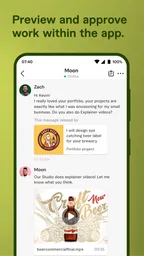
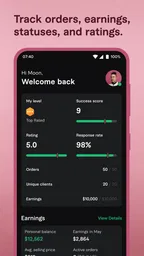
- Track order progress through the app.
- Contact sellers to clarify project details.
- Get alerts about messages and order updates.
What could be better
- Service quality can vary between freelancers.
- Popular sellers may have limited availability.
- Custom projects can require extra discussion before ordering.
- Some services may cost more than their listed starting price.
- Resolving order disputes can take time.





