
Lyft Driver review
 Analysis by Appsdrops
I can see why Lyft Driver might feel useful almost immediately: it puts the work of driving for Lyft in a dedicated app rather than asking me to manage the driver side through the passenger experience. But the first few days are not the best test of whether it deserves a lasting place on my phone. The better question is whether it fits the hours I actually want to work, and whether checking it, preparing for trips, and dealing with the less enjoyable parts of driving remain worthwhile after the novelty wears off.
Lyft, Inc. makes this free business app for people who want to drive with Lyft. It has an Everyone age rating, a 4.8 average from around 260,000 ratings, and more than five million installs. Those figures suggest a substantial audience, but they cannot tell me whether driving is a good fit for a particular person. The practical value depends on local demand, personal availability, and how much time and attention someone is willing to give the work.
What feels useful in the first week
The app’s appeal is clearest when I have a specific reason to try driving: a flexible schedule, a few open blocks of time, or a need to explore work that can be fitted around other commitments. Rather than treating driving as a vague side project, the app gives the process a clear starting point. Its store summary focuses on getting started, but I would not mistake that invitation for a promise of immediate earnings. Applying and deciding whether the work suits me are separate steps.
In the opening week, I would use the app to learn the rhythm of a shift before committing to a routine. Pick a time window that does not interfere with essential plans, check how driving feels in familiar areas, and make a note of the time spent preparing as well as the time spent on the road. That small habit gives a more honest picture than judging the experience by one busy stretch or one quiet session.
A realistic example is someone with a free evening after their main job. They can use that time to see whether driving fits their energy and schedule, rather than immediately reshaping the whole week around it. The app is most compelling for a person who values that flexibility and is comfortable making decisions while out driving. It is less appealing to anyone who needs predictable hours or dependable income from the outset.
I would also keep the first few sessions deliberately simple. Get comfortable with the app’s driver workflow and the demands of being on the road before trying to optimize every hour. A new driver can easily confuse activity with success: being available longer does not automatically mean the time is well spent. The useful early question is not merely whether I can accept work, but whether the overall routine feels manageable.
Building a routine that lasts
After the first week, the more important test is repeatability. Can I choose workable hours without letting the app dictate every spare moment? Does driving fit around sleep, family obligations, and other work? I would treat Lyft Driver as a tool for coordinating a chosen schedule, not as a reason to stay available whenever I happen to have a free minute.
This is where the app’s business purpose matters. It is not a general productivity suite or a way to compare every possible gig. It is for the Lyft driver’s side of the work. That focus makes sense if I have already decided that Lyft is the service I want to drive for; it is less useful if I am still comparing several platforms and want one place to manage them all.
Compared with relying on informal arrangements or trying to track work mentally, a dedicated driver app gives the work a defined home. Compared with using a broader gig-work platform, however, it has a narrower role: it supports driving with Lyft rather than serving as a neutral hub across different kinds of work. Someone weighing several options may reasonably prefer to compare those choices separately before building a routine around this one.
A useful practice is to review a shift after it ends, while the details are still fresh. Note the start and finish times, how the schedule affected the rest of the day, and whether the effort felt reasonable. This is not a claim that the app provides a particular budgeting tool; it is a simple way to avoid letting a few memorable trips stand in for the whole experience. Over time, those notes can help me decide which kinds of availability are worth repeating.
Keeping the setup and habit manageable
Any app tied to work needs a little upkeep. I would keep it current, check that the phone is ready before setting out, and avoid leaving basic setup until the moment I want to drive. Lyft Driver’s current version is 2026.43.3.1793922287, and it supports devices running Android 9 or later. Those details matter most when an older phone is part of someone’s plan: compatibility is a practical check to make before relying on the app for a shift.
Maintenance is not only about software. The work itself asks for attention, patience, and a willingness to spend time in traffic and around changing road conditions. A sensible pre-shift routine can reduce avoidable distractions: charge the phone, make sure the route environment is familiar enough, and decide in advance when the session will end. I would not plan a long shift simply because the app is available; the driver still has to manage fatigue and road safety.
Another useful boundary is to separate driving time from personal time. If I open the app whenever I have a spare moment, it can become difficult to tell whether I am working intentionally or simply staying on standby. Setting a start and stop point helps preserve the flexibility that attracted me in the first place. For someone who prefers a firm timetable handed to them by an employer, that self-management may feel like extra work rather than freedom.
The app should also be considered alongside the phone and driving setup a person already has. A device that is awkward to use in a vehicle can make any driver workflow more stressful, even if the software itself is straightforward. I would sort out a safe, low-distraction way to interact with the phone before taking on regular shifts. Convenience is not a reason to handle the device while moving; attention belongs on the road.
Where the routine can become tiring
The recurring friction is less about novelty and more about the realities of driving for work. Time on the road can be tiring, and flexible work can still involve uncertainty about how a given session will feel. The app cannot remove traffic, interruptions, or the need to judge whether continuing makes sense. If I find that I am extending every session in the hope that the next part will feel more worthwhile, I would step back and reassess the schedule.
There is also a mental cost to being the person who has to decide when to work and when to stop. Flexibility sounds simple until it asks for repeated choices around evenings, weekends, and recovery time. For some drivers, that control is a genuine advantage. For others, a regular shift with a clear end time is healthier and easier to plan around. Neither preference is a failure; it is a question of fit.
Lyft Driver is not the right choice for someone who does not want to drive, who needs a guaranteed routine, or who expects an app alone to settle the financial question. It also may not suit someone who wants a single tool for different gig categories. In those situations, a conventional part-time role or a broader work platform may be a better starting point. I would make that comparison before investing time in a driving habit.
For prospective drivers, the application stage is another reason to keep expectations grounded. The app invites people to apply, but an invitation to begin is not the same as being ready to drive or knowing how the work will fit locally. I would approach the decision in stages: consider the work, complete the relevant onboarding, then evaluate the routine based on real experience rather than assumptions formed from the app’s pitch.
Who is likely to keep it installed?
I can recommend it most readily to someone who has decided to drive with Lyft, values control over when to work, and is comfortable managing a mobile workflow while treating road safety as non-negotiable. For that person, the app has a clear recurring purpose: it belongs to the work rather than being an occasional novelty. Its business focus is a benefit when the goal is specifically Lyft driving.
I would be more cautious if someone is searching for a quick fix for financial pressure. A flexible schedule does not, by itself, make a work arrangement predictable or effortless. Before making it a regular commitment, I would test a modest schedule, account for the time around each session, and compare the experience with other realistic work options. That approach is more useful than assuming that more hours automatically make the arrangement better.
The app has been available since May 4, 2017, and its current release shows that it remains an actively maintained product. That history can reassure someone who wants an established driver-specific app, though longevity alone does not settle whether a person should drive. I would judge it by whether the workflow stays useful in my real routine, not by how long the app has existed.
My long-term verdict
After the first-week curiosity fades, Lyft Driver earns a place on my phone only if I keep choosing to drive and the schedule remains workable. It is focused, free to install, and aimed squarely at the driver side of Lyft. Its lasting value comes from serving a repeated work routine, not from being something I would open for entertainment or general planning.
My advice is to treat it as a practical work tool and test the fit gradually. Give yourself clear hours, pay attention to how the work affects the rest of your day, and reassess rather than letting availability turn into an open-ended obligation. If flexibility and driving suit you, it can be a useful companion to that choice. If you need more certainty, dislike time behind the wheel, or want one place to coordinate multiple kinds of gig work, another route may be a better match.
What we like
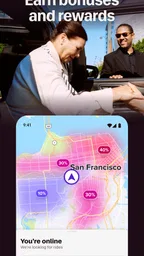
- Drivers can choose when to go online and accept rides.
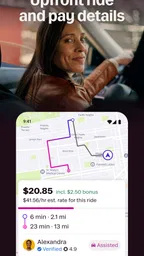
- The app displays trip details before drivers accept a request.
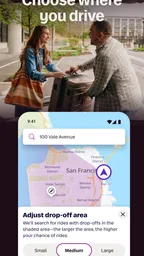
- Built-in navigation helps drivers find pickup and drop-off locations.
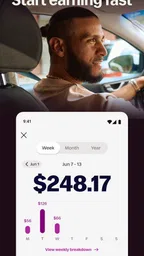
- Earnings summaries make it easier to track completed work.
- In-app support provides a route to resolve account or ride issues.
What could be better
- Driver availability and earnings vary by location and time.
- Navigation directions may not match a driver's preferred route.
- Cancellations can disrupt plans and reduce time spent earning.
- Drivers need a suitable vehicle that meets local requirements.
- App use depends on a reliable phone connection and battery life.





