


JobStack for Work | Daily Pay review
 Analysis by Appsdrops
I’d look at JobStack as a focused way to find work when a conventional weekly schedule is not what I need. It is a business app from TrueBlue® built around gig and temporary jobs, with flexible shifts and daily-pay opportunities. That focus is useful: instead of treating a short assignment as an exception, the app makes temporary work the central search. My main advice is to use it as one channel in a broader job search, not as a promise that a shift will always be available exactly when you want one.
What JobStack is useful for right now
JobStack’s audience is fairly clear. I’d consider it if I want to pick up temporary work, fit shifts around other responsibilities, or look for a way to bring in income between longer-term roles. The app is free, is rated for Everyone, and sits in the business category. Its average rating is 4.7 from around 54,000 ratings, with roughly 3,500 written reviews and over 500,000 installs. Those figures suggest that many people have tried it, though they don’t tell me whether a particular job will suit my location, schedule, or experience.
The practical distinction is that this is not a general-purpose career platform designed mainly for polishing a résumé and pursuing a long hiring process. JobStack is aimed at work that can be organized around shifts and short assignments. That makes it potentially more relevant to someone seeking near-term options than a traditional job board full of permanent roles. It also means I would not rely on it alone if my goal is a salaried position, a specific career ladder, or a role that requires a lengthy application and interview process.
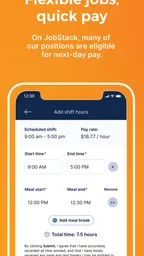
The daily-pay angle may matter most when timing is as important as the work itself. I’d still treat “daily pay” as a reason to inspect the details of a particular opportunity, not as a substitute for checking when payment is issued or what conditions apply. Before planning bills around a shift, I’d confirm the assignment’s terms in the app and make sure I understand what I need to do to complete it. Flexible work can help with cash flow, but it can also be less predictable than a fixed-hours job.
How I would fit it into a job search
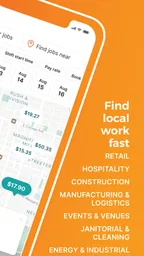
I would begin by checking which opportunities are actually available near me, then compare the schedule and location against my real week. A job that looks appealing in isolation may stop making sense once travel time, childcare, another shift, or a class is included. One useful habit is to decide in advance how far I am willing to travel and what hours I can reliably work; that keeps a tempting listing from turning into a difficult commitment.
For example, imagine I have a few open weekdays between a part-time role and a longer-term job search. I could use JobStack to look for a temporary shift that fits one of those gaps, rather than accepting work that clashes with an interview or leaves no time to recover. I’d compare the full day, not just the shift: start time, commute, likely end time, and the effect on the next morning. That simple check is especially valuable when assignments vary, because flexibility only helps if I can meet the commitment I accept.
A second useful approach is to keep a small record of the kinds of shifts that work well for me. I would note the travel burden, schedule fit, and whether the work was worth repeating, then use that experience to make better choices next time. This is not a special app feature; it is a practical way to avoid treating every listing as equally suitable. For shift-based work, knowing my own limits can be more useful than applying broadly without a plan.
What the version history can and cannot tell me
The current version is 1.82.0, and the app was released on September 28, 2023. Those facts give a useful frame for judging its maturity: JobStack is an established product with ongoing versioning rather than a newly launched idea. They do not, by themselves, reveal which tools changed between releases, so I would not assume that a particular workflow or feature was recently added just because the version number has advanced.
For an existing user, a newer version is most relevant when it makes a routine task smoother or improves reliability. I’d keep the app updated through the app store and check its current behavior before relying on it for an important shift. If an older installation feels confusing or behaves unexpectedly, updating is a sensible first step; it is not a guarantee that every concern will disappear. The useful question is whether the version I’m using lets me review opportunities and manage my work clearly, not whether the number looks large.
This distinction matters because job-search apps can change quickly, but a version label is not a changelog. I can treat 1.82.0 as the current release identifier and still be cautious about claims concerning specific improvements. When deciding whether to stay with JobStack, I’d judge the experience I can actually use: whether suitable work appears, whether the details are clear enough to make a decision, and whether the schedule works for me.
Where it sits beside other options
Compared with broad job boards, JobStack’s strength is its emphasis on temporary and shift-based work rather than presenting every kind of career opportunity as equally relevant. A general job site may be better for comparing permanent openings, researching employers, or applying for a specialized role. A staffing agency’s direct process may be better if I want a human contact to discuss a particular assignment. JobStack makes more sense when I want a mobile-first way to look for flexible work and can make decisions based on individual shifts.
I would not make it my only source of income if I need guaranteed hours every week. A fixed-schedule job is usually a better fit for someone who needs a dependable routine, predictable earnings, or benefits tied to ongoing employment. Nor would I use JobStack as my main route if my work depends on a narrow professional specialty; a dedicated industry board or direct employer applications may surface more relevant roles. The right comparison is not “which app has the most listings?” but “which route matches the kind of work and certainty I need?”
There is also a real trade-off in convenience. Searching for short assignments can make it easier to respond to changing availability, but a flexible format asks me to evaluate each opportunity carefully. I need to be comfortable weighing a shift’s timing and location against my other obligations. If I prefer an employer to set a stable weekly schedule for me, the very flexibility that makes JobStack appealing may feel like extra uncertainty.
Questions I would settle before accepting work
First, I would check whether the jobs shown are practical for my area and transport options. “Near me” is only useful if I can get to the work reliably, and a shift that is technically nearby may still involve an awkward commute. I would also check the precise schedule and assignment details before committing, rather than assuming that all jobs follow the same pattern. Availability and fit can vary, so I would plan around the specific opportunity in front of me.
Second, I would clarify how daily pay applies to the assignment I am considering. The phrase can be attractive, especially when money is tight, but I would verify the payment timing and any requirements directly in the job information. I would not budget on the assumption that accepting a shift means funds arrive immediately under every circumstance. Treating pay timing as a detail to confirm is a sensible safeguard, not a reason to dismiss the app.
Third, I would ask whether I can use this alongside another job or study schedule. Flexible shifts can make that possible, but the answer depends on the hours and location of each assignment. I’d avoid accepting two commitments that leave no buffer for travel or delays. If my availability changes often, I would check listings when I can make a clear decision rather than agreeing first and trying to rearrange everything afterward.
Finally, I’d consider what I need beyond finding a shift. If I want career coaching, a long-term employer relationship, or a predictable salary, I should pair JobStack with other resources. If I mainly need a way to explore temporary work that may fit around the rest of my life, its focused approach is more compelling. The app can help me look; it cannot make an unsuitable schedule or unstable income suitable.
Who I’d recommend it to
I’d recommend JobStack to someone who is open to temporary assignments, values schedule flexibility, and is prepared to judge each opportunity on its own terms. It may be especially useful when I have open blocks of time and want to see whether shift work can fill them. The free price removes a cost barrier to trying it, while the Everyone age rating makes its intended audience broad; neither fact should be mistaken for a guarantee that every user will find appropriate work.
I would tell a friend to start with a realistic availability plan, check the details of each shift, and keep another search route open if they need steady employment. I’d also advise them not to let the appeal of quick pay override a careful look at travel and timing. For the right person, JobStack is a practical, specialized addition to a work search. For someone who needs certainty, a stable role, or a highly specialized career path, a conventional employer search or a more targeted service is likely the better starting point.
What I would watch as it develops
As the app continues to evolve, I would pay attention to whether updates make the essential decisions clearer: what a shift involves, when and where it takes place, and what I should understand about pay before accepting. Those are the details that affect whether flexible work is genuinely manageable. I would judge future changes by how they help people make informed commitments, rather than by version numbers alone.
My overall view is that JobStack has a distinct purpose: helping people explore temporary, shift-based work without pretending that short assignments are the same as a permanent job. TrueBlue® has built a recognizable option in the business-app space, and the app’s established audience makes it worth considering if its kind of work matches your needs. I’d use it with clear limits and a backup plan, and I’d recommend it most strongly to people who value choice of shifts more than guaranteed weekly hours.
In short, JobStack is most useful when I treat it as a tool for finding a suitable assignment, not as a complete answer to employment. Check the location, schedule, and pay terms each time; compare the commitment with the rest of your week; and turn to other services when stability or specialization matters more. That approach lets the app’s flexibility work in your favor without overlooking the trade-offs.
What we like
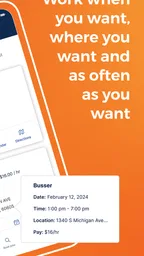
- Browse nearby shifts that fit your availability.
- See pay details before accepting a shift.
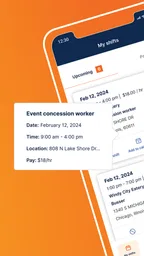
- Track accepted shifts and work schedules in one place.
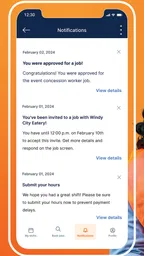
- Get notifications about new shift opportunities.
- Submit hours through the app after completing a shift.
What could be better
- Available shifts depend on local employer demand.
- Some jobs may require screening or onboarding first.
- Shift cancellation rules can vary by employer.
- A smartphone and reliable internet are needed to manage shifts.
- Daily pay availability may depend on job and payroll terms.





